Innovation, Integration, and Community: Reflections on WordCamp Europe 2026
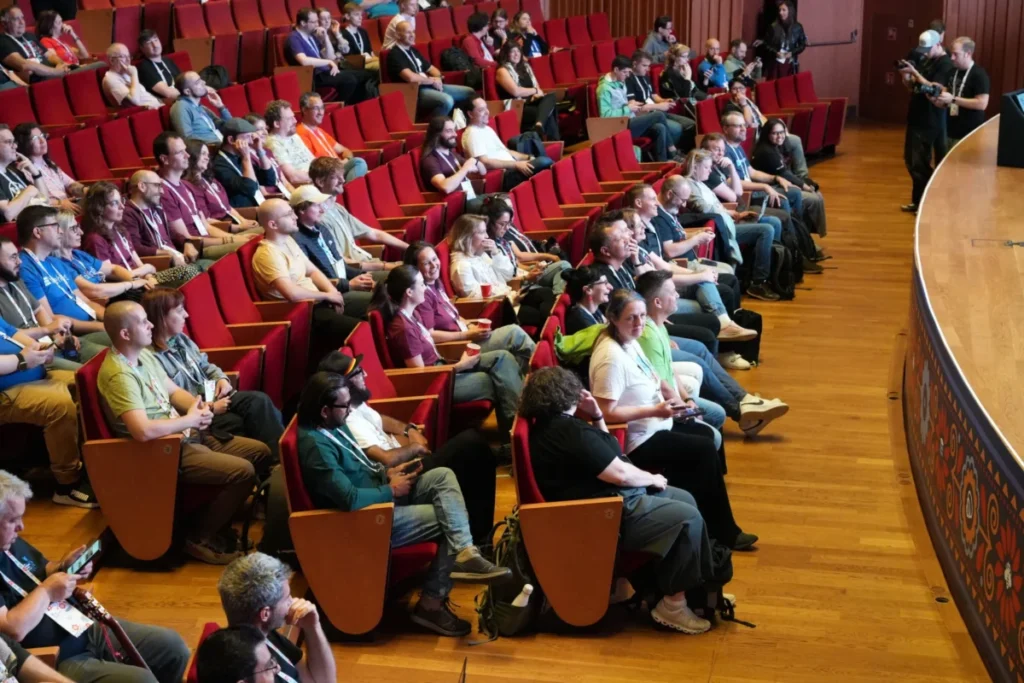
The first week of June 2026 served as a global focal point for the digital publishing world as the ICE Kraków Congress Centre in Poland opened its doors to the WordPress community. WordCamp Europe (WCEU) 2026, the continent’s most significant gathering of WordPress developers, designers, and business owners, concluded a three-day run that set a new benchmark for open-source collaboration. With 2,458 attendees representing 81 countries, the event served as a testament to the enduring relevance of the world’s most popular content management system.

For the local organizing team, the challenge was twofold: to host a world-class technical conference and to immerse a global audience in the rich cultural tapestry of Kraków. From the seamless integration of public transit holograms on attendee badges to the authentic local cuisine—ranging from pierogi to traditional żurek—the city provided a sophisticated backdrop for what was, at its core, a deep dive into the future of the web.

A Chronological Overview: From Contribution to Vision
Contributor Day: The Engine Room
The event kicked off on June 4 with Contributor Day, a cornerstone of the WordCamp experience. Rather than merely observing lectures, participants engaged in a hands-on collaborative effort to improve the WordPress ecosystem. The day was structured into two intensive working sessions, separated by a collective networking lunch.

Tables were organized by function, mirroring the breadth of the project. Newcomers were paired with seasoned mentors at onboarding stations, while specialized groups tackled high-level tasks. Polyglot teams worked on localization, the Documentation team refined essential user guides, and the Plugins team conducted live reviews to ensure the security and performance of the plugin directory. The inclusion of remote participants via the #contributor-day Slack channel ensured that geography was no barrier to contribution, reinforcing the project’s commitment to global accessibility.

The Keynote: CERN’s Digital Transformation
The conference’s formal opening on June 5 featured a high-profile keynote from CERN, the European Laboratory for Particle Physics. Joachim Valdemar Yde, head of CERN’s web team, provided a fascinating look at why the world’s leading physics laboratory chose to transition its massive web infrastructure to WordPress.

The move, described by Yde and his colleague Francisco Borges Aurindo Barros, represents a shift toward a modern, modular web presence. By leveraging a custom, Kubernetes-based infrastructure and automating the migration of decades of scientific content into Gutenberg blocks, CERN has successfully centralized its web strategy. Most significantly, Yde announced that the laboratory’s flagship site, home.cern, is now live on WordPress. This development serves as a powerful endorsement of the platform’s scalability and enterprise-grade security.

Data-Driven Insights and Technical Progress
WordPress 7.0: A New Paradigm
A central theme throughout the conference was the release of WordPress 7.0. The "Inside WordPress 7.0" panel provided a rare behind-the-scenes look at the coordination required to ship a release of such magnitude. Speakers including Juan Manuel Garrido, Adam Silverstein, and Milana Cap discussed the evolution of contribution workflows and the human-centric approach to software development.

The technical implications of version 7.0 are profound. The introduction of a native AI client and a new "Abilities API" suggests a future where WordPress acts as an intelligent orchestration layer. By providing a standard interface for providers like OpenAI, Anthropic, and Google Gemini, WordPress is positioning itself as the primary interface for AI-assisted content creation and site management.

Crafting Performance at Scale
Technical workshops moved beyond theory, offering deep dives into the mechanics of performance. Dennis Snell led a session on the HTML API, while Peter Wilson focused on the optimization of the WP_Query class, illustrating how site builders can achieve significant speed improvements at scale. Fellyph Cintra’s presentation on the WordPress Playground showcased how browser-based architectural changes are reducing development friction, allowing for faster prototyping and testing.

Official Responses and Strategic Directions
The Human Element in the Age of AI
During the closing fireside chat, Mary Hubbard, Executive Director of WordPress, navigated the delicate intersection of human creativity and machine intelligence. Accompanied by Gutenberg project lead Matías Ventura and designer Rich Tabor, the conversation centered on the "human in the loop" philosophy.

Hubbard was adamant about the necessity of vocal advocacy for open-source AI. "We should be talking about it, and we should be much louder about it," she remarked, emphasizing that the values of transparency and freedom that built the open web must be applied to the development of AI tools. Ventura echoed this, demonstrating experimental desktop-mode interfaces that suggest a move toward a more agent-based, open-canvas administrative experience.

Education as a Strategic Pillar
A highlight of the closing ceremony was the announcement of a new, formal partnership between the Kraków University of Technology and the WordPress community. Starting in October, the university will offer a dedicated WordPress course, marking a milestone in academic recognition of the platform. This is an extension of the broader WordPress Campus Connect initiative, which seeks to integrate professional web development skills into higher education, fostering the next generation of contributors.

Implications for the Future of the Web
The discussions at WCEU 2026 point to several long-term implications for the WordPress project and the broader internet:

- Standardization of AI Integration: By building native AI connectors, WordPress is shifting from a CMS to an "Intelligent Operating System." This reduces the reliance on proprietary, siloed third-party AI plugins, keeping control within the open-source ecosystem.
- Enterprise Maturity: The successful migration of CERN’s infrastructure signals that WordPress is increasingly being viewed as a stable, secure, and performant solution for large-scale institutional and scientific environments.
- Educational Sustainability: The focus on universities and micro-credentials is a deliberate strategy to solve the "talent gap" in the open-source world. By mentoring students and treating them as contributors, the project is ensuring its longevity.
- Community-Driven Business Models: The sessions led by speakers like Debbie Levitt and Vassilena Valchanova underscored a shift toward a more professional, business-savvy community. Attendees were encouraged to view their work through the lens of business value, bridging the gap between technical output and commercial success.
Conclusion: The Road Ahead
As the sun set on the ICE Kraków Congress Centre, the energy was palpable. The 2026 edition of WordCamp Europe was not just a conference; it was a demonstration of a community that has matured alongside the software it builds.

The transition from a simple blogging tool to a robust, AI-ready framework is complete, but the community’s focus remains anchored in the values that started it all: openness, education, and the democratization of information. With the gaze now turning toward Phoenix for WordCamp US 2026 in August, and with preparations already underway for WCEU 2027 in Málaga, the WordPress community continues to prove that its greatest asset is not its code, but its people.

The legacy of Kraków will be defined by this convergence of academic rigor, enterprise ambition, and the timeless, human desire to connect. As Mary Hubbard noted in her closing remarks, the goal is to bring younger generations into the project in a healthy, sustainable way—ensuring that as the web evolves, the principles of an open and accessible internet remain the guiding light.