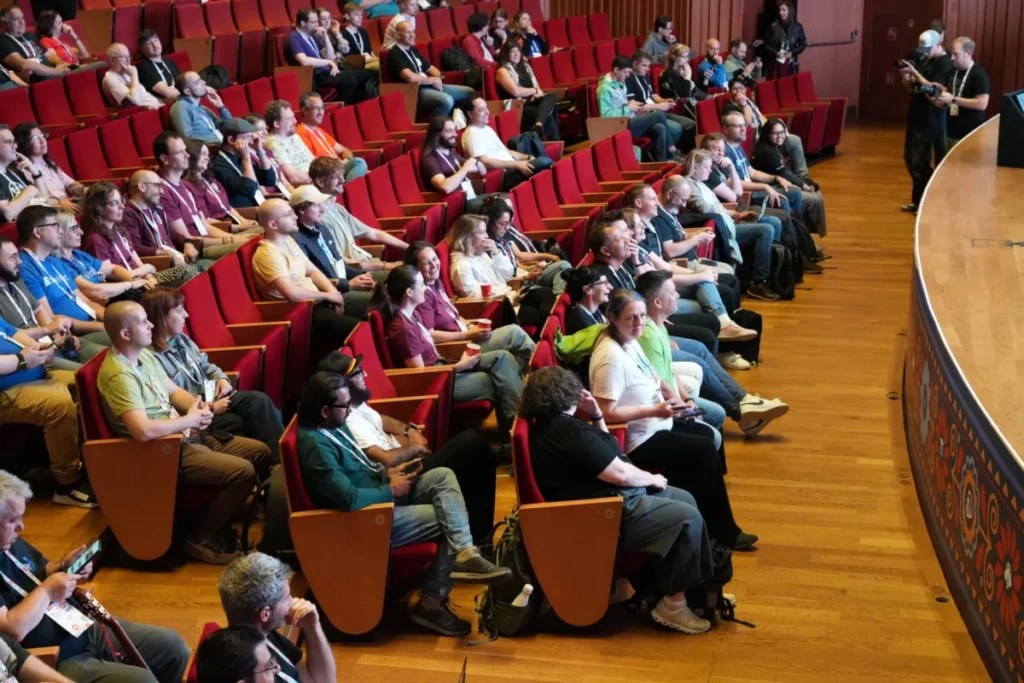
The first week of June 2026 transformed the ICE Kraków Congress Centre into a global epicenter for the open web. WordCamp Europe (WCEU) 2026, the premier gathering for the WordPress ecosystem, brought together a diverse cohort of 2,458 attendees from 81 countries. Against the backdrop of one of Europe’s most historic cities, the event served as a definitive moment for the platform, balancing the weight of its 40% market share with the cutting-edge evolution of WordPress 7.0 and the rapid integration of artificial intelligence.
For three days, from June 4 to 6, the Polish city offered more than just a venue; it provided an immersive cultural experience. Attendees, nearly a quarter of whom were first-time participants, navigated the city with ease thanks to a thoughtful transport initiative: every conference badge doubled as a hologram-enabled pass for unlimited public transit. This accessibility mirrored the ethos of the event itself—welcoming, interconnected, and rooted in the spirit of community.
Chronology of a Global Gathering
The rhythm of WordCamp Europe is defined by its unique structure, starting long before the main stage lights hit.
The Foundation: Contributor Day
On June 4, the event officially kicked off with Contributor Day. This is the heartbeat of the project, where the "work" of WordPress occurs. Unlike typical conferences that focus solely on passive learning, Contributor Day invites participants to become active stakeholders. The venue floor was partitioned into functional zones: from the Polyglots team—who ensure WordPress speaks the language of the world—to the Core, Performance, and Plugin review teams.
Mentorship was the cornerstone of this year’s effort. Recognizing that the project’s longevity depends on new blood, organizers implemented a structured onboarding program. Experienced contributors were paired with newcomers, guiding them through their first patch, documentation string, or support forum interaction. For those unable to attend in person, the #contributor-day channel on the Make WordPress Slack ensured that global participation remained a reality, proving that the open-source spirit transcends physical borders.
The Main Event: Keynotes and Knowledge Sharing
The main conference days, June 5 and 6, were a whirlwind of intellectual exchange. The program featured 49 distinct talks and eight hands-on workshops. The sessions were categorized into strategic themes: core development, the future of AI in content creation, business strategy, and the preservation of the open web. The event concluded with a marathon eight-hour after-party in the Kazimierz district, a nod to the local culture and the deep social bonds that sustain the WordPress community.
Supporting Data and Technical Milestones
The 2026 edition was anchored by several major technical announcements that signaled a paradigm shift for the platform.
CERN: The World’s Web Pioneer Moves to WordPress
Perhaps the most symbolic moment of the conference was the opening keynote delivered by CERN, the European Laboratory for Particle Physics. Joachim Valdemar Yde, head of CERN’s web team, announced that home.cern—the successor to the birthplace of the World Wide Web—has officially migrated to WordPress.
The technical implications are profound. CERN’s move was not a simple lift-and-shift; it involved a sophisticated automated pipeline. Using a tool that the laboratory plans to open-source, the team successfully converted years of legacy content into modern Gutenberg blocks. This migration, built on top of a secure, Kubernetes-based infrastructure, allows CERN’s researchers to focus on their science while the web team manages a shared, high-performance platform. This serves as a powerful validation of WordPress’s capability to handle enterprise-grade, high-traffic requirements.
WordPress 7.0 and the AI Integration
The launch of WordPress 7.0 was the central narrative of the conference. The release introduces a native AI client and a new "Abilities API," allowing plugins to communicate their capabilities to other tools in the ecosystem. This architectural change is designed to democratize AI, moving it from the domain of specialized developers to the hands of every site builder.
The "Inside WordPress 7.0" panel provided a rare look at the human logistics behind such a massive release. Contributors discussed the coordination required to ship software in the open, highlighting that while the feature set is impressive, the real achievement is the collaborative workflow that makes the release possible.
Official Perspectives: The Path Forward
The closing fireside chat, featuring Executive Director Mary Hubbard, Gutenberg lead Matías Ventura, and designer/developer Rich Tabor, provided a candid outlook on the road ahead.
Education as the Catalyst
A major highlight of the closing session was the partnership with the Kraków University of Technology. Mary Hubbard announced that the university will launch a WordPress-specific academic course this October. This initiative, part of the wider "WordPress Campus Connect" program, marks a significant step toward formalizing WordPress education. Hubbard emphasized that the future of the project lies in the next generation:
"Focusing on younger generations, and bringing them into the project in a healthy way, with the dynamic of education as well as mentorship… is very important."
AI and the "Human in the Loop"
The discussion around AI was refreshingly pragmatic. Matías Ventura stressed that AI should serve as an extension of the existing WordPress design system, not a replacement for human intent. He demonstrated "desktop mode" and agent-based coding tools that allow for a more intuitive, canvas-like experience in the admin dashboard. The consensus among the leaders was clear: WordPress must lead the charge in ensuring that AI development remains open, transparent, and ethically aligned with the GPL principles that have sustained the project for over two decades.
Implications for the WordPress Ecosystem
The themes of WCEU 2026 point toward several key implications for the future of the web:
The Professionalization of Contribution: The shift toward structured mentorship and formal education (like the Kraków University partnership) suggests that WordPress is moving toward a more sustainable, institutionalized model of growth.
AI as a First-Class Citizen: By baking AI capabilities into the core (via the Abilities API and native client), WordPress is positioning itself as the primary interface for the AI-augmented web. This lowers the barrier to entry for users who want to leverage advanced technology without needing a deep background in coding.
The "Open Web" Defense: As corporate walled gardens continue to grow, the commitment shown by organizations like CERN to move to an open-source platform like WordPress is a vital victory for the health of the internet. It reinforces the idea that the web’s standards should remain open and accessible to all.
Performance and Scalability: Technical sessions regarding the optimization of WP_Query and the success of WordPress Playground in browser-based development indicate that the project is successfully tackling the "performance debt" that often accompanies large, legacy codebases.
Looking Ahead: The Community Roadmap
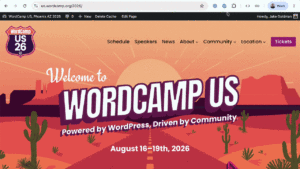
The energy generated in Kraków is already being channeled into the next major milestone. The community now looks toward WordCamp US 2026, scheduled for August 16–19 in Phoenix, Arizona, where the discussions on AI integration and contributor workflows are expected to deepen.
Following the American event, the community will return to Europe for WCEU 2027, which will be hosted in the coastal city of Málaga, Spain, from May 27–29.
As the conference concluded, the overriding sentiment was one of optimism. In a digital landscape increasingly fragmented by proprietary tools and closed ecosystems, the 2,458 attendees in Kraków reaffirmed their commitment to a shared, open-source future. By bridging the gap between historical significance (CERN) and the future of technology (AI and Gutenberg), WordCamp Europe 2026 proved that the WordPress project is not just keeping pace with the evolution of the web—it is defining it.
The success of this year’s event was not merely in the lines of code written or the sites migrated; it was in the strength of the human network that gathered in Poland to ensure that the web remains a tool for everyone. As Mary Hubbard noted during the closing session, the community must be louder and more vocal about its values. If Kraków was any indication, that voice is growing stronger, more diverse, and more prepared for the challenges of the next decade.