Kerala Assembly Passes Historic Resolution Demanding Removal of CEC Over Electoral Integrity Concerns
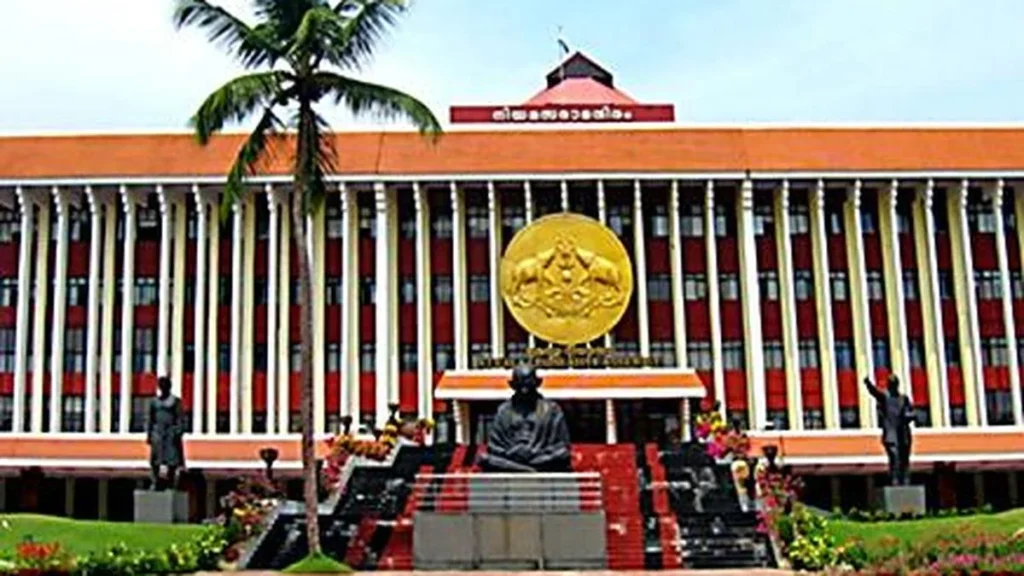
THIRUVANANTHAPURAM — October 12, 2026 — In a move that signals a deepening constitutional crisis between state legislatures and central electoral authorities, the Keralam Legislative Assembly passed a landmark resolution on Monday, formally demanding the removal of Chief Election Commissioner (CEC) Gyanesh Kumar. The resolution, which calls for a comprehensive overhaul of the Election Commission of India’s (ECI) functioning, was passed with the rare bipartisan support of the ruling United Democratic Front (UDF) and the Opposition Left Democratic Front (LDF), marking a unified front against what they term the "systemic erosion of democratic impartiality."
The resolution, moved by Chief Minister V.D. Satheesan, underscores growing anxieties regarding the sanctity of the electoral roll, the exclusion of marginalized voters, and the institutional independence of the ECI.
The Core Grievances: A Crisis of Confidence
The primary catalyst for this legislative action is the alleged mismanagement of the Special Intensive Revision (SIR) of electoral rolls. The Assembly’s resolution explicitly accused the ECI of orchestrating a "flagrant breach of democratic principles" by disenfranchising millions of eligible citizens.
According to the text of the resolution, the exclusion of marginalized sections, including minorities, migrant labourers, and the youth, was not a result of administrative oversight but rather a consequence of "technical chicanery." The House expressed "deep concern" that the powers of Electoral Registration Officers (EROs) have been diluted, effectively shifting the control of voter lists away from local, ground-level verification toward a centralized, opaque mechanism.

Furthermore, the resolution cited internal friction within the commission, noting that other Election Commissioners had reportedly raised objections to specific ECI decisions—objections that were allegedly sidelined or ignored. The Assembly argued that these "aberrations" in the electoral roll are tantamount to undermining the very mandate of the people, threatening the fundamental basis of India’s universal adult franchise.
Legislative Chronology: How the Motion Unfolded
The session on Monday was marked by high-tension debate and significant political maneuvering.
- 10:00 AM: The House convened to discuss the motion introduced by Chief Minister V.D. Satheesan. The Chief Minister opened the floor by emphasizing that the sanctity of elections is the "bedrock of democracy" and that current institutional failures had pushed the state to take this extraordinary step.
- 11:30 AM: The Opposition, led by Pinarayi Vijayan, extended its full support to the core intent of the resolution. In a rare show of political convergence, the LDF and UDF set aside ideological differences to present a united demand for institutional accountability.
- 12:15 PM: Four members proposed various amendments. The most significant of these, suggested by Opposition Leader Pinarayi Vijayan, sought to replace the word "lakhs" with "crores" regarding the number of excluded voters, a change that the Chief Minister accepted, noting that the disenfranchisement is a national-level phenomenon.
- 1:00 PM: BJP Parliamentary Party leader B. B. Gopakumar attempted to table a counter-motion, questioning the legal validity of the 2026 Assembly elections themselves and calling for the dissolution of the House. This motion was summarily rejected by the Speaker.
- 1:29 PM: The resolution was passed by a majority vote, with the UDF and LDF voting in favor and the BJP in opposition.
Institutional Overhaul: The Call for Structural Reform
The Kerala Assembly’s resolution goes beyond a demand for the removal of an individual; it proposes a structural redesign of the ECI to prevent future executive overreach.
Central to this demand is the composition of the committee tasked with selecting the Chief Election Commissioner and other Commissioners. The resolution argues that the current selection process—which critics claim is dominated by the Central government—has "destroyed the credibility of the ECI as an institution."

The Assembly has formally urged the Centre to align the selection panel with the spirit of previous Supreme Court observations. The proposed model suggests a three-member panel comprising:
- The Prime Minister
- The Leader of the Opposition in the Lok Sabha
- The Chief Justice of India (CJI)
By including the CJI, the Assembly posits that the process would gain the necessary judicial oversight to ensure that appointees are independent of political influence. This demand is framed as a "corrective measure" to restore public faith in an institution that has traditionally been viewed as the guardian of India’s democracy.
Official Responses and Political Repercussions
The Government’s Position
Chief Minister V.D. Satheesan, while addressing the press following the session, emphasized that the resolution is not an attack on the office of the CEC, but a defense of the constitutional process. "When the referee becomes a player, the game loses its meaning," Satheesan remarked. "We have provided evidence of widespread roll manipulation, and we expect the Centre to respond with more than silence."
The Opposition (BJP) Standpoint
B. B. Gopakumar, speaking for the BJP, dismissed the resolution as a "politically motivated stunt." He argued that the Kerala government is attempting to deflect from its own governance failures by creating a narrative of electoral victimization. "The ECI is an autonomous body. For a state assembly to dictate the removal of a constitutional authority is an act of overreach that violates the federal spirit of our Constitution," Gopakumar stated.

Implications for Indian Democracy
The decision by the Kerala Assembly creates a volatile precedent. By formally passing a resolution against the head of a constitutional body, the state has effectively escalated its dispute with New Delhi to a constitutional level.
1. Federal Tension
The resolution challenges the centralizing tendencies of the current electoral administration. If other state assemblies follow suit—particularly those governed by opposition parties—it could lead to a massive, country-wide legitimacy crisis for the Election Commission of India.
2. The Credibility Gap
The allegations regarding "Form 6" amendments and the reduction of ERO powers touch upon the technical infrastructure of the electoral process. If these claims are validated by independent audits or judicial review, the integrity of recent election outcomes could face legal challenges in the Supreme Court.
3. Judicial Intervention
Given the mention of the Supreme Court’s previous stance on the selection committee, it is highly probable that this matter will eventually reach the apex court. Legal experts suggest that the court may be asked to adjudicate whether a state assembly has the constitutional standing to demand the removal of a CEC, and whether the current selection mechanism for Election Commissioners indeed violates the principle of institutional independence.

Conclusion: The Path Forward
The October 12 resolution represents a turning point in the relationship between India’s federal units and its national electoral body. While the Centre has yet to issue an official response, the intensity of the resolution and the bipartisan consensus in the Kerala Assembly ensure that the debate over electoral transparency will dominate the political discourse for the foreseeable future.
As the nation moves forward, the demand for "restoring the shine" of Indian elections remains the core focus. Whether this results in a change of personnel at the ECI or a complete overhaul of the appointment process, the events of this week have underscored that the silence of constitutional bodies is no longer an option in the face of widespread public and legislative scrutiny.
The question remains: will the Union government acknowledge the concerns raised by the Kerala Assembly, or will this standoff further polarize the democratic landscape in the months leading up to the next electoral cycle? As of now, the ball is firmly in the Centre’s court.