Mobile Tech Weekly: Samsung’s Aggressive Software Strategy, Nothing’s New Design, and the Evolution of Smartphone Optics
The mobile industry is currently locked in a fascinating tug-of-war between mid-range utility and premium experimentation. This week, we have seen a flurry of announcements ranging from Samsung’s commitment to long-term software support for its budget-conscious Galaxy M-series to rumors regarding Apple’s future camera hardware. As manufacturers race to differentiate their devices in an increasingly saturated market, the focus has shifted toward longevity, unique hardware features, and specialized user experiences.
Samsung Galaxy M47 5G: A New Benchmark for Mid-Range Longevity
Samsung has officially confirmed that the Galaxy M47 5G is slated for an Indian market launch on June 29. This device represents a strategic pivot for Samsung, as it aims to capture the value-conscious demographic that demands flagship-level software support.
Technical Specifications
The M47 5G is built around a expansive 6.7-inch AMOLED display, featuring a 120Hz refresh rate that promises fluid navigation and responsive gaming. Under the hood, the device utilizes a Snapdragon chipset, providing a reliable performance baseline. However, the true standout feature is the power management system: a massive 6,000mAh battery paired with 45W fast charging, ensuring that users can comfortably bypass the need for a mid-day charge. The imaging system is headlined by a 50MP primary sensor equipped with Optical Image Stabilization (OIS), a feature often omitted in the mid-range category.
Software Support: The New Industry Standard
Perhaps the most significant revelation regarding the M47 5G is Samsung’s promise of six Android OS updates and six years of security patches. By extending this level of support to a mid-range device, Samsung is signaling a departure from the "planned obsolescence" model that has historically plagued the smartphone industry. This move places immense pressure on competitors like Xiaomi and Realme to improve their own update cycles, as software longevity is becoming a primary purchasing criterion for modern consumers.
The Nothing Phone (4b): Transparent Design Meets Future Software
The upcoming Nothing Phone (4b), scheduled for a July 7 debut, continues the company’s commitment to unconventional aesthetic choices. This week, the brand provided a deeper look at the device, confirming the inclusion of their signature transparent back panel and the iconic Glyph lighting interface.
Performance and Geekbench Leaks
Leaked benchmarks on Geekbench have shed light on the internal architecture of the Phone (4b). The device is expected to house the Snapdragon 6 Gen 4 chipset, paired with 8GB of RAM. Notably, the unit spotted on benchmark platforms was running Android 16, suggesting that Nothing is working closely with Google to ensure their hardware remains at the cutting edge of the Android ecosystem.
Design Philosophy
Nothing continues to lean heavily into its "tech-as-art" design language. The dual-camera setup on the rear is integrated seamlessly into the transparent casing, maintaining the minimalist aesthetic that has defined the brand since its inception. By focusing on a unique visual identity and a clean software experience, Nothing is attempting to carve out a niche as the "lifestyle brand" of the smartphone world.
Market Diversification: Tecno and Realme’s Battery-Centric Approach
While premium devices dominate headlines, the budget segment continues to see impressive engineering feats, particularly regarding battery capacity and durability.
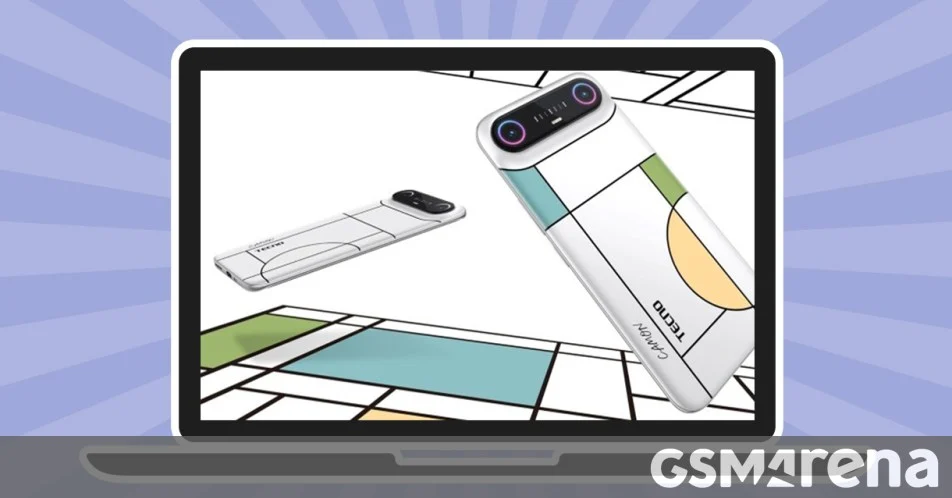
Tecno Camon Slim
Tecno has officially unveiled the Camon Slim, a device designed to sit alongside the Spark and Pova Slim series. Despite its ultra-slim 6.39mm profile, the phone manages to house a 6,000mAh battery—a feat of high-density cell engineering. Furthermore, the device features IP69/IP68 water and dust resistance, bringing professional-grade durability to a price bracket that traditionally ignores such features.
Realme P4x 4G
Realme has countered the current 5G-only trend by introducing the P4x 4G, a budget-focused alternative to its 5G sibling. The device is aimed squarely at power users who prioritize endurance over network speed, evidenced by its massive 8,000mAh battery. With a 6.8-inch 120Hz LCD, a 50MP main camera, and IP64 protection, the P4x 4G is a specialized tool for those who spend significant time away from power outlets.
The Future of Imaging: Variable Aperture and Privacy
The industry is currently divided between refining existing technology and chasing "gimmick-free" utility.
The Return of Variable Aperture
Reports regarding the iPhone 18 Pro suggest that Apple intends to debut a variable-aperture camera system. While this technology has appeared in various flagship devices over the past decade, it has yet to become a permanent industry fixture. Critics argue that software-based computational photography has largely negated the need for mechanical aperture blades. However, if Apple implements this, it could signify a renewed focus on optical physics over purely algorithmic image processing.
Privacy Innovations
In a separate development, rumors surrounding the Samsung Galaxy S27 Pro suggest the integration of a "Privacy Display." This anti-peeping technology would theoretically limit the viewing angle of the screen, ensuring that only the user directly in front of the device can read the contents. In an era of increased mobile surveillance and public data exposure, such a hardware-level privacy feature could be a major selling point for enterprise and high-security users.
Ecosystem Integration: Google’s Audio Push
Google has quietly introduced LHDC v5 (Low Latency High-Definition Audio Codec) support to Pixel devices via the Android 17 update. This high-end Bluetooth codec enables near-lossless audio streaming, which is a major upgrade for audiophiles using compatible wireless headphones.
However, the implementation is not without friction. Users must manually enable the codec through "Developer Options." This suggests that Google is still in the testing phase of integrating these high-bandwidth codecs, likely aiming to optimize power consumption before enabling them by default.
Implications for the Mobile Market
The events of this week highlight three distinct trends that will shape the smartphone market for the remainder of the year:
- Software as the Primary Differentiator: Samsung’s six-year support cycle is no longer just a perk; it is a defensive strategy designed to prevent user churn. As hardware reaches a plateau of "good enough," consumers are looking for long-term reliability.
- The "Battery First" Movement: The release of the Realme P4x and the Tecno Camon Slim proves that for a massive segment of the global population, battery capacity remains the most critical hardware spec. Manufacturers who can balance slim profiles with massive power cells will continue to dominate emerging markets.
- Experimental Hardware vs. Computational Software: The industry is at a crossroads regarding optics. While Apple looks back toward mechanical solutions like variable apertures, companies like Google are focusing on the software layer (LHDC, Android 17 features) to squeeze more utility out of existing hardware.
Looking Ahead
As we approach the July 7 launch of the Nothing Phone (4b) and the June 29 release of the Galaxy M47, the competitive landscape remains volatile. For the consumer, this is a golden age of choice. Whether one prioritizes long-term software support, specialized battery endurance, or avant-garde design, the market is currently catering to a wider variety of use cases than at any point in the last five years.
The coming months will likely see these manufacturers attempt to justify their price points not through raw processing power—which has become largely commoditized—but through the unique "experience" provided by their ecosystem integrations and long-term device commitments. As these technologies mature, the line between "budget" and "flagship" continues to blur, offering significant value to the end user.