Motorola Addresses Software Update Confusion: Clarifying the Edge 70 Max Support Lifecycle
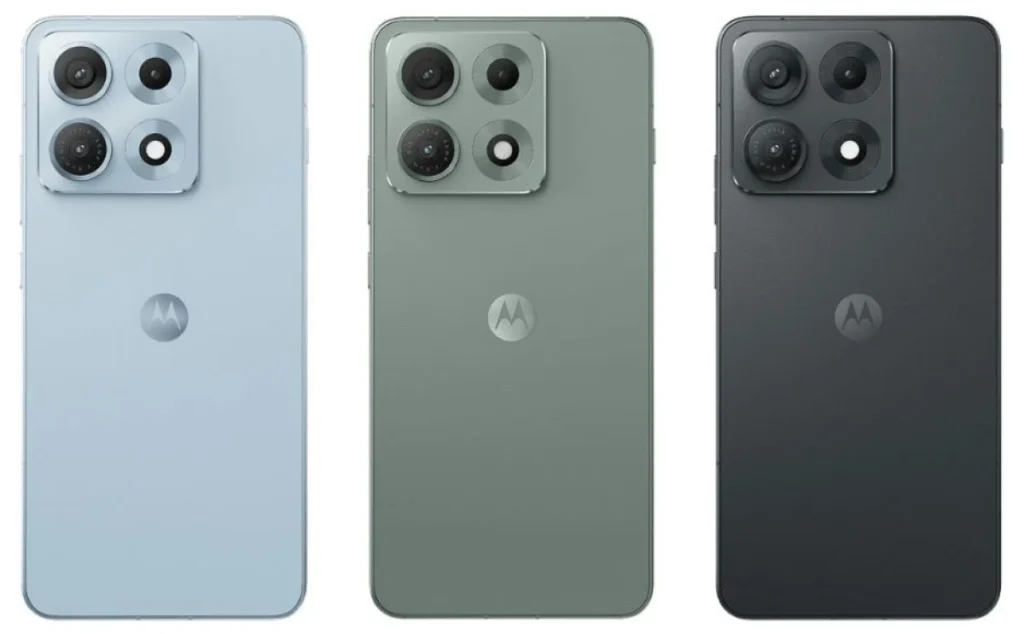
The smartphone industry has undergone a seismic shift regarding longevity. As consumers hold onto their devices for longer periods, the "software support window"—the duration for which a manufacturer provides Android OS upgrades and security patches—has become a cornerstone of the purchasing decision. In this competitive landscape, Motorola recently found itself at the center of a public relations headache regarding its new Edge 70 Max. Following a wave of consumer confusion and an editorial inquiry into conflicting information, the company has stepped forward to clarify its official policy.
The Core Controversy: A Tale of Two Footnotes
The controversy began when eagle-eyed consumers and tech enthusiasts began scrutinizing the product pages for the newly announced Motorola Edge 70 Max. On these regional websites, a glaring contradiction emerged. The primary marketing copy for the device prominently boasted "up to 3 Android OS upgrades and 5 years of security updates."
However, a closer inspection of the fine print—the footnotes that typically serve as the legal safety net for corporate claims—painted a different picture. Those sections explicitly cited "2 OS upgrades and 3 years of security updates."
This discrepancy did not merely represent a minor clerical error; it struck at the heart of consumer trust. In an era where flagship devices from competitors are increasingly offering seven-year support windows, a two-year difference in software longevity is a significant factor in determining the value proposition of a smartphone. The conflicting data left prospective buyers in a state of uncertainty: Was the Edge 70 Max a future-proof investment, or was it a device destined for early obsolescence?
Chronology of the Discrepancy
To understand the scope of the confusion, it is necessary to map out the timeline of this communication breakdown:
- Launch Day: Motorola introduces the Edge 70 Max with marketing materials promising a robust update cycle.
- Discovery Phase: Shortly after the product pages go live, early adopters and tech reviewers notice the mismatch between the bold, high-level claims and the restrictive footnotes.
- Public Discourse: Social media threads and forums begin to buzz with speculation. Users question whether the discrepancy is a result of a marketing pivot or a failure in quality control.
- Media Inquiry: Following an editorial investigation into the company’s inconsistent documentation, the industry press requests a formal clarification from Motorola’s communications department.
- Official Resolution: Motorola issues a statement confirming the higher tier of support (3 OS upgrades and 5 years of SMR), attributing the previous error to legacy data carryover.
Official Response: Motorola’s Stance
In response to inquiries, a representative from Motorola Mobility provided an official clarification that aims to put the matter to rest. The statement serves as both a confirmation of the device’s capabilities and a broader mission statement regarding the company’s adherence to global regulatory standards.
The representative stated:
"We can confirm that Edge 70 Max arrives with up to 3 OS upgrades and up to 5 years of SMR (Security Maintenance Releases). Lenovo and Motorola Mobility are committed to meeting the principles set out in the Lot X regulation and will continue to provide security, corrective and functionality updates to our phones and tablets, to help ensure the longevity and operation of our products. We are working to further enhance the longevity of our products through enhanced repair and OS update policies."
While this statement definitively answers the question regarding the Edge 70 Max, it also sheds light on the internal processes that led to the confusion. The industry consensus, supported by the nature of the error, suggests that the restrictive footnotes were likely "boilerplate" text—legacy copy from older, entry-level, or mid-range devices that was inadvertently carried over to the Edge 70 Max’s web template without being updated to reflect the new device’s specific specifications.
The "Lot X" Context: Why Regulatory Compliance Matters
Motorola’s mention of "Lot X" regulation is significant. As governments—particularly in the European Union—tighten regulations regarding the "Right to Repair" and device longevity, manufacturers are under increasing pressure to standardize their support cycles.
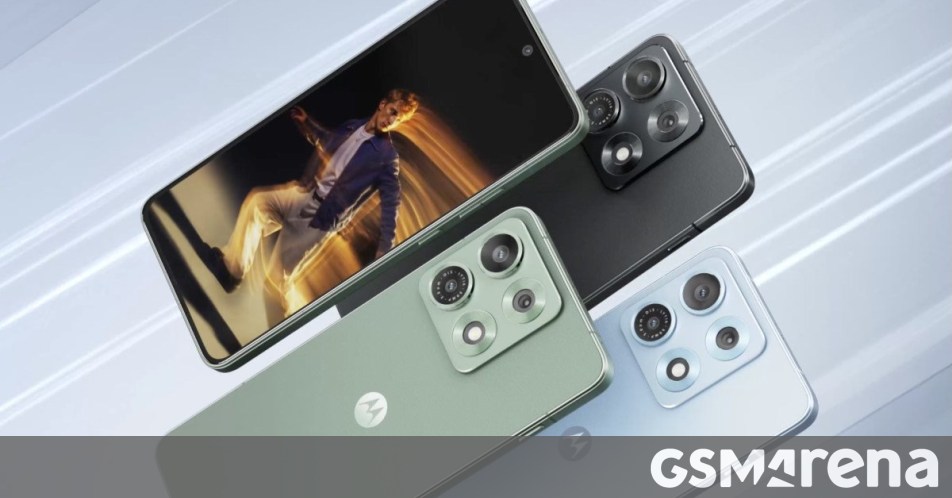
"Lot X" refers to the EU’s ecodesign requirements for smartphones and tablets. These regulations mandate that manufacturers provide security updates for a minimum period to prevent premature electronic waste. By aligning its messaging with these regulatory principles, Motorola is attempting to signal to both consumers and regulators that it is taking sustainability and product longevity seriously. However, the efficacy of this commitment is often judged by the consistency of the communication, which, in this instance, was clearly lacking.
Implications for the Smartphone Market
The fallout from this incident highlights three major trends currently shaping the mobile industry:
1. The Death of the "Secret" Policy
In the past, manufacturers could get away with vague promises. Today, the transparency of the internet means that every footnote, disclaimer, and product manual is subject to peer review. Any inconsistency between marketing claims and technical documentation is caught almost instantly.
2. The Weight of "Up To"
Motorola’s commitment uses the phrasing "up to." In legal terms, this is a double-edged sword. It allows the manufacturer flexibility, but it also allows them to technically fulfill their promise while delivering the bare minimum. If Motorola provides one OS upgrade and calls it "up to three," they are technically within their legal rights, even if they have failed the consumer in spirit. For the consumer, "up to" creates a lack of concrete expectations. A clearly defined minimum—for instance, "guaranteed minimum of 2 OS upgrades"—would provide significantly more security to the buyer.
3. Brand Trust and Longevity
When a company like Motorola, which sits in a highly competitive bracket, fails to maintain basic consistency in its documentation, it invites skepticism. Consumers who are considering a premium-priced device are looking for stability. If the marketing team cannot accurately describe the software policy, it raises questions about the company’s internal coordination. Does the engineering team talk to the marketing team? Is the commitment to long-term support a core design philosophy or a secondary marketing bullet point?
Moving Forward: The Need for Clarity
The incident involving the Edge 70 Max serves as a cautionary tale for the industry. As the smartphone market reaches a point of hardware saturation, software support has become the primary differentiator between brands.
For Motorola to regain and maintain the trust of its power-user base, it must prioritize absolute clarity in its communication. This includes:
- Standardized Dashboards: Implementing a centralized, public-facing database where users can look up the exact support lifecycle of any device by its model number.
- Eliminating Boilerplate Risks: Ensuring that web content management systems use dynamic variables for support policies rather than static text that requires manual updating.
- Prioritizing Minimums over Maximums: Shifting the conversation from "up to" (which focuses on the ceiling) to "guaranteed minimums" (which focuses on the floor). Consumers prefer to know the least they can expect, rather than the most that might happen under perfect conditions.
Conclusion
The Motorola Edge 70 Max is, on paper, a capable device that reflects a modern understanding of consumer needs. By confirming the 3 OS upgrade and 5-year security policy, Motorola has reaffirmed that the device is a competitive contender in the current landscape.
However, the journey to this clarification was unnecessarily turbulent. For a brand to succeed in the long term, its marketing must be as reliable as its hardware. While the footnote error may have been a simple administrative oversight, it serves as a stark reminder that in the eyes of the consumer, the document is the promise. Moving forward, Motorola—and indeed all manufacturers—must recognize that clarity is not just a customer service issue; it is a fundamental pillar of brand equity. As we move into the next generation of mobile computing, the companies that thrive will be those that treat their software update policies with the same precision and transparency as their hardware specifications.
The Edge 70 Max incident should be viewed as a turning point. If Motorola takes the lessons from this experience to heart, they can transform a momentary PR stumble into a commitment to better, more transparent communication. If not, they risk being left behind in an industry that is increasingly demanding accountability, clarity, and, above all, longevity.