Mumbai’s Traffic Paradox: Nitin Gadkari Calls for Infrastructure Overhaul After Personal Transit Delay
By Editorial Desk
September 14, 2026
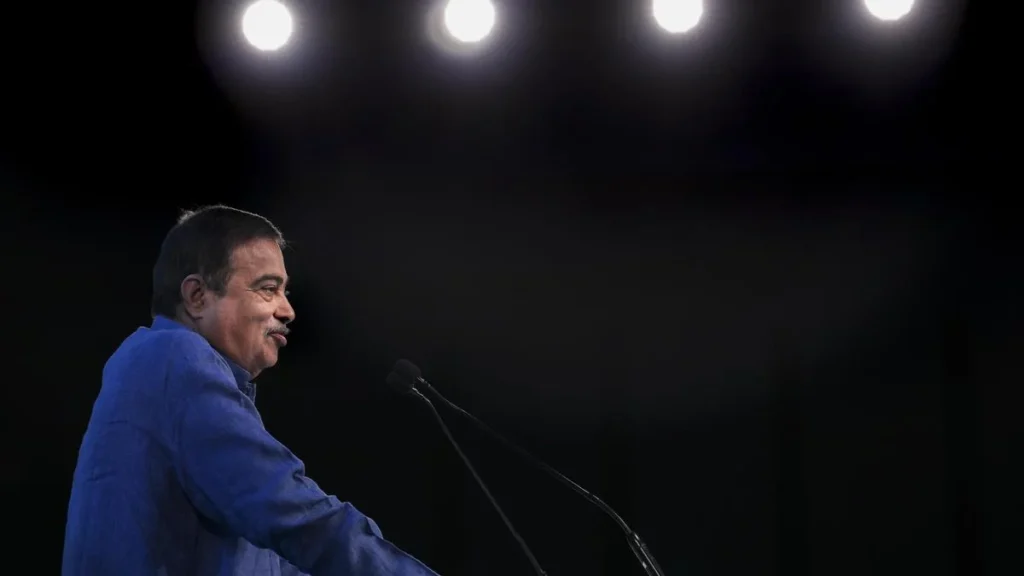
In a striking moment of self-reflection that underscored the persistent urban challenges facing India’s financial capital, Union Road Transport and Highways Minister Nitin Gadkari found himself at the mercy of the very infrastructure he helped pioneer decades ago. On September 11, 2026, while traveling from Worli to attend the 22nd Indo-American Corporate Excellence Awards, the Minister was delayed by an hour due to severe traffic congestion in Mumbai.
Rather than dismissing the delay as a mere logistical inconvenience, Mr. Gadkari utilized the experience as a catalyst for a broader policy discourse. Speaking before an audience of business leaders and dignitaries, he acknowledged that the flyovers and road networks developed during his tenure as Maharashtra’s Public Works Department (PWD) Minister in the 1990s—once hailed as the gold standard of urban connectivity—are now struggling to keep pace with the exponential growth in vehicular volume. His remarks have sparked a fresh debate on the necessity of technological modernization in urban planning.
The Chronology of a "Lesson in Infrastructure"
The event, hosted by the Indo-American Chamber of Commerce’s (IACC) West India Council, was intended to celebrate bilateral trade and economic innovation. However, the keynote address shifted toward the reality of urban mobility.
- The Journey: Mr. Gadkari’s transit from the upscale Worli district to the event venue was hampered by the gridlock that has become synonymous with Mumbai’s peak hours.
- The Admission: Upon reaching the venue, the Minister addressed the gathering with a touch of irony. "Today I got late by an hour," he remarked, candidly adding that he was effectively "paying for my own mistake"—a direct reference to the 55 flyovers and major road projects, including the Mumbai-Pune Expressway, that he championed during his early political career in Maharashtra.
- The Acknowledgement: The Minister noted that while these projects were pioneering in the 1990s, the engineering limitations of that era have been eclipsed by the sheer density of modern traffic.
The ceremony proceeded with the recognition of 13 award winners, with YES Bank MD and CEO Vinay Tonse serving as the guest of honour. Yet, the underlying message of the evening remained clear: India’s rapid economic expansion is outstripping its existing urban physical infrastructure.
Supporting Data and the Evolution of Engineering
The limitations cited by Mr. Gadkari are rooted in the shift from conventional civil engineering to multi-modal, high-density transit solutions. During his address, the Minister provided a comparative analysis of historical and future-ready infrastructure.

The Shift from Conventional to Multi-Level Design
Mr. Gadkari pointed out that the flyovers built in the 1990s were designed for a different era of traffic volume. As Mumbai’s population and vehicle registration numbers have skyrocketed, these structures have become bottlenecks rather than conduits.
- The Pune Model: As a template for future development, the Minister highlighted ongoing initiatives in Pune. The government is evaluating projects worth approximately ₹50,000 crore that prioritize vertical expansion.
- Vertical Integration: The proposed designs involve multi-level structures capable of accommodating different modes of transport simultaneously. For instance, these structures would feature roads constructed at various levels with a Metro corridor integrated above them.
- Global Benchmarking: The Minister explicitly mentioned the adoption of advanced engineering technologies imported from Malaysia, which allow for high-capacity transit in space-constrained urban environments.
Official Responses and Strategic Vision
The Minister’s remarks were not merely observations; they signaled a shift in policy direction. Mr. Gadkari revealed that he has already initiated discussions with Maharashtra Chief Minister Devendra Fadnavis regarding a systematic replacement of aging flyovers.
The Policy Pivot
The government’s proposed strategy involves:
- Auditing Aging Assets: A comprehensive review of 20th-century flyovers to determine which structures have reached their "service life" threshold.
- Technological Retrofitting: Replacing outdated, single-tier flyovers with modern, multi-level infrastructure that utilizes high-tensile materials and space-saving engineering.
- Coordination: Ensuring that urban road planning is synchronized with Metro and suburban rail expansions to create a seamless transit ecosystem.
Implications: The Indo-US Synergy
The setting of the event—an Indo-American Corporate Excellence Awards ceremony—provided the perfect backdrop for Mr. Gadkari’s vision of global collaboration. He argued that the challenge of urban congestion is not unique to India but is a global phenomenon that requires a marriage of American technological expertise and Indian entrepreneurial execution.
"We have the engineering capability and the vision, but we must integrate global technological resources to ensure our infrastructure is sustainable for the next 50 years," the Minister stated. He proposed a "win-win" model where U.S.-based firms specializing in smart-city technology and advanced traffic management systems collaborate with Indian contractors on large-scale infrastructure projects.
Economic and Urban Impact
The implications of this policy shift are manifold:

- Economic Productivity: Traffic congestion is not just a nuisance; it is a significant economic drain. By reducing transit time, the government aims to boost the overall productivity of the Mumbai Metropolitan Region (MMR).
- Sustainability: Modernizing infrastructure allows for better traffic flow, which reduces the carbon footprint of idling vehicles—a critical goal in India’s climate-conscious urban agenda.
- The Construction Sector: A massive push toward replacing old infrastructure with multi-level, tech-heavy designs will open significant opportunities for the engineering, procurement, and construction (EPC) sectors.
Conclusion: A City in Transition
Mumbai’s struggle with road congestion is a complex tapestry woven from decades of rapid urbanization, geographic constraints, and historical planning limitations. The fact that a Union Minister, tasked with the nation’s road network, faced the same daily struggle as the average commuter serves as a potent reminder of the work that remains.
Mr. Gadkari’s acknowledgment of his own past projects, viewed through the lens of modern requirements, demonstrates a rare level of political accountability. By advocating for the replacement of outdated structures with sophisticated, multi-level systems, the Ministry of Road Transport and Highways is signaling that the era of "conventional expansion" is over.
As Mumbai looks toward the future, the integration of vertical, multi-modal transit solutions—as proposed by the Minister—will be the litmus test for whether the city can maintain its status as India’s economic engine. The collaboration between domestic policy, global technology, and robust investment will be the defining factor in whether India’s infrastructure can finally catch up to its ambition.
The event, which celebrated the synergy between India and the United States, concluded with a call to action for the private sector: to participate in building a smarter, faster, and more efficient India. For the commuters of Mumbai, the hope is that this shift in policy will eventually lead to shorter journeys and a more functional urban landscape, proving that even the most congested cities can be reimagined through innovation and the courage to replace what no longer works.