Navigating the AI Era on LinkedIn: How to Master the Algorithm Without Losing Your Human Voice
By [Your Name/Journalist Desk]
Published: Social Media Marketing Insights
As artificial intelligence reshapes the digital landscape, few platforms have reacted as aggressively as LinkedIn. In recent months, the professional networking giant has quietly blocked billions of automated posting attempts and hundreds of thousands of daily spam comments. Armed with new peer-reporting tools and advanced detection mechanics, LinkedIn is drawing a hard line in the sand: AI should serve as an assistant, never a replacement for genuine human expertise.
Co-created by LinkedIn Ads expert AJ Wilcox alongside industry authorities Michael Stelzner and Jerry Potter, a comprehensive framework has emerged for modern marketers. To thrive on LinkedIn today, professionals must understand how to leverage AI strategically across content creation, commenting strategies, live streaming, and paid advertising without triggering the platform’s strict anti-slop filters.
The Main Facts: LinkedIn’s Content Crackdown and the AI Dilemma
The primary takeaway for digital marketers is that generic, unedited AI content—often colloquially termed "AI slop"—is actively penalized by user perception and algorithmic shifts. LinkedIn is shifting its internal product features away from generic generative text and toward proofreading tools that preserve an author’s unique voice.
Furthermore, Wilcox notes that the platform’s new reporting feature for AI-generated content currently functions as a training mechanism for its detection models. While a flagged post might not face immediate algorithmic suppression, its lack of authentic engagement pushes it to the bottom of the feed organically.
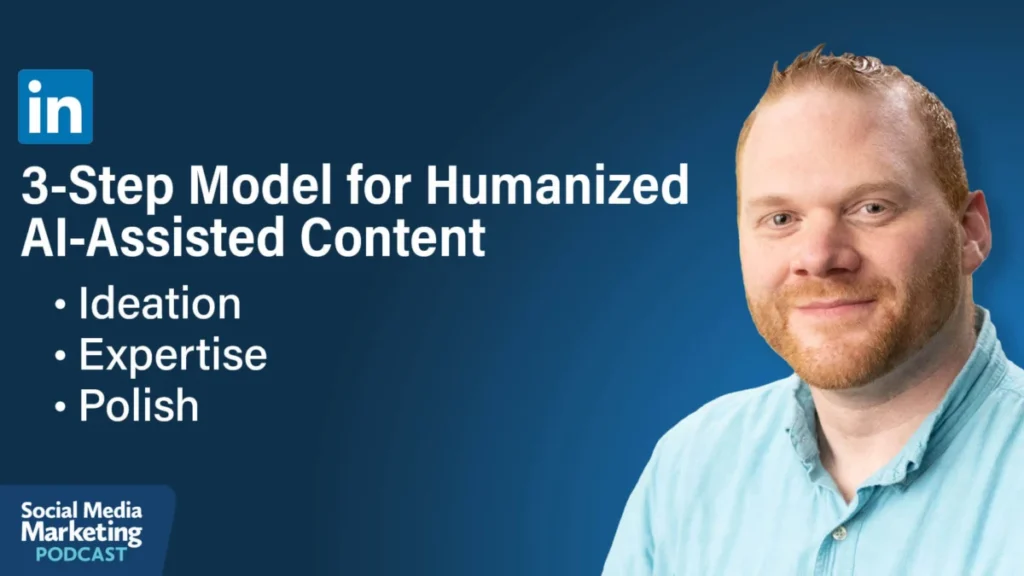
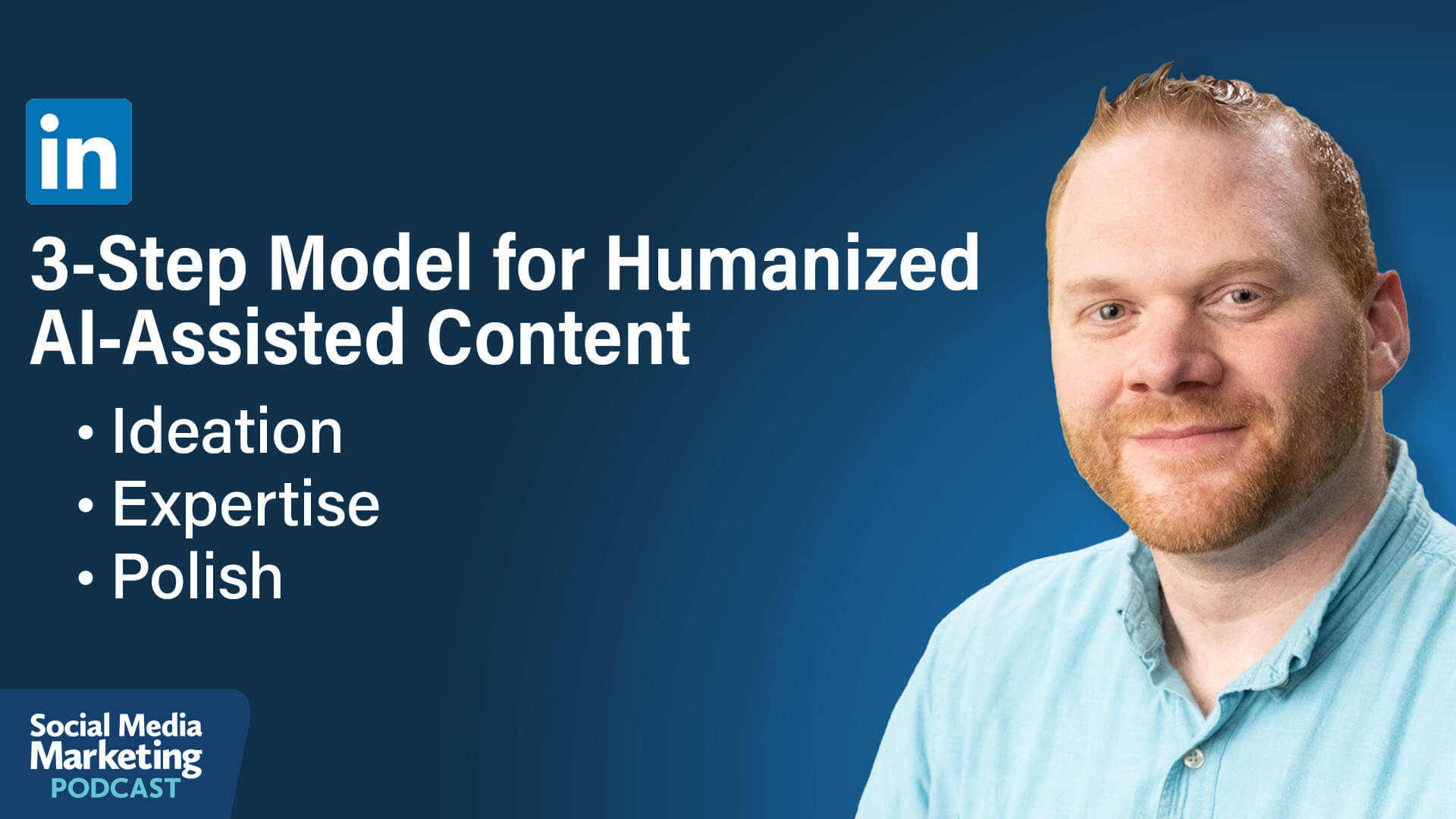
To combat this, creators are adopting the Ideation-Expertise-Polish Model, utilizing AI for the bookends of content production while keeping hard-earned human insights firmly in the center.
Chronology and Evolution of LinkedIn’s AI Integration
Understanding how LinkedIn reached this critical juncture requires looking at the timeline of recent platform rollouts and algorithm modifications:
- Late 2023 to Early 2024: LinkedIn introduces various generative AI writing assistants, leading to an immediate surge in formulaic, highly polished, but ultimately hollow posts and comments.
- Mid 2024: Comment impressions become publicly visible to the commenter, transforming the comments section into an independent growth engine. Concurrently, LinkedIn rolls out features allowing posts to maintain longevity in user feeds past the traditional 24-to-48-hour window.
- Late 2024: The platform announces a massive crackdown, blocking billions of automated posts and introducing user-facing reports for perceived AI slop. Native AI writing tools shift from "enhance your post" (which rewrote text into a robotic voice) to strictly proofreading applications.
- Current State: LinkedIn integrates AI features into live-stream management (automatic clip generation and chaptering) and ad platforms (headline and copy generation), forcing marketers to adapt their workflows to a tightly regulated ecosystem.
Supporting Data, Metrics, and Platform Mechanics
Marketers relying on guesswork will quickly find their metrics suffering. Data from platform usage and industry experts highlight specific tactical benchmarks:
- Posting Frequency: Publishing two posts per week on Tuesday and Thursday yields optimal engagement. For a single weekly post, Wednesday is the strongest day. Mondays and Fridays suffer from peak return-to-work competition and weekend mental disengagement, respectively.
- The Danger of Over-Posting: Publishing twice in one day is strictly discouraged; the second post cannibalizes the reach of the first.
- Comment Density: According to the head of LinkedIn’s company pages team, the primary metric for comments is "comment density"—the depth and substance of a conversation thread, rather than mere length or sheer number of back-and-forth exchanges.
- Ad Creative Limits: While LinkedIn recommends five or more ad variations per campaign for a presumed 20% bump in click-through rates, Wilcox warns that this practice breaks the platform’s frequency cap, causing costs to skyrocket. Sticking to 2 to 4 creatives per ad set is the recommended threshold.
- Live Stream Retentions: LinkedIn retains live stream replays for approximately six months—vastly outperforming Facebook’s 30-to-60-day window.
Official Responses and Platform Signals
LinkedIn’s product decisions speak volumes about its corporate stance on automation. By replacing generic rewriting tools with voice-preserving editors, the platform is signaling that authenticity is its primary currency.
Industry leaders like Wilcox suggest that the platform’s decision to allow users to flag AI content is not yet an automated penalty hammer, but rather a crowdsourced data-gathering effort. As these detection models mature, accounts that consistently rely on raw, unedited AI text risk complete algorithmic obscurity.
At the same time, LinkedIn is encouraging constructive human discourse by restructuring the feed to prioritize top comments and making comment impressions visible to all users. Time spent in comments across the platform has surged by 18% year-over-year, proving that conversations, not broadcast posts, are the true engine of modern LinkedIn growth.
Strategic Implications for Marketers and Creators
How should marketers pivot in light of these developments? The strategic roadmap can be broken down into three core pillars:

1. The "Sandwich" Content Creation Model
Treat AI like a sous-chef, not the head chef.
- Ideation (AI): Use tools to brainstorm angles, frameworks, and structural outlines.
- Human Expertise (You): Inject your proprietary data, client anecdotes, industry nuance, and lived experience. This is the non-negotiable core.
- Polish (AI): Clean up grammar, improve sentence scannability, and format for readability.
Beware of AI Tells: Avoid overusing em dashes, unnatural emojis, and dramatic clichés like "guard your mental faculties" or "this is silently killing you." Audiences spot these patterns instantly.
2. The Comment-Led Growth Strategy
For brands and individuals struggling to build an audience from scratch, original posting can be an uphill battle. Instead, leverage LinkedIn’s emphasis on comment visibility:
- Curate your feed by searching niche hashtags and connecting with industry peers.
- Target the critical 1-to-2-hour window after an authority figure publishes a post.
- Use open-ended discussion prompts like "Am I wrong?" or "What am I missing?" to invite diverse community replies.
- Apply the Ted Lasso Principle—be curious, not judgmental—when executing respectful disagreements: compliment the original post, state your differing take respectfully, and ask for others’ perspectives.
3. Streamlining Video and Ads
- Live Streaming for Executives: Lower the production barrier for busy CEOs by recording unscripted, interview-format live streams. Let LinkedIn’s AI automatically parse out 30-to-60-second vertical clips and chapter replays to extend discoverability.
- Paid Ad Restraint: Do not flood LinkedIn campaigns with Meta-style volumes of creative variations. Keep ad sets down to 2 to 4 variations to respect frequency caps and maintain cost efficiency.
Conclusion
The era of effortless, fully automated LinkedIn growth is over. However, for professionals willing to treat AI as a productivity multiplier rather than a thought substitute, the platform offers unprecedented opportunities for organic reach and authority-building. By combining high-level human insights with disciplined tactical execution, marketers can easily cut through the noise and build real, lasting professional relationships.