New Delhi Summit: BRICS Navigates a Fractured Geopolitical Landscape
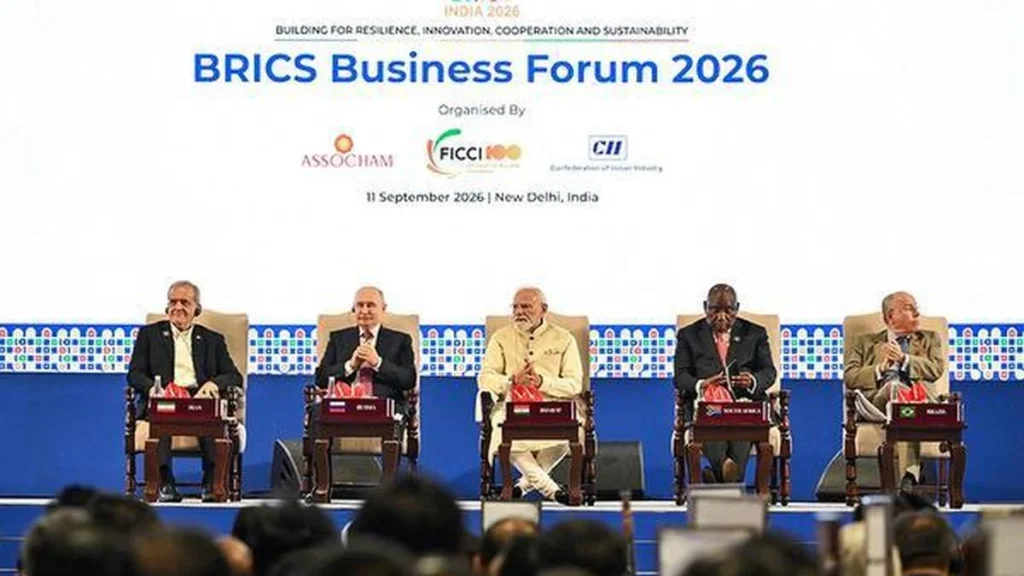
NEW DELHI – On September 12, 2026, the global diplomatic spotlight converged on New Delhi as leaders of the BRICS bloc—now an eleven-member powerhouse—gathered for a high-stakes summit. Hosted by Prime Minister Narendra Modi, the assembly seeks to solidify the coalition’s role as the definitive voice for the Global South, even as internal tensions and overlapping global crises threaten to fracture the group’s unified front.
The summit, which began on Saturday, comes at a pivotal juncture in international relations. With the world grappling with the protracted conflict in Ukraine, the volatile escalations in West Asia, and a deepening systemic rivalry between the United States and China, the BRICS nations are under pressure to prove that their diverse, often competing, interests can produce a cohesive agenda for economic and geopolitical reform.
The Core Mandate: Reshaping the Global Order
At its heart, the 2026 New Delhi Summit is a statement of intent. Since its inception in 2006 as a four-nation grouping (Brazil, Russia, India, and China), followed by the inclusion of South Africa in 2010, the bloc has evolved into a formidable economic entity. With the recent expansion to 11 members, the group now encompasses nearly half of the world’s population and controls a substantial, ever-increasing share of global GDP.
The central theme of this year’s discussions is the urgent need for a "multipolar reality." Member nations are advocating for a fundamental restructuring of international institutions, arguing that bodies like the United Nations, the World Bank, and the IMF remain relics of a post-WWII order that no longer reflects the current economic weight of developing nations.
Chronology of the 2026 Summit Preparations
The intensity of the diplomatic activity in New Delhi has been months in the making:

- May 2026: A critical turning point occurred during the BRICS Foreign Ministers’ meeting. Divisions over the conflict in West Asia proved too deep to bridge, resulting in the failure to produce a consensus joint statement—a rare crack in the bloc’s veneer of unity.
- September 10, 2026: Delegations began arriving in the Indian capital. Security protocols were initiated, with thousands of paramilitary personnel and police deployed to secure the city.
- September 11, 2026: Prime Minister Modi held a flurry of bilateral meetings, most notably with Russian President Vladimir Putin and Iranian President Masoud Pezeshkian. These sessions were designed to iron out potential friction points before the formal plenary sessions.
- September 12, 2026: The formal Leaders’ Session of the BRICS Business Forum commenced, marking the official opening of the summit.
Economic Sovereignty and the "De-Dollarization" Push
One of the most consequential topics on the table is the effort to reduce global reliance on the U.S. dollar. For several members, particularly those under Western sanctions or navigating trade barriers, "de-dollarization" is no longer just a theoretical goal but a strategic necessity.
The discussions in New Delhi are centered on three primary economic pillars:
- Local Currency Settlement: Expanding the use of domestic currencies for intra-bloc trade to minimize exposure to external financial shocks.
- Alternative Financial Infrastructure: Exploring blockchain-based or independent payment systems that could eventually offer a bypass to the Western-dominated SWIFT system.
- Supply Chain Resilience: Strengthening internal trade corridors to ensure food and energy security, specifically in response to the volatility caused by the wars in Ukraine and West Asia.
The Indian Tightrope: A Balancing Act of Diplomacy
For India, this summit serves as a masterclass in the "multi-alignment" strategy. New Delhi is currently engaged in a complex diplomatic dance: it maintains a deep-rooted, long-term strategic partnership with Moscow and has been actively deepening its ties with Tehran, while simultaneously strengthening its defense and technological cooperation with the United States, France, and other Western powers.
Prime Minister Modi’s challenge is to ensure that India’s role as the host does not alienate any of its partners. By framing the summit around "dialogue and diplomacy," India is positioning itself as a bridge-builder. Whether this will be enough to achieve a consensus joint statement—the ultimate barometer of the summit’s success—remains the central question of the weekend.
Official Perspectives and Behind-the-Scenes Friction
The presence of Iranian President Masoud Pezeshkian has added a layer of complexity to the summit. With Iran’s direct involvement in the conflicts in West Asia, the bloc is facing uncomfortable questions regarding its stance on regional stability. While some members are keen to maintain a neutral, pro-sovereignty stance, others are wary of being perceived as an "anti-Western" alliance.

"The BRICS bloc is not an anti-Western entity," stated one diplomat close to the negotiations, requesting anonymity. "It is a pro-Global South entity. The goal is to ensure that when the rules of the international game are rewritten, our voices are not just heard, but are the ones holding the pen."
Despite these sentiments, the friction remains palpable. The inability to agree on a joint statement in May serves as a warning of the fragility of the group’s unity. Observers are keenly watching for how the final declaration addresses—or avoids—the issue of the war in West Asia.
Global Implications: What Comes Next?
The implications of the New Delhi Summit extend far beyond the meeting halls. If the 11 nations can emerge with a unified stance on economic reform and institutional restructuring, they will significantly increase their leverage in upcoming G20 and UN summits.
However, if the summit fails to resolve the underlying tensions regarding regional conflicts, the bloc risks being viewed as a disorganized forum rather than a viable alternative to Western hegemony. For the Global South, the stakes could not be higher. Many developing nations are watching to see if BRICS can deliver concrete solutions to the food and energy crises that have plagued their economies since 2022.
Conclusion: The Path Forward
As the summit progresses, the eyes of the world remain fixed on the negotiations in New Delhi. The security measures surrounding the venue, the high-level bilateral discussions, and the public posturing of leaders like Putin, Xi, and Modi all point to a defining moment in the trajectory of the 21st-century global order.

Whether the 2026 BRICS Summit will be remembered as the moment the bloc found its true geopolitical weight, or as the moment its internal contradictions began to outweigh its collective ambitions, will depend on the final hours of diplomacy. For now, the message from New Delhi is clear: the emerging powers are determined to shape their own future, even if the road to consensus is paved with profound geopolitical obstacles.
As the leaders conclude their final sessions, the world waits for the "New Delhi Declaration"—a document that will serve as the litmus test for the future of the BRICS alliance.