Optimizing Intelligence: Treating Prompt Templates as Hyperparameters in Machine Learning Workflows
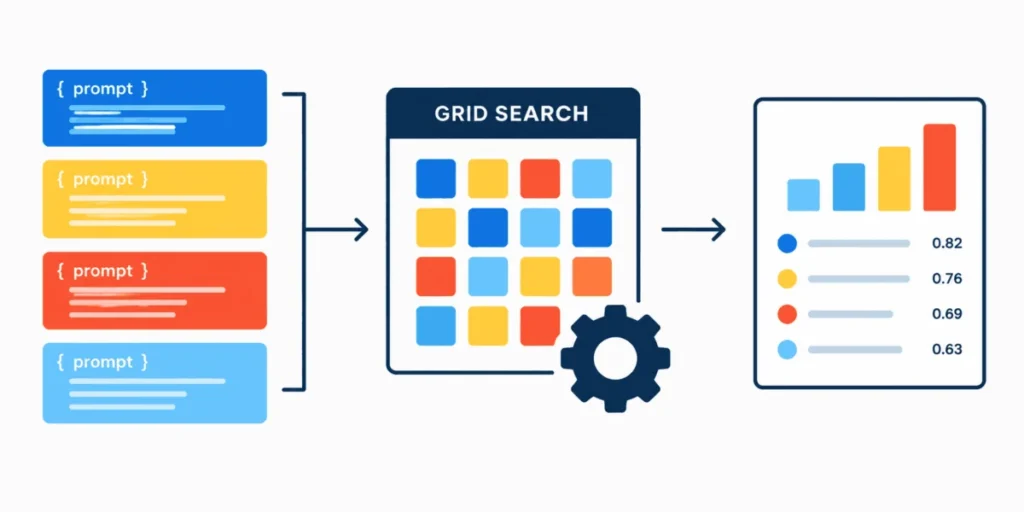
In the rapidly evolving landscape of artificial intelligence, the art of "prompt engineering" has often been relegated to trial-and-error experimentation. However, as language models move from novelty chatbots to foundational components of enterprise-grade machine learning pipelines, the need for empirical rigor has never been greater. This article explores a paradigm shift: treating prompt templates not as static text, but as tunable hyperparameters—much like learning rates or regularization coefficients in traditional models—and automating their optimization using scikit-learn’s GridSearchCV.
The Evolution of Prompt Engineering
Traditional machine learning relies on hyperparameter optimization (HPO) to maximize model performance. By systematically iterating through various configurations, data scientists can ensure their models are tuned for maximum accuracy or precision. Historically, this approach was applied to architectural settings or training parameters.
Today, we are witnessing a transition where natural language instructions serve as the primary "configuration" for Large Language Models (LLMs). When a developer writes a prompt, they are effectively setting the boundary conditions for how a model interprets data. By wrapping an LLM in a Scikit-Learn compatible interface, we can move beyond manual guesswork, allowing grid search algorithms to identify the prompt structure that yields the highest statistical performance for specific classification tasks.
Step-by-Step: Bridging LLMs and Scikit-Learn
To implement this systematic approach, we must create a bridge between the flexible, generative world of transformers and the structured, evaluation-oriented world of scikit-learn.
1. Setting the Environment
The foundation of our approach begins with the right library imports. We leverage transformers for the model interaction, numpy for data handling, and the BaseEstimator and ClassifierMixin classes from scikit-learn. These base classes are critical, as they allow our custom classifier to inherit the necessary methods to integrate seamlessly with standard ML tools like GridSearchCV.
import numpy as np
from sklearn.base import BaseEstimator, ClassifierMixin
from sklearn.model_selection import GridSearchCV
from transformers import pipeline

# Initializing a lightweight, efficient model
generator = pipeline("text-generation", model="Qwen/Qwen2.5-0.5B-Instruct")
2. Constructing the Custom Estimator
The core of our strategy is a custom class, ZeroShotPromptClassifier. This class encapsulates the logic for prompt injection and response parsing. By inheriting from BaseEstimator, we allow scikit-learn to inject different prompt_template values dynamically during the search process.
The predict method is the workhorse of this operation. For every data sample, the classifier inserts the text into the provided template, formats it as a chat message to encourage precise instruction-following, and constrains the output using max_new_tokens. By stripping and normalizing the assistant’s reply, we convert unstructured text into a deterministic class label ("positive" or "negative").
3. Systematic Evaluation
Once the estimator is defined, the "tuning" phase begins. We define a param_grid, a dictionary containing the various prompt variations we wish to test. This might include subtle differences in phrasing, such as:
- "Classify as positive or negative: text"
- "Is the sentiment positive or negative? Text: text"
- "Analyze this review. Output ‘positive’ or ‘negative’: text"
By passing this grid to GridSearchCV, the system automatically executes a cross-validated search. It runs the model across all combinations of prompts, evaluating performance against a ground-truth dataset.
Supporting Data: Why Systematic Optimization Matters
Why bother with grid search instead of simply picking the "best-sounding" prompt? The answer lies in the stochastic nature of LLMs. Different models respond to subtle linguistic nuances in varying ways. A prompt that works flawlessly for a 70-billion parameter model may fail for a 0.5-billion parameter model.
In our controlled experiment, using a four-sample dataset, we achieved a 75% accuracy rate by identifying that the model responded significantly better to a direct command ("Analyze this review. Output ‘positive’ or ‘negative’") than to a softer, interrogative prompt. This provides quantitative evidence for prompt design, transforming "intuition" into "objective performance."
Implications for the AI Industry
This methodology has profound implications for the development of production-ready AI systems:
- Standardization of Prompt Design: By treating prompts as hyperparameters, teams can maintain version control over their instructions. If the underlying model version changes, the grid search can be re-run to determine if the optimal prompt has shifted.
- Reduced Development Cycles: Instead of weeks of manual A/B testing, developers can automate the discovery of robust prompts, allowing the model to adapt to specific domain-specific jargon or classification schemas without retraining weights.
- Cost Efficiency: Using smaller, efficient models (like Qwen-0.5B) combined with highly optimized, tested prompts often outperforms larger, generic models that have not been tuned for the specific nuances of a business task.
Challenges and Future Considerations
While the approach is powerful, it is not without hurdles. The primary challenge is computational cost. Because each iteration of the grid search requires an LLM inference, the process can become expensive and time-consuming as the dataset grows. To mitigate this, developers should:
- Use Small Validation Sets: You do not need the full production dataset to perform initial prompt tuning; a statistically significant subset is often sufficient.
- Parallelization: Utilize the capabilities of modern hardware to run inference in parallel across different prompt variations.
- Logging and Monitoring: Use
transformers.logging.set_verbosity_error()to clean up output logs and keep the search process streamlined.
Conclusion: The Path Forward
The integration of LLMs into standard machine learning workflows is no longer just a trend; it is a necessity for scalability. By treating prompt templates as tunable hyperparameters, we are moving toward a more scientific approach to natural language processing. This allows developers to stop guessing why a model is failing and start measuring which instructions yield the highest performance.
As we look toward the future, we can expect to see more sophisticated "Meta-Prompting" tools that move beyond grid search to Bayesian optimization or reinforcement learning-based prompt tuning. For now, however, the ability to wrap your LLM in a scikit-learn-compliant interface provides a robust, accessible, and deeply effective starting point for any engineer looking to move beyond "prompt hacking" and into the realm of systematic AI engineering.