Parliament Monsoon Session Day 4: Deadlock Persists as Opposition Demands Accountability Over NEET Crisis
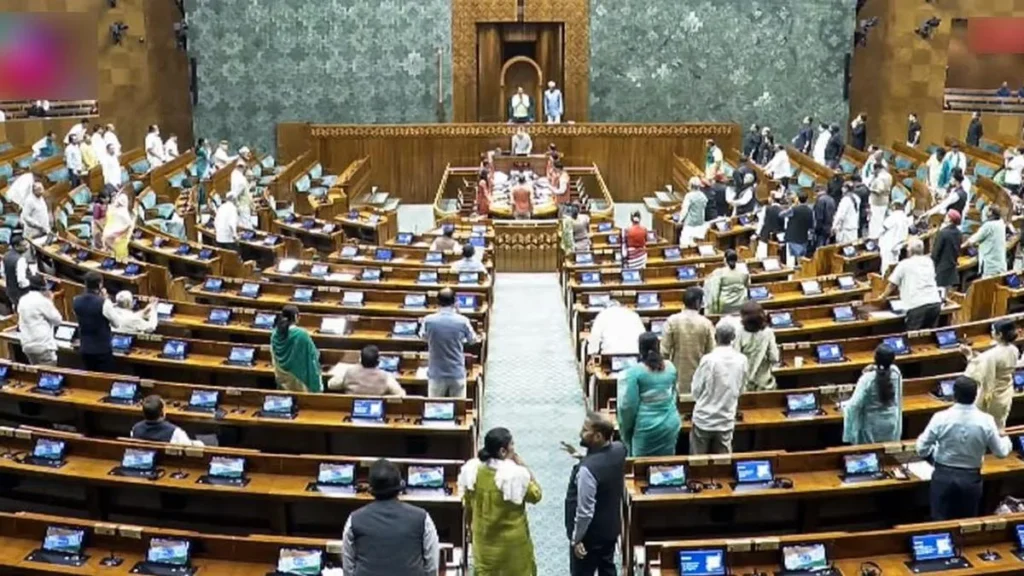
New Delhi, July 23, 2026 – The Monsoon Session of the Indian Parliament entered its fourth consecutive day of turmoil on Wednesday, as both the Lok Sabha and Rajya Sabha were adjourned shortly after convening. The legislative agenda, intended to address critical national infrastructure and judicial reforms, has been effectively sidelined by a fierce standoff between the Treasury benches and the Opposition over the recurring NEET (National Eligibility-cum-Entrance Test) examination paper leak controversy and alleged police misconduct against protesting students.
As the session continues to face repeated disruptions, the core of the impasse rests on the Opposition’s uncompromising demand for the resignation of Union Education Minister Dharmendra Pradhan. Conversely, the government, led by Minister of Parliamentary Affairs Kiren Rijiju, has accused the Congress-led Opposition of stalling proceedings by imposing "pre-conditions" on parliamentary debates.
Main Facts: The Anatomy of the Standoff
The current parliamentary deadlock is defined by two distinct, yet interconnected, crises:
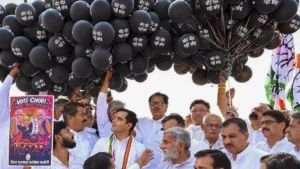
- The NEET Paper Leak Scandal: Following widespread reports of irregularities and paper leaks in the 2026 NEET examinations, student organizations and political parties have mounted a massive protest campaign. The Opposition argues that the scale of the failure warrants the immediate resignation of the Union Education Minister, citing moral responsibility.
- Allegations of Police Brutality: Recent protests by student activists in the national capital against the Ministry of Education were met with heavy-handed police action, according to opposition leaders. They are demanding a dedicated parliamentary debate on what they term "state-sponsored brutality" against the youth.
The legislative work for the fourth day—which included the consideration of the Supreme Court (Number of Judges) Amendment Bill, 2026—remains in limbo. With neither side willing to yield ground, the productivity of the Monsoon Session has reached a historical low, with the first three days yielding virtually no legislative business.
Chronology of the Monsoon Session 2026
- July 20 (Day 1): The session opened with high expectations, but proceedings were immediately disrupted. The Opposition raised the NEET issue, leading to multiple adjournments.
- July 21 (Day 2): Discussions remained suspended as protests intensified. The government maintained its stance that the Education Minister would provide a statement only after order was restored.
- July 22 (Day 3): Parliamentary business was once again halted. Outside the House, tension grew as reports of student detentions reached the Opposition benches, fueling further vitriol in the chambers.
- July 23 (Day 4): Both Houses met at 10:41 AM. Within minutes of the session starting, the Speaker and the Chairman were forced to adjourn the Houses until noon due to slogans and the lack of a conducive environment for debate.
The Political Divide: Official Responses
The Government’s Position: "Conditions Stifle Debate"
Union Minister Kiren Rijiju addressed the Rajya Sabha this morning, expressing the government’s frustration with the current state of play. "The government is ready to have a comprehensive discussion on the NEET issue in both Houses today. However, the Congress party has insisted on setting specific conditions for this debate. This clearly indicates that their intent is not to reach a solution but to prevent the House from functioning," Rijiju stated.
The government has characterized the Opposition’s demand for the Education Minister’s resignation as "politically motivated obstructionism" intended to distract from the substantive reforms the government aims to pass, such as the Supreme Court (Number of Judges) Amendment Bill.

The Opposition’s Stance: "Accountability is Non-Negotiable"
Leader of the Opposition (LoP) in the Rajya Sabha, Mallikarjun Kharge, remains the face of the dissenting voice. Speaking to the media, Kharge reiterated that the integrity of the NEET examination is a matter of national importance involving millions of students.
"The Education Minister must step down. You cannot have the same individual overseeing an investigation into a system that collapsed under his watch," Kharge asserted. Furthermore, he criticized Prime Minister Narendra Modi’s recent announcement regarding the establishment of fast-track courts for paper leak cases, labeling the move "instigative" rather than "substantive," and arguing that it fails to address the root causes of the administrative failures.
Supporting Data and Context
The NEET Crisis: A Brief Background
The 2026 NEET examination, the gateway for thousands of students to medical schools across India, has been mired in controversy following reports that question papers were leaked and sold in various states. This has led to a nationwide outcry, with students questioning the efficacy of the National Testing Agency (NTA).
Legislative Agenda Stalled
The government’s primary agenda for this week included:
- The Supreme Court (Number of Judges) Amendment Bill, 2026: A critical piece of legislation aimed at addressing the mounting backlog of cases in the Indian judiciary by increasing the authorized strength of judges.
- Public Accounts Committee (PAC) Reports: The PAC was scheduled to present several reports on financial irregularities in public sector undertakings. These reports are considered vital for transparency in government spending.
Opposition members—including Sougata Ray, NK Premachandran, and Adv. Dean Kuriakose—have already moved statutory resolutions expressing their disapproval of the Supreme Court Amendment Bill. Their dissent is expected to lead to a fierce debate if and when the session resumes.
Implications for Indian Democracy
The persistent adjournment of the Parliament has profound implications for the nation’s governance. When the legislature fails to function, the "check and balance" mechanism inherent in the parliamentary system is weakened.

1. The Impact on Students
The primary victims of this stalemate are the students waiting for clarity on the re-examination process. The lack of a parliamentary resolution means that the government’s response to the NEET crisis remains limited to administrative orders, which the public and the opposition are currently rejecting as insufficient.
2. The Erosion of Parliamentary Norms
Political analysts note that the frequent use of adjournments by the Chair—while necessary to maintain decorum—has become a default mechanism rather than a last resort. This trend, if it continues, risks reducing the Parliament to a venue for protest rather than a forum for lawmaking.
3. Economic and Judicial Consequences
The delay in passing judicial reforms like the Supreme Court (Number of Judges) Amendment Bill has a cascading effect on the economy. A sluggish judicial system discourages investment and delays justice for ordinary citizens. As the session progresses, the government will face increasing pressure to bypass the stalemate, potentially through ordinance routes, which would further deepen the rift between the executive and the legislature.
Future Outlook
As of the latest update, the Rajya Sabha and Lok Sabha remain adjourned. The government has signaled that it will persist in its attempt to table the legislative agenda, while the Opposition has made it clear that it will not allow the House to conduct business until their grievances regarding the Education Ministry are addressed.
The coming days will be a test of political negotiation. Whether the Speaker and the Chairman can facilitate a middle ground—perhaps by allowing a short-duration discussion on the NEET issue prior to the legislative agenda—remains to be seen. For now, the Monsoon Session 2026 continues to be defined by the sound of shouting, the banging of desks, and the silence of empty legislative benches.
Follow The Hindu for continuous updates as the situation in New Delhi evolves.