RBI Governor Sanjay Malhotra at Global Fintech Fest 2026: Balancing Quantum Innovation with Fiduciary Trust
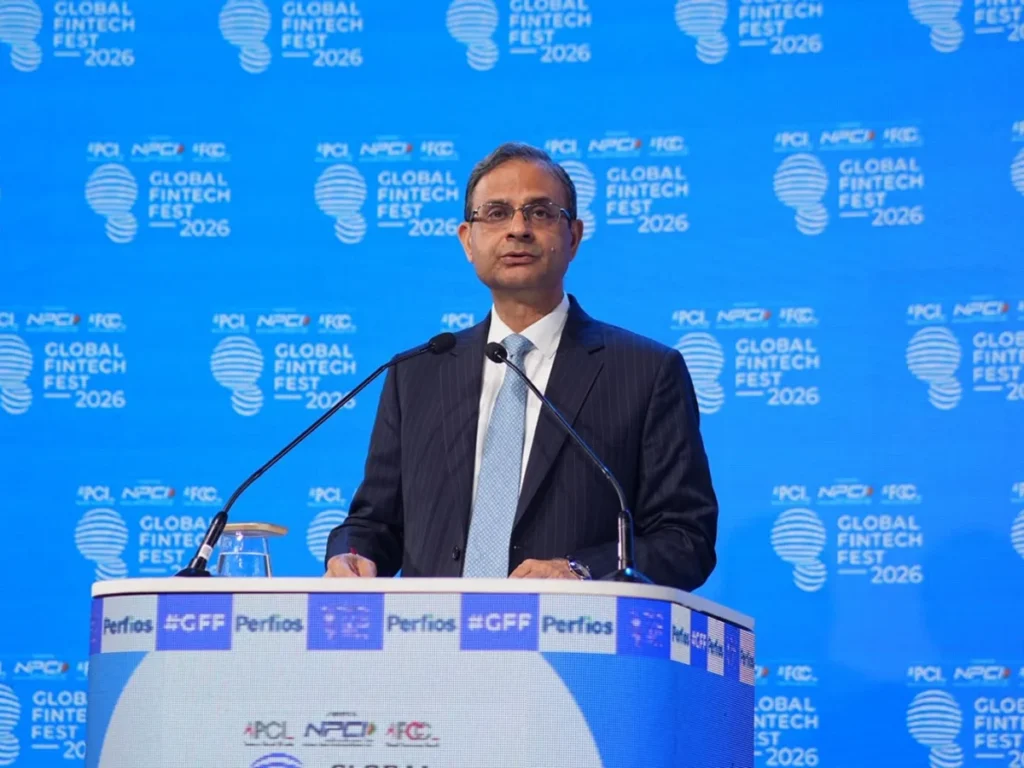
MUMBAI — In a wide-ranging and visionary keynote address delivered today at the Global Fintech Fest (GFF) 2026, Reserve Bank of India (RBI) Governor Sanjay Malhotra outlined a definitive roadmap for the country’s digital financial architecture. Addressing a packed auditorium of global fintech founders, policy architects, banking executives, and investors, Governor Malhotra issued a compelling call to action: fintechs must aggressively leverage cutting-edge technologies like Artificial Intelligence (AI), tokenisation, and quantum computing, but they must anchor every innovation in an unyielding foundation of consumer trust and data security.
The high-profile address coincided with a slew of major regulatory and technological unveilings, including the commercial launch of UPI Tap & Pay, the debut of the AI-driven MyUPI platform, a joint RBI-SEBI framework for the tokenisation of corporate bonds, and the formal recognition of the Unified Fintech Forum (UFF) as the newest Self-Regulatory Organisation (SRO) for the sector.
Governor Malhotra’s remarks echoed the core philosophies laid down earlier in the day by Prime Minister Narendra Modi during his inaugural address at GFF 2026, where the Prime Minister underscored the urgent necessity for the fintech industry to move beyond basic payment aggregation and deeply penetrate underserved verticals such as credit, micro-insurance, and pensions.
1. Main Facts and Major Announcements
The central bank’s sweeping announcements at GFF 2026 represent a structural maturation of India’s digital economy, shifting from a period of aggressive user acquisition to a phase of deep sector expansion, institutional risk management, and global technological export.
Key Unveilings at GFF 2026:
- UPI Tap & Pay: Designed to streamline retail checkout experiences, this new feature allows users to execute UPI transactions instantly by tapping Near Field Communication (NFC)-enabled smartphones directly onto compatible Point-of-Sale (PoS) terminals, bridging the gap between card-based tap payments and India’s ubiquitous instant payment rails.
- MyUPI Platform: Powered by the National Payments Corporation of India’s (NPCI) proprietary Small Language Model (FiMI), MyUPI is an AI-driven, centralized hub designed to offer users a unified, holistic view of all their UPI transactions and AutoPay mandates distributed across multiple banking applications and third-party apps.
- Corporate Bond Tokenisation Framework: In a collaborative leap with the Securities and Exchange Board of India (SEBI), the RBI introduced a formal regulatory and operational framework for the tokenisation of corporate bonds, aiming to bring fractional ownership, enhanced liquidity, and blockchain-based transparency to India’s debt markets.
- Unified Fintech Forum (UFF) as SRO: Marking a vital step in co-regulation, the RBI officially recognized the UFF as the fintech sector’s second Self-Regulatory Organisation (following the Fintech Association for Consumer Empowerment, or FACE), institutionalizing industry-led accountability and compliance.
2. Chronology of the Fintech Evolution: From Scale to Depth
To understand the weight of Governor Malhotra’s directives at GFF 2026, it is essential to trace the chronological trajectory of India’s fintech revolution over the past decade.
Phase I: Building the Rails (2016–2020)
Following the demonetization shock in late 2016 and the rapid rollout of India Stack—encompassing Aadhaar, UPI, and the Account Aggregator framework—the primary objective of the Indian financial ecosystem was simple: interoperability and scale. During this era, startups prioritized user onboarding, driving down the marginal cost of digital transactions, and normalising cashless behavior among a traditionally cash-centric population.
Phase II: The Unicorn Surge & Regulatory Realignment (2021–2024)
As transaction volumes exploded into the tens of billions per month, systemic risks emerged. The RBI and other financial regulators had to pivot from an entirely permissive sandbox model to proactive risk-mitigation. Issues regarding digital lending predatory practices, unauthorized data harvesting, and cyber hygiene compelled the central bank to tighten digital lending guidelines, tighten KYC norms, and conceptualize the SRO framework.
Phase III: Global Leadership and Deep Financial Inclusion (2025–2026 and Beyond)
As marked by GFF 2026, India’s fintech story has entered its third major epoch. Having successfully digitized urban and semi-urban payments, the focus has pivoted decisively toward the unserved and underserved segments. The goal is no longer merely processing high-volume, low-value P2P transactions; rather, it is about deploying AI and advanced cryptography to engineer viable micro-credit, micro-pension, and small-ticket insurance products for the last mile.
3. Supporting Data and Socio-Economic Imperatives
Governor Malhotra’s policy imperatives are backed by stark economic realities. While India boasts the world’s highest volume of real-time digital payments—accounting for nearly 46% of global real-time transactions—formal credit penetration in rural and informal segments remains disproportionately low.
- The Last-Mile Gap: Traditional banking institutions, constrained by legacy physical infrastructure and high customer acquisition costs, routinely struggle to economically service micro-enterprises, self-employed women entrepreneurs, MSMEs in Tier-III and Tier-IV towns, and small or marginal farmers.
- The Opportunity in the Informal Economy: According to recent industry estimates, India’s informal sector employs over 80% of the country’s workforce but captures a fraction of institutional credit. Malhotra emphasized that fintech enterprises possess the unique computational agility to bridge this gap through data-driven underwriting models.
- Fourfold Mandate: Reiterating the structural objectives outlined by Prime Minister Modi, the RBI governor underscored four pillars for the fintech sector:
- Universal and equitable consumer service.
- Unmet financial needs fulfillment (credit, pensions, insurance).
- Radical enhancement of operational efficiency.
- Proactive containment of sophisticated financial frauds.
4. Official Responses and Industry Perspectives
The reception to Governor Malhotra’s address among industry leaders has been overwhelmingly positive, albeit tempered by the sobering reminder that compliance and cybersecurity must keep pace with innovation.

Speaking on the sidelines of the summit, fintech association heads noted that the formal recognition of the Unified Fintech Forum (UFF) as an SRO marks a watershed moment. For years, the industry operated in a regulatory grey zone, often caught between aggressive commercial scaling and sudden compliance clampdowns. By empowering an SRO like UFF, the RBI is effectively handing the pen to the industry to draft codes of conduct, thereby fostering a collaborative regulatory environment.
Furthermore, reactions to the Corporate Bond Tokenisation Framework have been exceptionally bullish from institutional investors and wealth-tech platforms. By leveraging distributed ledger technology and tokenisation, the joint RBI-SEBI initiative is expected to democratize access to high-yield corporate debt, allowing retail investors to participate in fractional bond issuances with unprecedented settlement speeds.
Regarding the launch of MyUPI, fintech developers have praised the integration of NPCI’s Small Language Model (FiMI). By embedding contextual intelligence directly into the payment interface, users can now query transaction histories, receive real-time alerts regarding payee legitimacy, and instantaneously execute safety protocols like the "Safety Switch" if an account breach is suspected.
5. Systemic Implications: Trust as an Operating Discipline
Perhaps the most resonant theme of Governor Malhotra’s address was his conceptualization of trust not as a marketing catchphrase, but as a rigid "operating discipline."
Fiduciary Responsibility over Data
In an era where consumer data is frequently weaponized for targeted advertising or compromised through lax cybersecurity controls, the RBI governor issued a strict warning: fintechs must treat customer data as a sacred fiduciary responsibility. Rapid execution and aggressive capital burning without building an impregnable security fortress are fundamentally unsustainable strategies in the Indian market.
"Trust is built transaction by transaction over years," Malhotra remarked during his address. "Yet, it can be lost in a single episode over a matter of minutes."
Regulation and Innovation as Reinforcing Pillars
By establishing frameworks like the corporate bond tokenisation guidelines, rolling out advanced NFC-based payment systems, and partnering with international entities to export India’s Digital Public Infrastructure (DPI), the RBI is signaling that regulation is no longer an adversary of innovation. Instead, robust regulation creates the structural certainty required for institutional capital and foreign direct investment to flow unhindered into the ecosystem.
Global Expansion of Indian DPI
Malhotra closed his keynote by pointing outward. Many emerging economies across the Global South face socio-economic challenges mirroring India’s historical hurdles—financial exclusion, lack of formal digital identity, and fragmented payment rails. By packaging India’s interoperable financial infrastructure, affordable payment layers, and trusted innovation models for global adaptation, Indian fintechs are uniquely positioned to spearhead the next wave of global financial architecture.
As GFF 2026 continues its deliberations in Mumbai, the message from the central bank is clear: the sandbox doors remain open, the innovation hubs are active, but the ticket to the future is earned through unwavering allegiance to consumer security, systemic resilience, and the relentless pursuit of financial inclusion for the last citizen in the remotest corner of the nation.