SaffronStays Secures $3.5 Million to Scale Premium Holiday Home Market Amidst Industry Consolidation
Executive Summary: A Strategic Infusion
Mumbai-based boutique hospitality platform SaffronStays has successfully closed a $3.5 million (approximately INR 29 Crore) funding round. The investment, comprised of a strategic mix of primary capital infusion and a secondary stake sale, underscores a shifting investor appetite toward sustainable, profit-first models in the travel-tech sector. The round was spearheaded by Infinity Ventures, with participation from several high-profile family offices. Notably, the transaction saw a partial exit for existing investor Sixth Sense Ventures, which had previously anchored the startup’s $2 million seed round.
This capital injection arrives at a pivotal juncture for the Indian hospitality industry, where the demand for managed, high-end vacation villas has surged post-pandemic. SaffronStays, which curates and manages operations, branding, and guest experiences for private vacation homes, intends to utilize these funds to fortify its technological infrastructure, deepen its presence in emerging leisure destinations, and expand its portfolio of managed properties nationwide.
The Chronology of Growth: From Inception to Market Maturity
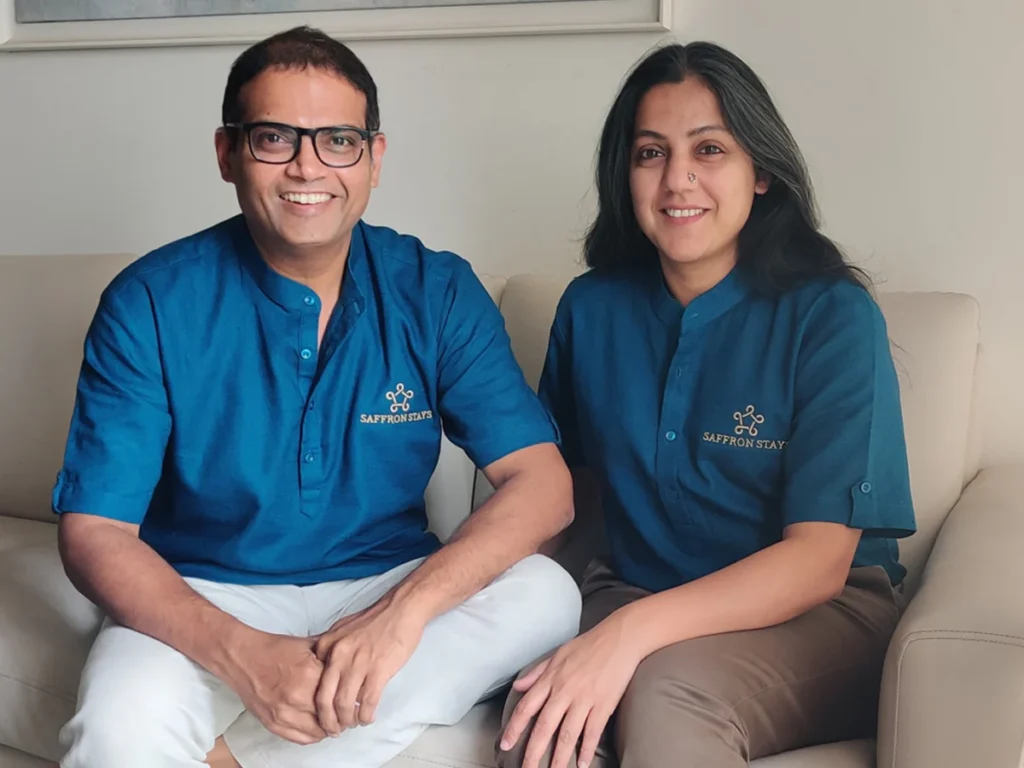
Founded in 2015 by the husband-wife duo Devendra and Tejas Parulekar, SaffronStays began with a vision to bridge the gap between luxury vacation homeowners and travelers seeking curated, experiential stays.
- 2015–2018: The Foundation Years: The startup focused on establishing a niche brand identity, emphasizing the curation of premium homes rather than mass-market inventory.
- 2019: Early Validation: With the support of Sixth Sense Ventures, the company secured its seed funding of $2 million. This allowed the founders to refine their operational model, which involves not just listing, but actively managing the hospitality services of the properties.
- 2020–2022: The Pandemic Pivot: While the broader travel sector faced existential threats, SaffronStays leveraged the "work from anywhere" and "staycation" trends. Their model of managing private villas proved resilient as travelers sought safety and seclusion, accelerating the company’s growth trajectory.
- 2023–2024: Scaling for Profit: Having achieved profitability for four consecutive years, the company shifted its focus toward institutionalizing its business units and optimizing direct-to-consumer (DTC) channels.
- 2024 (Current): The $3.5M Injection: The latest funding round validates the company’s "profit-first" strategy, setting the stage for a more aggressive pan-India expansion.
Supporting Data: The Anatomy of Success
SaffronStays’ value proposition lies in its divergence from the "growth at all costs" mantra that dominated the startup ecosystem for much of the last decade. The company’s performance metrics provide a compelling case study in operational discipline:
1. Operational Profitability
SaffronStays has maintained profitability for four consecutive years. In an industry notoriously plagued by high customer acquisition costs (CAC) and thin margins, this is a significant outlier.
2. Portfolio Expansion
Over the past three years, the platform has grown its property portfolio by more than 150%. This growth has been achieved without compromising the quality of the "curated" experience, a challenge that many aggregator-style hospitality platforms fail to navigate.
3. The Power of Direct Channels
A defining metric of the company’s independence is its reliance on its own ecosystem. Currently, nearly 70% of the platform’s business is driven by its direct booking channel. This reduces dependence on third-party Online Travel Agencies (OTAs) and significantly lowers commission-based overheads, allowing for healthier margins.
Official Perspectives: The Founders’ Vision
Reflecting on the funding and the company’s trajectory, co-founder Devendra Parulekar emphasized that the capital is a tool for acceleration rather than a lifeline for survival.
"SaffronStays has always focused on building a sustainable and profitable hospitality platform rather than chasing growth at any cost," said Parulekar. "Throughout this journey, we have remained profitable while continuing to invest in technology, operations, and guest experience. This capital raise allows us to accelerate those investments and further strengthen our position in India’s managed holiday-home market."
The founders have laid out an ambitious roadmap: the creation of five distinct regional business units. Each unit is tasked with the mandate of achieving INR 100 Crore in annual business. This regional-first approach is designed to ensure that as the company scales, it maintains the localized quality control and deep operational knowledge that have become the hallmarks of the SaffronStays brand.
Market Implications: The Premiumization of Indian Hospitality
The hospitality landscape in India is undergoing a structural shift. The "premiumization" of the holiday home sector is no longer a peripheral trend but a central pillar of the hospitality industry’s future.
The Competitive Landscape
SaffronStays operates in a segment that is increasingly attracting interest from industry giants. OYO, through its parent company PRISM, has pivoted toward the premium segment to cater to a more discerning demographic. Notably, OYO’s subsidiary, Sunday PropTech, secured INR 50 Crore last year to launch 40 new four- and five-star properties. This shift indicates a broader industry movement: moving away from the franchise-heavy, budget-hotel model toward "company-serviced" models that promise higher reliability and luxury.
The "Managed Home" Revolution
For high-net-worth individuals who own vacation homes, the management of these properties—maintenance, security, staffing, and marketing—is a logistical nightmare. SaffronStays solves this by acting as a full-service hospitality partner. This model provides a "win-win" scenario:
- For Homeowners: Asset monetization with professional care.
- For Travelers: Standardized luxury in unique, private environments.
- For Investors: A scalable business model that benefits from the increasing asset base without the capital expenditure of building new real estate.
Technology as a Differentiator
As SaffronStays scales, the role of its technology stack becomes critical. The company is investing in proprietary reservation systems, dynamic pricing algorithms, and guest experience management tools. By automating the backend, the platform ensures that even as the portfolio expands from dozens to hundreds of properties, the standard of service remains consistent—a common hurdle that has tripped up many competitors.
Future Outlook: Challenges and Opportunities
While the outlook for SaffronStays remains bullish, the company faces a complex market environment. As tourism in India evolves, the startup will need to navigate:
- Regulatory Hurdles: The short-term rental market is subject to changing local regulations regarding taxation, safety, and community impact.
- Maintaining Exclusivity: The challenge of scaling a "curated" brand is the potential dilution of the guest experience. Maintaining the premium feel while adding inventory at a rapid clip will require a sophisticated balance of human-led curation and AI-driven operations.
- Regional Competition: With OYO and other boutique hotel chains entering the premium segment, the battle for the "best" villas in prime locations will intensify.
However, by maintaining its focus on the direct-booking channel, SaffronStays is insulating itself from the price wars that define the OTA-led economy. Its target of INR 100 Crore per regional unit is not merely a revenue goal; it is a signal to the market that the company intends to become a dominant, decentralized entity in India’s hospitality infrastructure.
Conclusion
The $3.5 million funding of SaffronStays is a testament to the maturation of the Indian travel-tech ecosystem. Investors are increasingly favoring companies that demonstrate operational efficiency, brand loyalty, and a clear path to profitability. As the company looks to expand its footprint, its ability to maintain its "profit-first" ethos while scaling rapidly will be the ultimate test. For now, SaffronStays stands as a prime example of how curated, tech-enabled hospitality can carve out a sustainable niche in a competitive market, setting a benchmark for the next wave of Indian hospitality innovation.