Telangana Assembly Focuses on Land Governance: CM Revanth Reddy Defends Section 22A Prohibited List
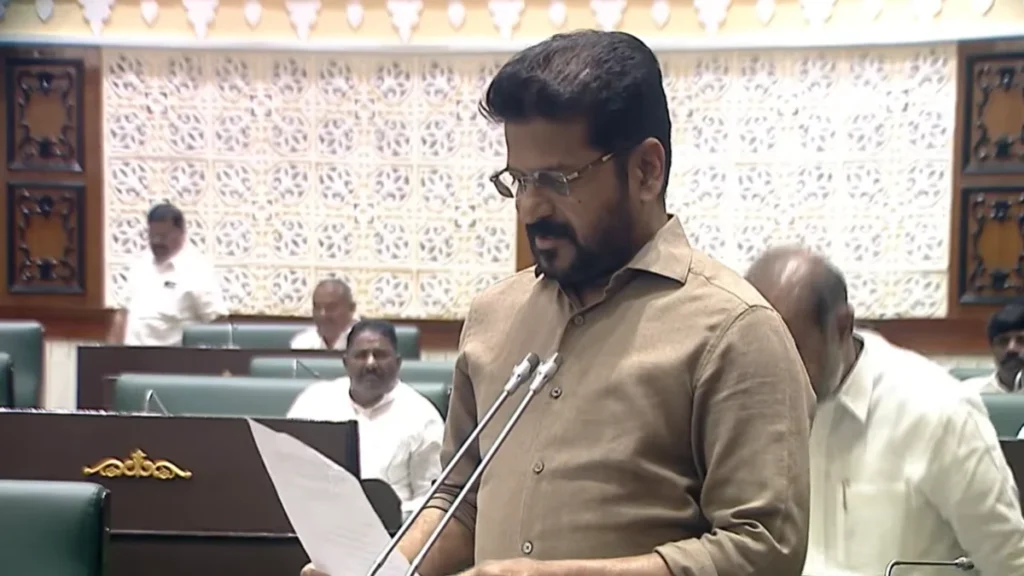
Hyderabad, September 16, 2026: The Monsoon Session of the Telangana Legislative Assembly resumed with high-stakes deliberations on Tuesday, centering on the contentious administration of the Registration Act’s Section 22A. As the House reconvened following a three-day hiatus, Chief Minister A. Revanth Reddy delivered a firm policy stance, asserting that nearly 98.31 lakh acres of land in the state must remain under the “prohibited properties” category to protect public interest and environmental integrity.
The debate, which has spanned several days, highlights a critical juncture in the state’s land management policy, balancing the rights of private landowners against the protection of state-held, forest, and endowment lands.
Main Facts: The Scope of Section 22A
At the heart of the current legislative dispute is Section 22A of the Registration Act, a provision that empowers the government to prohibit the registration of documents related to specific categories of land. The objective is to prevent the illegal sale and encroachment of public and sensitive lands.
Chief Minister Revanth Reddy provided a comprehensive breakdown of the land parcels currently classified under this section, totaling 98,31,320 acres. According to the data presented by the Chief Minister, the distribution is as follows:
- Assignment Lands: 24,63,940 acres.
- Forest Lands: Approximately 42,00,000 acres.
- State and Central Government Lands: Approximately 29,00,000 acres.
- Endowment and Waqf Lands: Approximately 5,12,000 acres.
- Lands under Legal Attachment: Properties currently held or attached by agencies such as the Enforcement Directorate (ED) and the Central Bureau of Investigation (CBI).
The Chief Minister was unequivocal in his address to the House: “Not even an inch can be removed from this list. If we allow for the exclusion of these lands from the prohibited list, it will amount to a grave injustice to the people of Telangana and provide a gateway for the rampant encroachment of forest and public lands.”
Chronology of the Debate
The discussion on Section 22A did not arise in a vacuum. It is the culmination of weeks of legislative scrutiny and public concern regarding land titles.
- September 12, 2026: Revenue Minister Ponguleti Srinivas Reddy initiated the dialogue, providing an exhaustive overview of the administrative challenges involved in managing properties under the purview of Section 22A. The minister highlighted the complexity of clearing land titles that have been entangled in legal disputes for decades.
- September 13–15, 2026: The Assembly was adjourned for three days, allowing members time to review the documentation and consult with their respective constituencies regarding specific grievances related to the prohibited list.
- September 16, 2026: The session resumed. The discourse saw participation from a diverse spectrum of MLAs, including K. Sambasiva Rao, Vemula Veeresham, Naini Rajender Reddy, K. Shankaraiah, Naveen Yadav, and Ahmed Bin Abdullah Balala. The consensus among many members was that while legitimate private landowners face hardship due to the inclusion of their lands in the prohibited list, the overarching need for state protection must take precedence.
Supporting Data and the "Private Land" Discrepancy
One of the most significant takeaways from the Chief Minister’s speech was his clarification regarding the actual scale of the dispute. While public perception and certain political narratives have suggested that as much as "one crore acres" of private land is erroneously trapped in the prohibited list, the government’s internal audit suggests a much narrower scope.
Chief Minister Reddy stated that the genuine conflict between the government and private entities regarding land ownership concerns approximately 3,72,930 acres.
By distinguishing between the 98.31 lakh acres of protected public land and the 3.72 lakh acres of disputed private land, the government is attempting to streamline the grievance redressal process. The implication is that while the government will not compromise on the larger 98-lakh-acre block, it is willing to review the status of the 3.72-lakh-acre subset to ensure that innocent landowners are not unfairly penalized by administrative errors.
Official Responses and Political Dynamics
The floor of the Assembly witnessed a robust exchange of ideas. Opposition members pressed the government to provide a clear timeline for the verification of land titles to offer relief to those affected.
Naini Rajender Reddy and other legislators emphasized that many citizens bought lands in good faith, only to find them marked as "prohibited" years later due to clerical errors or legacy issues in revenue records. They urged the government to implement a transparent, time-bound mechanism to rectify these entries.

The Chief Minister’s office has signaled a willingness to refine the record-keeping process but maintained that the "precautionary principle" must govern the state’s approach. He indicated that the government is currently evaluating digital tools and satellite imagery to cross-reference land boundaries, ensuring that future land records are immutable and accurate.
Broader Implications for Telangana
The legislative focus on Section 22A has implications that extend far beyond the Assembly floor.
1. Environmental Stewardship
By protecting 42 lakh acres of forest land from registration and subsequent development, the government is reinforcing its commitment to environmental conservation. In an era of climate change, the retention of these green zones is essential for maintaining the state’s ecological balance.
2. Economic Stability
The real estate sector in Telangana, particularly around the Hyderabad metropolitan region, relies heavily on clear land titles. The government’s move to clearly categorize what is "prohibited" versus what is "available for trade" will, in the long run, stabilize the market by reducing litigation risks for developers and homebuyers.
3. Governance and Administration
The debate reflects a push for "Revenue Reforms," a key pillar of the current administration’s platform. By addressing the backlog of Section 22A cases, the state aims to digitize and clean up its Land Records Management System, which is essential for the effective implementation of welfare schemes and development projects.
Beyond Land: Other Legislative Priorities
While the land issue dominated the morning session, the Monsoon Session is also addressing several other pressing concerns.
As the state grapples with shifting weather patterns, a dedicated discussion on the impact of El Niño and the necessary remedial measures is on the agenda. Legislators are expected to discuss agricultural preparedness, water conservation strategies, and disaster management protocols.
Additionally, the House is slated to deliberate on:
- Minority Education: The establishment and expansion of career guidance cells for minority students to improve employment outcomes.
- Public Infrastructure: Improving public transport systems in the CURE (Central Urban Regional Environment) region to facilitate better connectivity.
- Horticultural Expansion: Scaling up horticulture projects across the state to diversify crop yields and enhance farmers’ income.
Conclusion
The proceedings of September 16, 2026, demonstrate a government focused on long-term administrative discipline. While the inclusion of 98.31 lakh acres under the prohibited list may face scrutiny from those caught in the legal grey areas, Chief Minister Revanth Reddy’s firm stance underscores a shift toward prioritizing state assets and environmental sustainability.
As the Assembly continues its session, the focus will likely remain on balancing the protection of these vast public resources with the practical necessity of ensuring that genuine, law-abiding private landowners are not denied their rights. The government’s promise to resolve the 3.72 lakh acres of disputed land will be the benchmark by which the success of this session’s land reforms is measured.
Stay tuned to the Assembly floor for further updates on the ongoing Monsoon Session and the government’s response to the evolving challenges of the state.