Tesla’s India Entry: A Slow Start in a High-Stakes Market
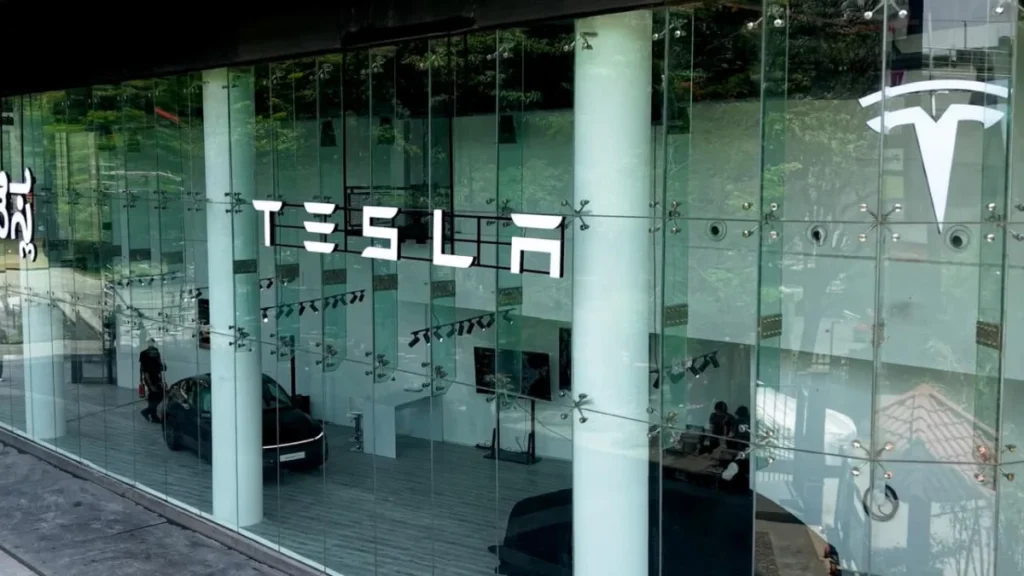
By Financial News Desk
Updated: July 17, 2026, 05:59 PM IST
The global electric vehicle (EV) landscape has been dominated by Tesla’s ambitious expansion strategies for over a decade. However, the company’s recent foray into the Indian subcontinent has yielded results that fall significantly short of initial market expectations. New sales data released for the first year of operations reveals that Tesla, despite its status as the world’s most valuable automaker, has struggled to gain a foothold in India, moving fewer than 500 units during its inaugural twelve-month cycle.
This performance stands in stark contrast to the robust numbers posted by established European luxury marques in the same region, highlighting the immense challenges faced by pure-play EV manufacturers in a market still dominated by internal combustion engine (ICE) loyalists and specific regulatory hurdles.
The Disparity: How the Giants Stack Up
The comparative data for the same fiscal period paints a humbling picture for the Austin-based automaker. While Tesla scrambled to deliver its first wave of vehicles to a niche, high-net-worth segment of Indian consumers, German luxury stalwarts continued to demonstrate their entrenched dominance.
During this identical timeframe, BMW India reported sales of 3,433 vehicles, while Mercedes-Benz outperformed both by retailing 1,116 units in a direct head-to-head comparison within the premium segment. The gap—with Tesla moving fewer than 500 cars against the thousands sold by its German counterparts—underscores the "incumbency advantage." BMW and Mercedes-Benz have spent decades building extensive service networks, supply chains, and brand equity that Tesla, operating as a newcomer with a limited retail footprint, has yet to replicate in the Indian market.
A Chronology of Entry: From Hype to Reality
The journey toward Tesla’s Indian launch was characterized by years of anticipation, political maneuvering, and shifting timelines.
- 2021: The Initial Spark: Elon Musk confirmed Tesla’s intent to enter the Indian market, citing the need for "regulatory clarity" and lower import duties as primary roadblocks.
- 2022–2023: The Policy Standoff: Negotiations between the Indian government and Tesla hit a stalemate. The government maintained its "Make in India" stance, urging Tesla to establish local manufacturing facilities before enjoying tax concessions. Tesla, conversely, pushed for a reduction in import taxes to test the market with imported units.
- Early 2025: The Compromise: Following a series of high-level meetings, a compromise was reached. The government offered a phased reduction in import duties for automakers committing to significant local investment. Tesla formally inaugurated its first showrooms in Delhi and Mumbai.
- Late 2025 – Mid 2026: The Launch Phase: The first customer deliveries began. Despite the high visibility of the brand, the sheer price point of the imported models, combined with the lack of widespread charging infrastructure, resulted in a sluggish adoption rate.
Analyzing the Market Hurdles
Why has Tesla struggled while BMW and Mercedes-Benz thrive? The answer lies in a confluence of infrastructure, price sensitivity, and luxury positioning.
1. The Infrastructure Gap
While the Indian government has accelerated its FAME (Faster Adoption and Manufacturing of Hybrid and Electric Vehicles) initiatives, the country’s charging infrastructure remains concentrated in tier-one metropolitan hubs. For a buyer looking to spend a premium on a luxury vehicle, the "range anxiety" associated with an all-electric fleet remains a significant psychological barrier compared to the convenience of a hybrid or traditional ICE vehicle offered by BMW or Mercedes.
2. Pricing and Import Duties
Even with the government’s concessions, the price of a Tesla in India—inflated by logistics and duties—places it in a bracket where the buyer has a plethora of established, prestige-laden alternatives. Consumers in this segment often prioritize the "prestige of the badge" and the assurance of a local service center that has been operational for twenty years, rather than the "tech-first" value proposition that defines Tesla’s brand.
3. The "Legacy" Advantage
BMW and Mercedes-Benz have successfully transitioned their Indian portfolios to include mild-hybrid and full-electric options (such as the EQ range and the i-series). By offering a transitional product, these brands allow customers to move toward electrification without forcing a complete departure from their established automotive habits.
Official Responses and Strategic Shifts
Industry analysts suggest that Tesla’s current performance should not be viewed as a failure, but rather as a "proof of concept" phase. When contacted for comment, a spokesperson for Tesla’s India operations declined to comment on specific sales figures but noted that the company is "deeply committed to the long-term vision of sustainable transport in India."
Sources close to the company indicate that Tesla is currently evaluating the feasibility of a sub-compact electric vehicle specifically designed for the Indian market. Such a move would be a departure from its global strategy, which has historically focused on premium sedans and SUVs, but it may be the only way to tap into the high-volume segments that drive the Indian automotive industry.
Implications for the Future of Indian EV Policy
The data serves as a wake-up call for both policymakers and international manufacturers. The Indian EV market is clearly not a "plug-and-play" environment. For Tesla, the implication is clear: the company must accelerate its plans for local assembly (CKD operations) to bring prices down and improve its service network to match the reach of its German rivals.
For the Indian government, the low sales volume suggests that import-duty reduction alone is insufficient to spur mass adoption. The emphasis must now shift toward accelerating the build-out of public charging networks and incentivizing the local production of battery cells, which remain the single largest cost component for any EV manufacturer.
The Road Ahead
As of July 2026, the luxury automotive market in India is at a crossroads. While the German incumbents have solidified their lead, the potential for an EV revolution remains untapped. Tesla’s first-year results demonstrate that the company is currently a niche player, catering to the early-adopter segment.
To challenge the status quo, Tesla must evolve its localized strategy. This involves not only lowering the price point but also adapting the vehicle’s technology to survive India’s unique road conditions, climate, and charging challenges. The competition is fierce, and the playing field is far from level. However, if history is any indication, Tesla’s tendency to pivot quickly—as seen in its growth in the Chinese and European markets—suggests that this slow start may merely be the prologue to a more aggressive, localized expansion.
In the coming months, the industry will watch closely to see if Tesla announces a formal manufacturing plant in states like Gujarat or Maharashtra. Such a move would signal the true beginning of the company’s "India Era," moving beyond the experimental sales phase and into a serious, long-term bid for market share in the world’s most populous nation.
Until then, the German automakers remain the undisputed kings of the road in India, setting a benchmark that Tesla, despite its global prestige, has yet to challenge in any meaningful way.