WASHINGTON / BEIJING / SEOUL — Elon Musk has once again upended the global corporate landscape, reviving speculation over what could easily become the largest commercial merger in human history. Committees within electric vehicle pioneer Tesla and aerospace giant SpaceX are actively reviewing a potential combination that would forge a staggering $3.5 trillion corporate titan.
Yet, as markets digest the sheer scale of a union linking high-end consumer electric vehicles, artificial intelligence, reusable rocketry, and military-grade satellite communications, industry analysts and trade experts warn that the transaction’s greatest hurdles will not stem from standard regulatory antitrust thresholds. Instead, the deal is hurtling directly into a complex, high-stakes geopolitical minefield stretching from Washington, D.C., to Beijing and Seoul.
By binding one of the U.S. government’s most vital defense contractors to a manufacturer deeply reliant on the Chinese market, the prospective megamerger threatens to ignite a ferocious partisan battle in the United States, trigger aggressive counter-measures from China, and invite rigorous foreign regulatory scrutiny across Asia and Europe.
1. The Main Facts: Anatomy of a $3.5 Trillion Megamerger
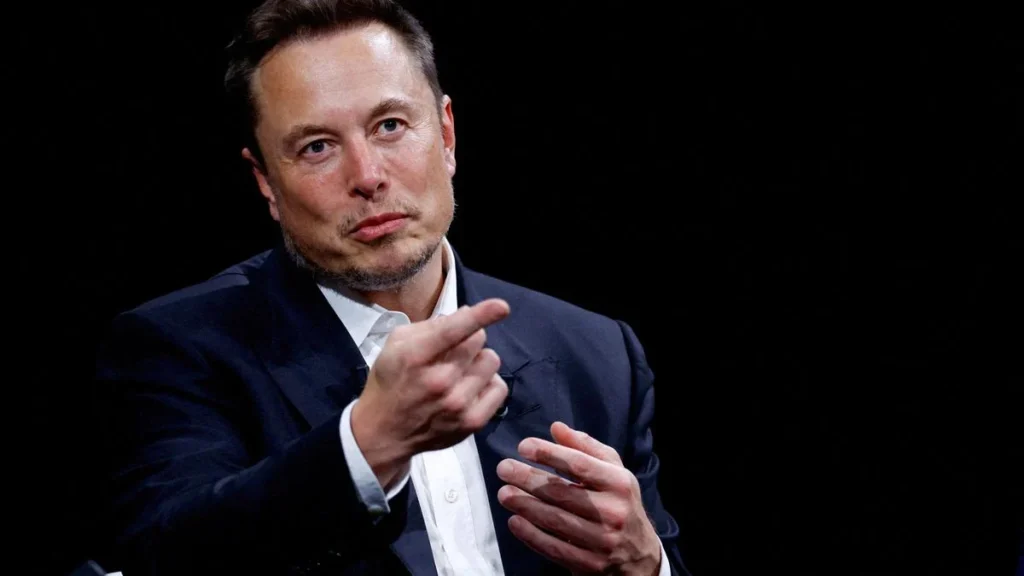
The contours of the proposed mega-deal began crystallizing earlier this week when Elon Musk openly described a combination of his two flagship enterprises as “a good idea.” Confirming that formal internal committees are evaluating the feasibility of a deal, Musk has thrust the concept of a multi-trillion-dollar conglomerate from science-fiction-adjacent speculation into active corporate boardrooms.
Core Assets of the Proposed Combined Entity:
Tesla, Inc.: A global leader in electric vehicles, autonomous driving software development, and energy storage, anchored by massive manufacturing hubs in Fremont, California, Austin, Texas, Berlin, Germany, and crucially, its sprawling Gigafactory in Shanghai, China.
SpaceX (Space Exploration Technologies Corp.): A private aerospace manufacturer, satellite launch provider, and the operator of Starlink—a low-Earth-orbit satellite constellation that has become a critical operational backbone for commercial entities and modern military communications, including active conflict zones like Ukraine.
Under a unified corporate umbrella, these entities would command unprecedented technological leverage, blending advanced battery technology, AI compute capacity, aerospace engineering, and global telecommunications infrastructure. However, this vast concentration of strategic assets under a single private individual immediately rings alarm bells for state regulators and lawmakers alike.
2. Chronology of Events: From Whispers to Boardroom Review
To understand how the Tesla-SpaceX merger talk reached this critical juncture, it is helpful to trace the rapid evolution of Musk’s corporate ecosystem over the past several years:
Late 2020s (The Integration Era): As Tesla heavily invested in artificial intelligence, supercomputing clusters (such as Dojo), and custom silicon, engineering overlaps between Tesla’s autonomous driving AI teams and SpaceX’s guidance systems became increasingly porous.
Early 2024–2025 (Deepening Defense Ties): SpaceX cemented its status as a cornerstone of U.S. national security through classified Pentagon launch contracts and the rapid global scaling of the Starlink network. Meanwhile, Tesla navigated fierce EV competition and margin pressures while maintaining its indispensable footprint in China.
The Current Week: Musk publicly acknowledges that internal committees at both Tesla and SpaceX are studying the feasibility of a merger, sending shockwaves through global financial markets and prompting immediate reactions from political capitals worldwide.
Upcoming Milestones: With the U.S. midterm elections looming on November 3, and global regulatory bodies signaling early intentions to review cross-border technology consolidation, the timeline for any definitive merger agreement faces compressed political windows.
3. Supporting Data & Market Dynamics
Financial markets and trade analysts have scrambled to evaluate the macroeconomic and strategic fallout of a $3.5 trillion corporate integration. The metrics underlying both companies illustrate why a merger creates such immense economic value—and why it triggers profound systemic anxiety.
Valuation and Scale:
Combined Valuation: Approximately $3.5 trillion, eclipsing the historical market caps of traditional defense primes and legacy automakers combined.
Shanghai Gigafactory Output: Tesla’s Shanghai facility accounts for a massive share of its global deliveries and production efficiency, making it an indispensable pillar of Tesla’s profitability.
Starlink Satellites: SpaceX has deployed thousands of operational satellites into low-Earth orbit, servicing millions of retail, enterprise, and military subscribers globally.
Regulatory Intersection Points:
Automotive Sector: Tesla faces mature antitrust frameworks globally, though competition authorities in Asia remain sensitive to dominant ecosystem plays.
Aerospace and Defense: SpaceX operates in a heavily restricted national security market, traditionally isolated from foreign capital and international commercial pressures.
AI and Semiconductors: Both companies rely heavily on cutting-edge semiconductor supply chains, tying their operational futures directly to geopolitical stability in East Asia.
4. Official Responses and Political Flashpoints
The political reaction to the merger blueprint was instantaneous, turning corporate restructuring into an immediate campaign issue ahead of the U.S. midterm elections.
U.S. Congressional Scrutiny and Democratic Pushback
Democratic lawmakers wasted no time signaling their intent to turn the prospective deal into a major political battlefield. Senator Cory Booker (D-NJ), a member of both the Senate Judiciary and Foreign Relations committees, did not mince words regarding the implications of the transaction.
"If Elon Musk moves forward with the merger of Tesla and SpaceX, the deal would carry real risks that antitrust enforcers across the world would scrutinize," Senator Booker stated. He added a stark warning regarding the concentration of strategic infrastructure: "When one person controls the infrastructure that governments and militaries depend on, his business decisions become national security decisions, too."
With the Democratic Party eyeing a potential takeover of the U.S. House of Representatives in the upcoming midterm elections, a combined Tesla-SpaceX entity is almost guaranteed to face aggressive congressional oversight hearings, subpoena threats, and intense legislative pressure.
The Washington Policy Landscape
While analysts note that the current administration in Washington might prove lenient toward the transaction—given Musk’s high-profile alignment with President Donald Trump—the long-term political durability of the deal remains deeply questionable.
Derek Scissors, a senior fellow at the American Enterprise Institute, noted that while initial structural pledges might satisfy current regulators, future administrations could take a sharply adversarial view:
"A merger agreement would involve pledges of limits to the connections between SpaceX and Tesla," Scissors explained. "I don’t think the Trump administration would enforce these limits. However, the next administration could certainly begin to scrutinize a merged entity. This may be the biggest risk to a deal—that it could get unwound in 2029."
5. Global Implications: Beijing, Brussels, and Seoul
While Washington will undoubtedly serve as the primary stage for political theater, the international ramifications of a Tesla-SpaceX merger are equally volatile.
The Beijing Dilemma: Leverage and National Security
For Beijing, a merger introduces a profound structural complication. The transaction would effectively place Tesla’s sprawling Shanghai manufacturing hub under the exact same corporate umbrella as SpaceX—an entity deeply embedded in U.S. military operations and orbital defense infrastructure.
Alicia Garcia-Herrero, a senior research fellow at the Brussels-based Bruegel think tank, highlighted the precarious position in which Chinese authorities would find themselves:
"A formal merger would make it harder for Chinese authorities to treat Tesla as a purely commercial actor, raising risks for future factory expansions, data approvals, or market access."
Because Tesla relies so heavily on its Shanghai operations for global supply, Beijing gains significant leverage over Musk’s entire empire. Conversely, Chinese regulators may view the integration of U.S. military-linked space tech into a major domestic automotive producer as an unacceptable intelligence or security vector, potentially leading to operational friction, localized audits, or restrictions on data collection.
Global Antitrust and Asian Industrial Concerns
Beyond the U.S. and China, international competition watchdogs are preparing for an unprecedented multi-jurisdictional review. Antitrust experts point out that foreign regulators will closely examine whether a merged entity leverages cross-industry dominance—spanning cars, AI, semiconductors, and aerospace—to create insurmountable barriers for competitors.
In nations with powerful domestic industrial bases, such as South Korea, alarm bells are already ringing.
"Korean antitrust officials will be wary of the merger. They will take the merger very seriously," said Lee Hwang, a law professor at Korea University and a former official with the Korea Fair Trade Commission. "The stakes are very high in Korea because it regards both the automotive and aerospace sectors as strategically important industries."
Legal scholars suggest that foreign regulators may demand strict behavioral remedies—such as mandating that the combined company license key artificial intelligence or manufacturing technologies to foreign rivals—as a condition for market approval. Ioannis Kokkoris, a law professor at Queen Mary University of London, noted that such remedies are becoming standard playbooks for competition authorities grappling with mega-conglomerates whose reach spans foundational technologies.
Conclusion: A High-Stakes Gamble for the Future
As Musk and his internal corporate committees press forward with reviews of the $3.5 trillion merger, the venture stands as a watershed moment for modern capitalism. It highlights the blurring lines between private enterprise, national defense, and sovereign infrastructure.
Yet, as the chess pieces move across the global board, the ultimate success of the deal will not be determined solely by discounted cash flow models or engineering synergies. It will survive—or perish—in the unforgiving crossfire of congressional committee rooms, Beijing’s trade ministries, and international antitrust tribunals, where the concentration of ultimate technological power meets the unyielding forces of global geopolitics.