The Agent Revolution: How Custom AI Orchestration is Redefining Entrepreneurial Productivity
In the rapidly evolving landscape of artificial intelligence, a significant shift is occurring. The initial "hype cycle" of generic, one-size-fits-all AI chatbots is giving way to a more sophisticated era of custom-built AI agents. While many business owners have experimented with basic prompts only to be met with mediocre results, a new blueprint for operational efficiency is emerging.
Keith Moehring, founder and CEO of L2 Digital, has pioneered a system that demonstrates the true potential of this technology. By moving away from "off-the-shelf" solutions and building a bespoke ecosystem of AI agents, Moehring has successfully automated approximately 60% of his total workload. His approach—which transforms two weeks of manual labor into a single hour of oversight—offers a masterclass in how modern entrepreneurs can reclaim their time and scale their impact.
Main Facts: The Architecture of a 60% Automated Workflow
The success of Moehring’s system rests on a fundamental departure from standard AI usage. Instead of treating AI as a search engine or a simple copywriter, he treats it as a digital workforce. The core of this system is built on three pillars: a specialized tech stack, a meticulously organized context layer, and a bottom-up hierarchy of agents.
At the heart of the operation is Cursor, a specialized code editor that serves as the primary user interface. Unlike web-based AI interfaces, Cursor connects an AI model—primarily Claude 3.5 Sonnet—directly to the local files on a computer. This allows the AI to "see" and interact with a business’s entire operational history, templates, and processes.
The results of this integration are tangible. Moehring’s most advanced agent, an orchestration entity named "Leo," handles the complex monthly onboarding and execution tasks for an entire roster of distributor clients. By triggering a single command, Leo activates sub-agents that draft emails, create tasks in project management software like ClickUp, and initialize strategy documents. What previously required a fourteen-day sprint is now completed by the time Moehring finishes his morning coffee.
Chronology: From Frustration to Orchestration
The journey to a 60% automated business did not happen overnight. It followed a distinct evolution that mirrors the learning curve many organizations are currently navigating.
The Phase of Disillusionment
Like many early adopters, Moehring’s first forays into AI involved generic GPT models. The "hard truth," according to Moehring, is that the internet’s promise of "building an agent in six steps" is often misleading. Early experiments with one-size-fits-all templates yielded outputs that lacked the nuance, brand voice, and specific procedural knowledge required for high-level agency work.
The Development of Task-Level Agents
Recognizing that broad mandates failed, Moehring pivoted to a "bottom-up" approach. He began by identifying the smallest, most repetitive tasks—such as summarizing meeting notes or formatting a specific type of report. By perfecting these individual "Entry Level" agents first, he created a foundation of reliable, predictable outputs.
The Rise of the "Second Brain"
As the library of task-level agents grew, a secondary benefit emerged: the creation of a "Second Brain." Because every interaction, meeting note, and process was logged and accessible to the AI via Cursor, Moehring realized he no longer had to rely on memory. The system became a searchable repository of every strategic decision and project milestone.
The Orchestration Era
The final stage of the chronology was the development of "Intermediate" and "Advanced" agents. Once the task-level agents were bulletproof, Moehring built "Leo." Leo’s role was not to do the work himself, but to act as a manager, delegating specific sub-tasks to the specialized agents built in the previous phase.
Supporting Data: The Frameworks Powering the System
To replicate these results, Moehring utilizes several specific frameworks that provide the "logic" for the AI.
The WAT Framework
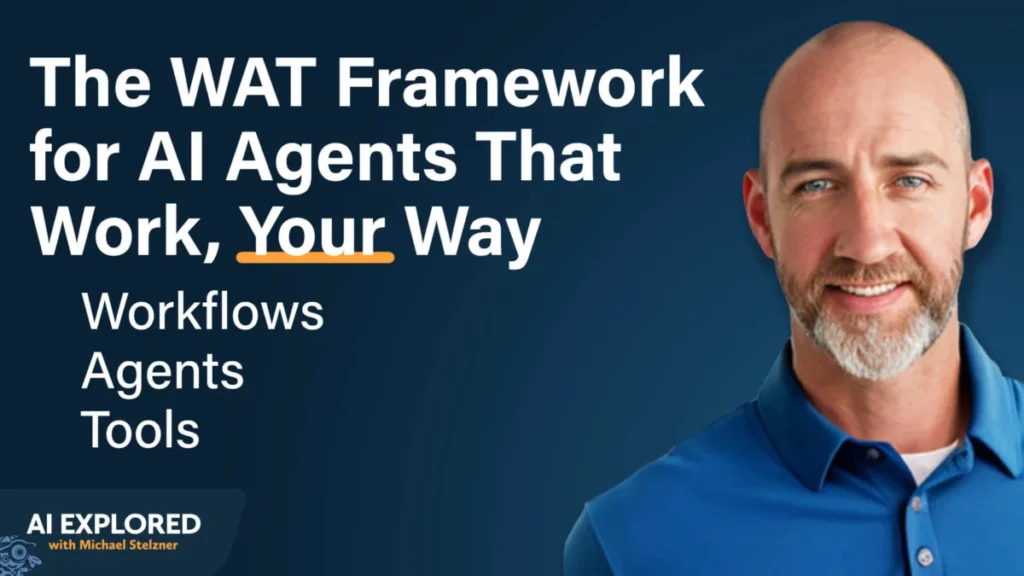
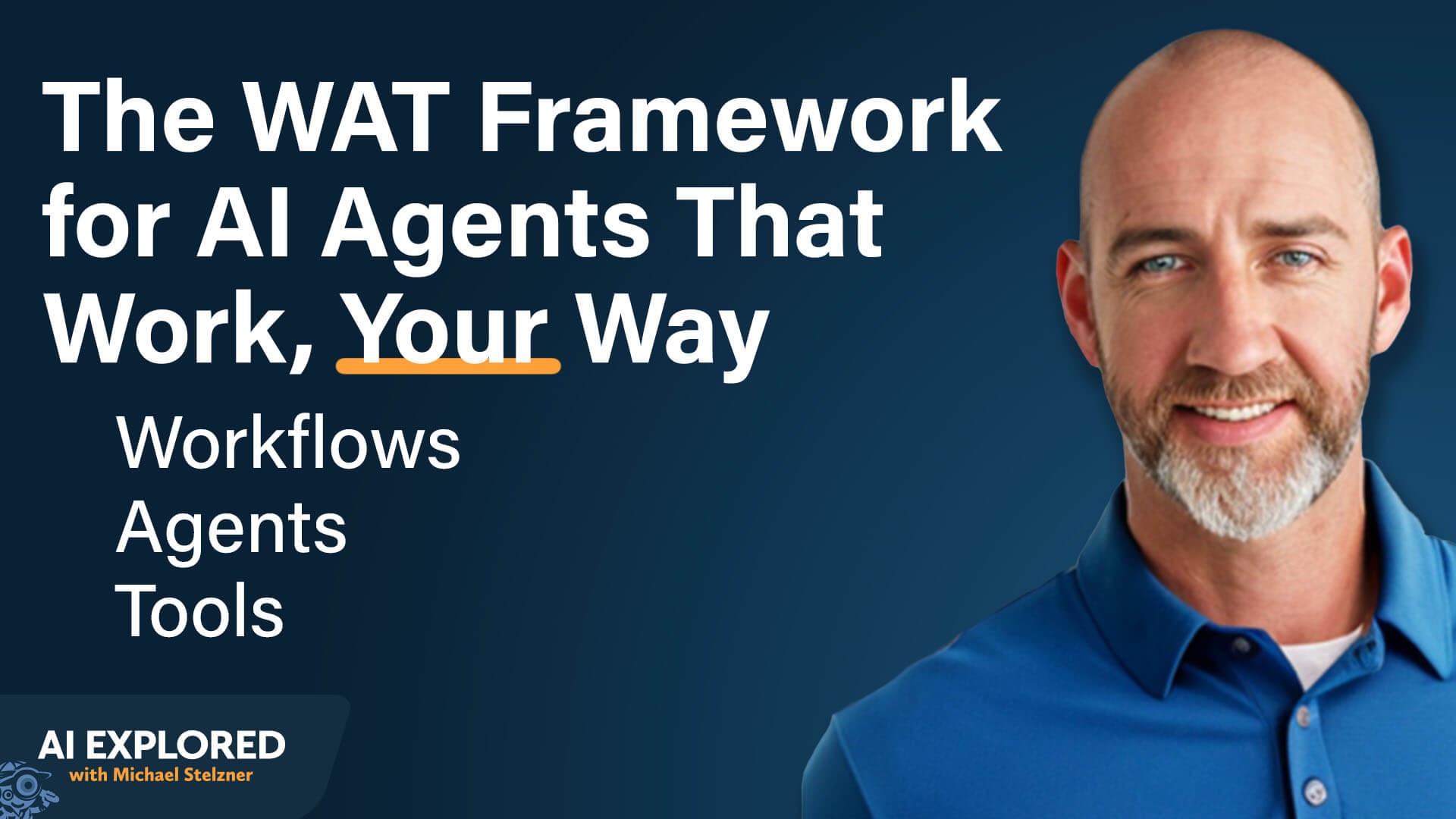
Moehring categorizes his builds using the WAT acronym:

- Workflows: The step-by-step human process currently in place.
- Agents: The AI personas designed to execute specific parts of that workflow.
- Tools: The external connections (APIs, software, and MCP connectors) the agents need to perform their duties.
The L2 Ops Context Layer
The most critical component of the system is the "Context Layer." Moehring maintains a master folder on his desktop named "L2 Ops," which is structured into six specific sub-directories. This structure allows the AI to navigate the business’s internal logic without constant hand-holding:
- Reference: Contains brand guidelines, client lists, and acronym definitions.
- Clients: Individual folders for every client, housing their specific history and preferences.
- Tech: Documentation on how to use the various APIs and software in the stack.
- Prompts: A library of successful prompts used to trigger different agents.
- Projects: Active work files.
- Archive: Completed work that serves as a historical reference for the AI to learn from.
Case Study: The Meeting Follow-Through Agent
One of the most effective applications of this data structure is Moehring’s meeting automation. Using Granola for AI-assisted note-taking, Moehring uses a Model Context Protocol (MCP) to bridge the notes into Cursor.
- Input: A meeting note titled "L2_Strategy_Call."
- Agent Action: The agent identifies the client "L2," pulls their history from the "Clients" folder, reads the new notes, identifies action items, and automatically populates ClickUp tasks.
- Efficiency Gain: This eliminates the "post-meeting lag" where critical tasks often fall through the cracks during the transition between calls.
Official Responses: Expert Perspectives on the "Agentic" Shift
Keith Moehring’s approach reflects a broader consensus among AI implementation experts. The consensus is that the value of AI is shifting from "generative" (making things) to "agentic" (doing things).
Moehring cautions that the upfront investment of time is the primary barrier to entry. "Building an AI agent that reliably performs a specific task in the specific way you do requires real work," Moehring notes. He emphasizes that the system must be proprietary—a "borrowed" workflow will never account for the unique idiosyncrasies of a specific business.
Furthermore, the role of the human has shifted from "creator" to "editor-in-chief." In Moehring’s system, the AI performs 80% of the heavy lifting, while he provides the final 20% of high-level creative and strategic refinement. This "human-in-the-loop" model is widely cited by industry analysts as the most secure and effective way to deploy AI in professional services.
For those looking to start, Moehring recommends using an Accountability Chart (often generated through tools like Ninety.io or Claude). By mapping out every role and recurring task in an organization, an entrepreneur can identify the "low-hanging fruit"—the high-frequency, low-complexity tasks that should be the first candidates for automation.

Implications: The Future of the "Company of One"
The implications of Moehring’s 60% workload reduction extend far beyond individual productivity; they suggest a fundamental restructuring of how small businesses and agencies operate.
The Democratization of Scale
Previously, scaling a service-based business required hiring more headcount, which increased overhead and complexity. With a system of custom AI agents, a "Company of One" or a small boutique team can handle the volume of a much larger organization. This allows for higher profit margins and the ability to compete with larger firms on speed and accuracy.
Operational Security and Continuity
By documenting every process in a "Context Layer" that AI can understand, businesses become more resilient. If a key employee leaves, the "Second Brain" retains the procedural knowledge. The AI agents continue to execute tasks according to the established playbooks, ensuring continuity that was previously impossible in small-scale operations.
The Shift to Strategic Value
As agents take over the "drudgery" of drafting emails, setting up projects, and cross-referencing data, entrepreneurs are forced—and enabled—to move up the value chain. When 60% of the workload is automated, the remaining 40% of a founder’s time is spent on high-level strategy, relationship building, and innovation.
Ethical and Security Considerations
Moehring’s use of Cursor highlights a growing trend toward local-first AI. By restricting the AI’s access to specific folders and requiring human approval for file changes, businesses can mitigate the risks of "hallucinations" and data leaks. As AI agents become more autonomous, the "approval-based" workflow will likely become the standard for professional AI implementation.
In conclusion, Keith Moehring’s system serves as a powerful proof of concept. The "Agent Revolution" is not about finding a smarter chatbot; it is about building a customized, interconnected digital infrastructure. For the entrepreneur willing to put in the initial work to define their processes and provide deep context, the reward is a business that essentially "runs itself" through a sophisticated layer of AI orchestration.