The AI Revolution Accelerates: Breakthroughs in Design, Video Production, and Enterprise Infrastructure
As the fast-paced workweek draws to a close, the artificial intelligence landscape refuses to slow down. From groundbreaking upgrades in multi-modal foundational models to practical, everyday marketing integrations that bridge the gap between AI generation and final execution, professionals are witnessing a fundamental shift in how digital content is created and managed.
Recent updates from industry titans like Anthropic, Google, and OpenAI—alongside innovative workflows leveraging everyday design tools—are redefining what is possible for creators, developers, and enterprise teams alike.
Main Facts: The New Frontier of AI Capabilities
The latest wave of announcements highlights a maturation in artificial intelligence. Rather than focusing merely on conversational novelty, tech leaders are delivering robust tools designed for deep integration, cost efficiency, and practical utility.
- Anthropic’s Claude Sonnet 5.5: Engineered for faster, highly cost-efficient performance in coding, professional workflows, and content creation, generating responses 30% faster while consuming fewer tokens.
- Google Gemini 3.8 Live Avatar & TTS: Expanding enterprise-grade communication with real-time visual animated personas and customizable, natural-sounding voice generation models (Flash TTS and Flash-Lite TTS).
- OpenAI’s DevDay 2026 Expansion: Unveiled over 20 updates transforming ChatGPT into a persistent agent and developer platform, featuring new models, cloud-based Codex workflows, and the introduction of GPT-6 Sol and Luna.
- Practical Multi-Tool Workflows: Emerging methodologies are empowering non-designers to produce print-ready marketing materials and professional AI videos without deep technical scripting expertise.
Chronology: A Week of Rapid-Fire Industry Innovation
The pace of AI development has reached a velocity where major releases occur almost daily. Below is the chronological progression of key updates shaping the digital marketing and development ecosystems:
- Early Week – Design & Workflow Optimization: Marketers began adopting hybrid workflows utilizing ChatGPT’s client-briefing capabilities paired with Canva’s Magic Layers, allowing for seamless transitions from AI-generated print drafts to editable, publication-ready files.
- Mid-Week – Model Releases & Text-to-Speech Innovations: Anthropic dropped Claude Sonnet 5.5, optimizing speed and token efficiency. Simultaneously, Google rolled out Gemini 3.8 Flash TTS and Flash-Lite TTS, introducing granular voice replication, multi-speaker dialogue staging, and robust consent verification frameworks.
- Developer Ecosystem Shifts – OpenAI DevDay 2026: OpenAI hosted its major developer conference, making more than 20 announcements that expanded ChatGPT from a simple chatbot into a comprehensive ecosystem featuring always-on "Dots" agents, expanded APIs, and external developer marketplaces.
- Late Week – Real-Time Enterprise Solutions: Google expanded Gemini 3.8 Live with Live Avatar support for 97 languages, alongside new third-party integrations connecting enterprise tools like Airtable, Linear, monday.com, Adobe, Squarespace, and Webflow directly into the Gemini ecosystem. OpenAI rounded out the week by introducing the lower-cost, high-performance GPT-6 Sol and Luna models.
Supporting Data & Performance Metrics
Beneath the marketing headlines, quantitative benchmarks reveal significant leaps in computational efficiency and processing capabilities across the board:
- Speed and Efficiency Gains: Anthropic’s Claude Sonnet 5.5 delivers responses more than 30% faster than its predecessor while operating on a reduced token footprint per task, optimizing operational costs for high-volume developers.
- Cost Reductions: OpenAI’s newly introduced GPT-6 Sol and Luna models have cut API prices by 50%, extending the advanced capabilities of the GPT-6 Astra framework to scaled applications and professional budgets.
- Global Reach: Google’s Gemini 3.8 Live Avatar now supports 97 languages, ensuring multi-national organizations can deploy expressive, brand-aligned visual personas across diverse global markets.
- Scale and Exposure: OpenAI’s strategic pivot to open ChatGPT to external developers coincides with its estimated 1.2 billion weekly active users, creating a massive addressable market for third-party plug-ins and enterprise integrations.
Official Responses and Strategic Positioning
Industry leaders are deliberately positioning their latest products to capture specific segments of the rapidly expanding AI market, balancing enterprise safety with creator flexibility.
- Anthropic’s Strategic Placement: By positioning Claude Sonnet 5.5 squarely between the high-volume Haiku 5.5 and the deeply analytical Opus 5.5, Anthropic is targeting the sweet spot for everyday enterprise coding and professional content creation.
- Google’s Ecosystem Integration: Google’s recent push—bringing third-party powerhouses like Adobe, Squarespace, Webflow, and Airtable directly into Gemini—signals an aggressive strategy to make its AI assistant the centralized hub for digital productivity, eliminating the friction of switching between disparate apps.
- OpenAI’s Developer-First Vision: At DevDay 2026, OpenAI executives emphasized a transition toward autonomous utility. By introducing persistent "Dots" agents and the "Sign in with ChatGPT" authentication framework, OpenAI is building an infrastructure where AI acts not just as an advisor, but as an active, independent coworker.
Implications: What This Means for Marketers, Creators, and Businesses
The convergence of these technologies carries profound implications for professionals across all sectors. The barriers to entry for high-end production, software development, and graphic design are collapsing, but this shift demands a strategic evolution in how humans interact with technology.
1. The Democratization of Professional Design and Video
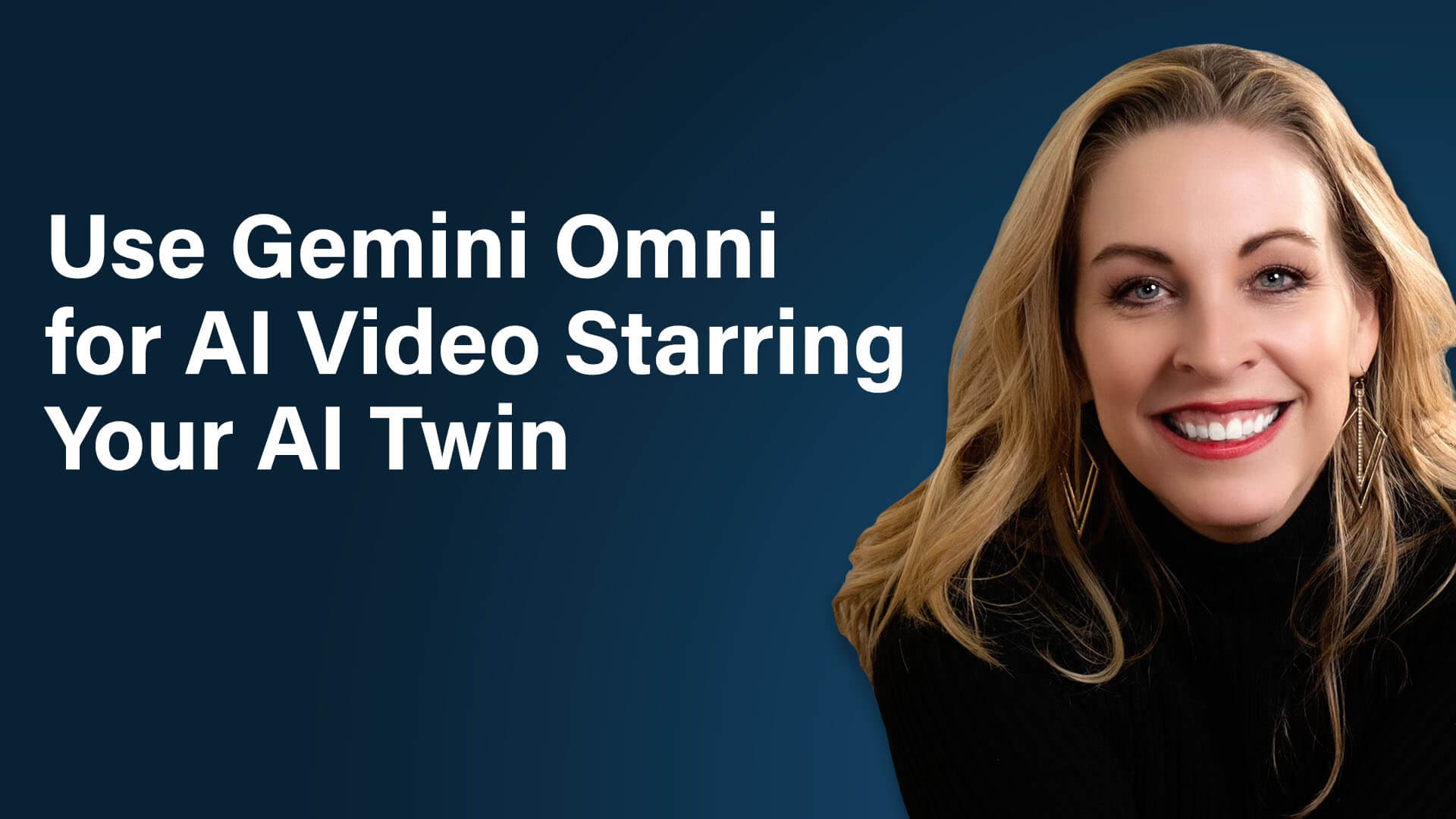
Marketers no longer need to wear every operational hat. By treating ChatGPT like a creative director—supplying detailed brand guidelines, precise copy, and print specs—professionals can generate print layouts and transfer them via Canva’s Magic Layers for final adjustments. Similarly, tools like Google’s Gemini Omni allow creators to bypass complex technical prompt engineering, enabling the creation of realistic AI twins, seamless video editing, and scroll-stopping hooks without the need for a full film crew.
2. The Rise of Portable, Platform-Agnostic Systems
As demonstrated by live industry demonstrations—such as smoothly transitioning workflows from Claude to ChatGPT mid-task—relying on a single proprietary tool is a operational vulnerability. Forward-thinking organizations are building portable, platform-agnostic workflows. The focus is shifting away from learning the quirks of individual AI models toward mastering systematic prompt frameworks and structured documentation that can be executed across any major AI environment.
3. Economic and Operational Efficiency
With API costs slashed by 50% (as seen in OpenAI’s Sol and Luna models) and token efficiency optimized by Anthropic, running autonomous AI agents and long-form conversations has become dramatically more affordable. Businesses can now scale customer support, code generation, and content creation without watching overhead costs spiral out of control.

Looking Ahead
As we look past the weekend and into the future of digital work, the message from these industry updates is clear: tools will continue to evolve, change, and occasionally experience downtime. However, professionals who invest in robust, transferable systems—while leveraging cutting-edge video, design, and agentic platforms—will not merely keep pace with the AI revolution; they will lead it.