The Anatomy of Trust: How Big Media Monetizes Product Recommendations and How Consumers Can Navigate the Commerce Content Boom
By Investigative Staff
Published: Special Industry Report
Main Facts
In an era where digital journalism faces severe revenue pressures, legacy media organizations have found a lucrative lifeline in commerce content—product reviews, "best of" roundups, and online shopping guides. Publications that once maintained strict firewalls between their editorial rooms and commercial departments now regularly monetize their brand authority through affiliate marketing links, sponsored placements, and curated e-commerce directories.
While this shift has provided vital financial oxygen to struggling newsrooms, it has fundamentally transformed the online consumer journey. When a reader searches for the "best running shoes," "top-rated mattresses," or "reliable smart home devices," the top results are frequently dominated by storied journalistic brands like The New York Times (via Wirecutter), The Washington Post, Rolling Stone, and Forbes.
However, this commercial evolution has sparked a fierce debate across the digital landscape. Industry insiders, affiliate marketing experts, and consumer advocates increasingly question the objectivity of these lists. Are these recommendations the result of rigorous, unbiased journalistic testing, or are they engineered by search engine optimization (SEO) strategies and financial incentives?
To understand the inner workings of this multi-million-dollar industry, observers must examine how media giants operate behind the scenes, the structural safeguards they put in place to protect their credibility, and the hidden financial levers—such as placement fees, inflated commission rates, and Earnings Per Click (EPC) guarantees—that can occasionally tilt the scales in favor of the highest bidder.
Chronology
The integration of commerce content into mainstream media was not an overnight phenomenon; it evolved through distinct phases over the past two decades:
- The Early 2000s (The Affiliate Infancy): Shortly after the dot-com bubble, blogs and niche websites began experimenting with affiliate marketing—earning small commissions by driving traffic to merchant sites via trackable links. Mainstream media largely viewed this practice as beneath their journalistic standards, preferring display advertising and native ads.
- The Mid-2010s (The Disruption of Traditional Revenue): As programmatic advertising rates plummeted due to ad blockers and tech monopolies capturing digital ad spend, legacy media faced an existential revenue crisis. Paywalls helped, but they were not enough to sustain newsrooms.
- 2016–2018 (The Wirecutter Effect): The New York Times’ acquisition of The Wirecutter in 2016 served as a watershed moment. It proved that rigorous, product-testing journalism could generate massive affiliate revenues while retaining consumer trust. Soon, nearly every major media outlet rushed to launch their own commerce desks.
- 2020–2023 (The SEO Arms Race): Major publishers realized that search engine authority (SEO) could be leveraged to rank product roundups at the top of Google search results. Media brands began aggressively optimizing commerce content, sometimes outsourcing or licensing their brand names to third-party commerce operators.
- 2025 and Beyond (Regulatory Scrutiny and Consumer Skepticism): As commerce roundups saturated search engine results pages (SERPs), consumer trust began to fray. Regulatory bodies, including the Federal Trade Commission (FTC), increased scrutiny on undisclosed financial arrangements, prompting industry leaders to publicly address transparency, editorial independence, and the ethical boundaries of monetized journalism.
Supporting Data and Industry Insights
The growth of the commerce content sector is underpinned by staggering financial figures and shifts in consumer behavior. According to industry estimates, affiliate marketing spending in the United States alone surpasses billions of dollars annually, with a significant percentage flowing directly into the coffers of major digital publishers.
The Mechanics of Big Media Monetization
When major media outlets enter the affiliate space, they typically do not haphazardly throw together product lists. Experienced affiliate management agencies, such as AM Navigator, note that top-tier publishers usually operate with a high degree of structural integrity. Before endorsing a product, reputable media organizations generally adhere to rigorous internal protocols:

- Dedicated Testing Labs: Outlets like Wirecutter maintain physical testing facilities where products are put through standardized, long-term stress tests by subject-matter experts rather than general-assignment reporters.
- Editorial Independence Policies: Established publications maintain strict firewalls. Editorial staff tasked with evaluating products are often prohibited from knowing or negotiating the affiliate commission rates associated with the items they test.
- Data-Driven Re-Evaluations: Top media brands continuously monitor product performance, user returns, and customer complaints, updating their roundups dynamically rather than treating them as "set-and-forget" articles.
- Transparent Disclosures: To comply with federal guidelines, reputable publishers prominently display affiliate disclosures, explaining to readers that the publication may earn a commission if they click through and make a purchase.
The Hidden Levers: When Money Influences Rankings
Despite these safeguards, the line between objective journalism and commercial partnership can blur. Industry insiders acknowledge that financial arrangements occasionally influence product visibility and ranking. These arrangements typically manifest in four ways:
- Placement Fees: Brands pay an upfront fee to guarantee their product is included in a high-visibility seasonal gift guide or "best of" roundup.
- Inflated Affiliate Commissions: Merchants offer higher-than-average percentage payouts to publishers, incentivizing them to prioritize those specific brands over superior, lower-paying alternatives.
- EPC (Earnings Per Click) Guarantees: Publishers demand a minimum payout guarantee based on the traffic they send, shifting the financial risk away from the media company and aligning incentives toward conversion optimization rather than pure quality.
- Hybrid Commercial Deals: Complex media-buying packages where a brand purchases display advertising, sponsored social media posts, and a guaranteed inclusion in an editorial product roundup.
Official Responses and Perspectives
Industry leaders have increasingly spoken out about the fragile balance between commercial viability and journalistic integrity.
In recent discussions regarding online shopping roundups, marketing experts and consumer advocates have weighed in on how media organizations manage public trust. Proponents of big media commerce argue that these revenue streams are essential for funding investigative journalism. Without the financial cushion provided by affiliate roundups, newsrooms would be forced to lay off reporters or erect even harsher paywalls, limiting access to quality journalism.
Conversely, critics warn that the commodification of trust poses a long-term threat to media credibility. When a consumer realizes that a glowing product review was heavily influenced by an elevated affiliate commission rate or a paid placement fee, the brand equity of the media outlet is severely damaged.
Furthermore, search engine optimization experts point out that the dominance of big media in product search results can stifle smaller, highly specialized niche blogs and independent reviewers who may actually possess deeper expertise in specific product categories but lack the domain authority to outrank a legacy newspaper.
Implications for Consumers
As the digital marketplace becomes increasingly crowded with monetized content, the burden of critical evaluation falls heavily on the consumer. To navigate this landscape safely and make informed purchasing decisions, buyers should arm themselves with specific strategies:
- Cross-Reference Multiple Sources: Never rely on a single "best of" list. Check reviews across independent user forums, niche enthusiast sites, and specialized testing blogs to see if the consensus matches the big media recommendation.
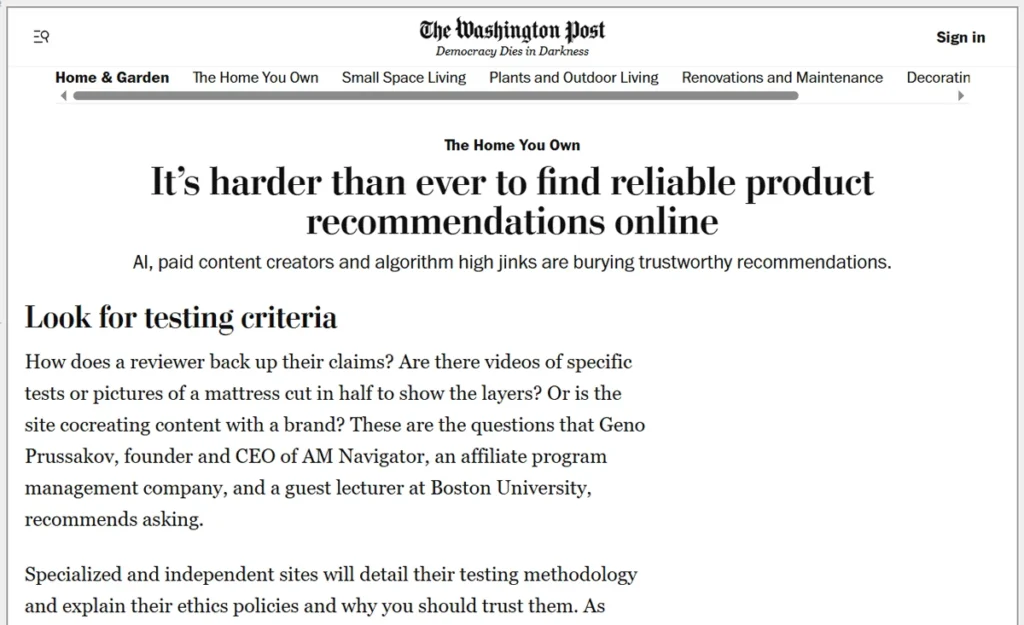
- Scrutinize the Testing Methodology: Look for articles that explicitly detail how the products were tested. Did the reviewer actually use the product for weeks, or is the description merely a regurgitation of the manufacturer’s marketing copy?
- Look Past the Top Ranking: Understand that the number-one spot on a major media roundup is frequently influenced by search optimization strength, commercial partnerships, or aggressive affiliate terms rather than absolute superiority.
- Check for Disclosure Statements: Transparent publishers will always include a clear affiliate disclosure near the top of the article. If a site attempts to hide its commercial relationships, approach its recommendations with extreme skepticism.
Join the Conversation
The evolution of commerce content is reshaping the internet, influencing everything from what we buy to how our favorite media outlets survive.
What has your experience been with online product roundups? Have you ever felt misled by a big media recommendation, or do you find these curated lists to be an indispensable shopping tool? Share your thoughts, experiences, and questions in the comments section below—every insight will be read and addressed.