The Great Creative Shift: How AI-Driven Advertising is Redefining the 2026 Digital Landscape
In the rapidly evolving world of digital marketing, the year 2026 marks a definitive turning point. The era of waiting weeks for a single User-Generated Content (UGC) creator to deliver a video is coming to an end. As platforms like Meta, Google, and TikTok integrate sophisticated artificial intelligence directly into their advertising cores, the industry is witnessing a shift from manual production to automated, "agentic" creative scaling.
According to industry expert Caleb Kruse, in conversation with Michael Stelzner, the adoption of AI-generated ad creative has transitioned from a competitive advantage to an absolute operational necessity. Advertisers who fail to adapt to this high-velocity environment risk being buried by competitors who can produce hundreds of variations in the time it once took to produce one.
Main Facts: The New Reality of Ad Creative
The fundamental landscape of advertising has been reshaped by three primary drivers: platform automation, the need for creative diversity, and the collapse of production timelines.
The Rise of the Agentic Media Buyer
The ultimate goal for platforms like Meta is a "zero-touch" advertising cycle. In this future—which is rapidly arriving—a business owner simply enters a product URL, defines a budget, and describes the target outcome. The platform’s internal AI then handles everything from audience targeting to the actual generation of the video and image assets. Meta’s acquisition of Manus, a fully agentic tool capable of analyzing media buying data and generating creative autonomously, signals that the platform is no longer just a delivery mechanism; it is becoming the creative director itself.
Creative Diversity as an Algorithmic Signal
With updates like Meta’s "Andromeda," the algorithm now prioritizes creative diversity over simple bid amounts. To find the most efficient path to a conversion, the system requires a massive volume of variations to test which visual signals resonate with specific demographic micro-segments. AI allows a single script to be performed by eight different "personas" in eight different settings, creating a matrix of content that traditional production could never match in terms of cost or speed.
The Efficiency Gap
Traditional UGC production often involves a "wait-and-repeat" cycle: finding a creator, shipping a product, waiting for a draft, requesting edits, and finally receiving a single asset. AI compresses this weeks-long process into hours. Furthermore, the cost per finished asset drops from hundreds or thousands of dollars to mere cents, allowing brands to test more "hooks" and "angles" without exhausting their budgets.
Chronology: The Evolution Toward AI-Native Advertising
The journey to the current 2026 landscape has moved through several distinct phases of technological maturity.
- The Generative Spark (2023-2024): Early adoption was defined by static image generation. Marketers used tools like Midjourney or early versions of DALL-E to create backgrounds or conceptual art. However, these tools often struggled with text rendering and human anatomy, making them risky for high-stakes brand work.
- The Integration Era (2024-2025): Major platforms began embedding AI tools directly into their ad managers. Google introduced early versions of its Imagen models, and TikTok’s parent company, ByteDance, released highly capable video models. This period saw the rise of "Character References," allowing brands to maintain visual consistency across multiple generated images.
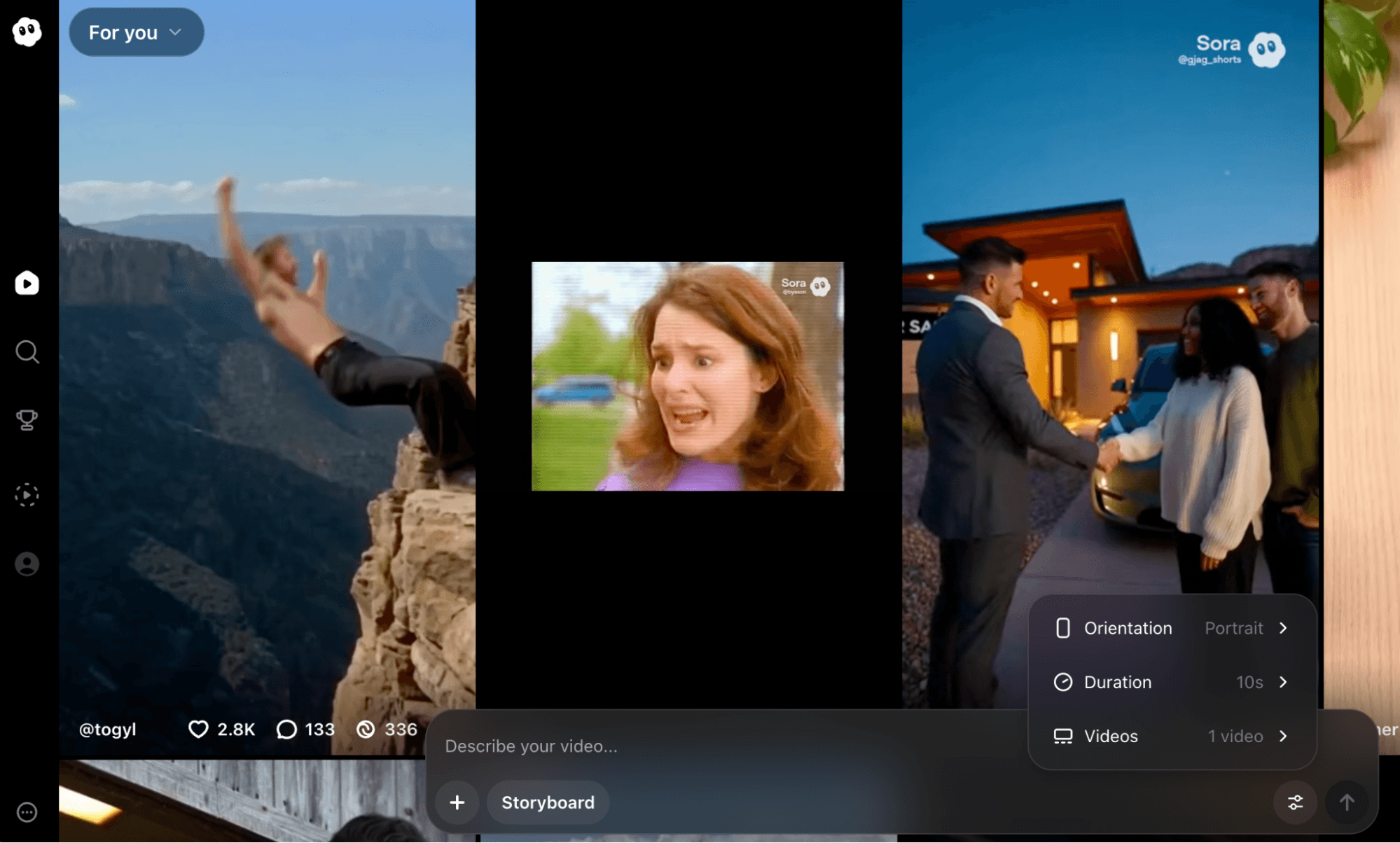
- The Multi-Scene and Agentic Era (2025-2026): We are currently in the phase of "multi-scene prompting" and "agentic" production. Tools like Kling and Sora 2 have moved beyond 5-second clips to producing fully edited, multi-sequence advertisements with synchronized sound effects, music, and voiceovers. The focus has shifted from generating an image to directing a sequence.
Supporting Data: Why AI Creative Outperforms Traditional Methods
The transition to AI is backed by performance metrics that emphasize the platform’s shift toward "Chameleon" or "Ugly Ads."
The "Ugly Ad" Phenomenon
Borrowing from the philosophy of creative strategist Barry Hott, Caleb Kruse highlights the success of "ugly ads"—content designed to look like organic, native feed posts rather than polished studio commercials. AI tools are uniquely suited for this because they can mimic the "selfie" aesthetic and "iPhone-style" lighting that users trust. In A/B testing, these "chameleon ads" often see higher click-through rates (CTR) because they bypass the user’s natural "ad blindness."
Scaling the Testing Loop
Data from modern ad accounts suggests that "creative fatigue" sets in faster than ever. To maintain a steady Return on Ad Spend (ROAS), brands now need to refresh their creative weekly, if not daily. AI allows for:
- Persona Segmenting: Generating a library of characters in five-year age increments (from 20 to 65) to match the specific age of the user viewing the ad.
- Aspect Ratio Optimization: Using AI to not just crop, but "outpaint" and reconstruct ads for 9:16, 1:1, and 4:3 formats, ensuring that every asset feels native to the placement (e.g., Reels vs. Feed).
Official Responses and Regulatory Guidelines
As AI becomes the standard, regulatory bodies and the platforms themselves have established clear boundaries for its use.
FTC Compliance and the "Third-Person" Rule
A common misconception is that AI-generated ads are a "legal Wild West." In reality, the Federal Trade Commission (FTC) applies the same standards to AI as it does to human creators. The primary risk involves "fabricated first-person testimonials."
- The Violation: An AI persona saying, "I used this cream and my wrinkles disappeared," when the persona does not exist and has never used the product.
- The Solution: Writing scripts in the third person. An AI avatar stating, "This cream is formulated to reduce wrinkles," is a product claim that can be substantiated, rather than a fraudulent personal experience.
Platform Policies
Meta, Google, and TikTok have largely embraced AI creative, provided it adheres to standard community guidelines. Caleb Kruse notes that there are currently no documented cases of ad accounts being penalized simply for using AI-generated avatars. The platforms’ own use of generative AI in their "Advantage+" and "Performance Max" suites reinforces this acceptance. However, disclosure labels (e.g., "AI-Generated") are becoming more common and are often handled automatically by the platform’s metadata detection.
Implications: The Future of the Creative Professional
The rise of AI in advertising does not signal the end of the human marketer, but it does signal a radical change in their job description.
From Creator to Director
The modern advertiser must shift from being a "maker" of assets to a "director" of models. This involves:
- Prompt Engineering and Systemization: Using LLMs like Gemini or Claude to build "Prompt Guides." Kruse recommends building custom GPTs or "Gems" loaded with official documentation to ensure the AI produces high-quality, formatted prompts every time.
- Strategic Oversight: Human intuition is still required to determine which "vibe" or "hook" will resonate emotionally. AI can generate the "what," but humans must still define the "why."
The Barrier to Entry for Physical Products
The implications vary by industry. For lead-generation (e.g., solar, insurance, home services), AI is a low-risk, high-reward tool. For "physical fit" categories like apparel or skincare, the stakes are higher. Consumers expect an accurate representation of how a product interacts with real skin or bodies. In these sectors, the "hybrid approach"—using real product footage with AI-augmented backgrounds or personas—is the likely middle ground for 2026.
The Competitive Edge
The ultimate implication of the 2026 ad landscape is that the "speed of learning" is now the most valuable metric. Brands that can use AI to test 50 different hooks in a week will gather 50 times more data than a brand testing one video. This data doesn’t just improve the ads; it informs product development, messaging, and overall business strategy.
In conclusion, leveraging AI creative in 2026 is no longer about "faking" content; it is about scaling the ability to communicate with diverse audiences at the speed of the algorithm. As Caleb Kruse aptly summarizes, the platforms are not waiting for advertisers to catch up—they have already built the AI into the infrastructure. The only question remains whether brands will choose to lead this shift or be left behind in the manual era of the past.