The Architecture of Profit: Deconstructing the M4 Method for eCommerce Scaling on Meta Ads
In an era where digital advertising costs are rising and consumer attention spans are fracturing, the traditional approach to Facebook Ads—focused on granular targeting and vanity metrics—is increasingly obsolete. As Meta’s algorithm evolves toward a more autonomous, creative-centric model, eCommerce brands are finding that "hacking" the system is less effective than building a robust, profit-focused infrastructure.
Sam Piliero, a prominent digital strategist and architect of the "M4 Method," argues that the difference between a stagnating brand and a $50 million powerhouse lies in two fundamental shifts: a move away from efficiency metrics toward contribution margin, and a transition from manual control to algorithmic partnership. By implementing a four-stage system involving account structure, creative volume, deep-dive analysis, and multi-faceted scaling, brands can transform their ad accounts into predictable growth engines.
Main Facts: The Shift from Efficiency to Contribution Margin
The primary hurdle for most eCommerce advertisers is a fixation on Return on Ad Spend (ROAS) and Cost Per Acquisition (CPA). While these metrics serve as useful guardrails, Piliero posits that they are ultimately "proxy metrics" that can obscure the true health of a business. The real objective is contribution margin—the actual profit remaining after all variable costs, including ad spend, are deducted.
For a healthy eCommerce brand, a 10–20% profit margin on total revenue is a standard benchmark. However, chasing a high ROAS (e.g., 10x) often limits a brand’s ability to spend aggressively and acquire a large customer base. Conversely, a lower but stable ROAS (e.g., 2.2x) that allows for massive scale can build a significantly larger business over time by leveraging customer lifetime value (LTV) and organic word-of-mouth.
This strategic shift requires a move away from "over-engineering" accounts. Many advertisers either create dozens of competing campaigns or abdicate all control to Meta’s Advantage+ settings. The M4 Method identifies a "sweet spot" between these extremes, providing enough structure to guide the algorithm without suffocating it.
Chronology: The Four Stages of the M4 Method
The M4 Method is a sequential framework designed to stabilize an account before attempting to scale.
Stage 1: Establishing the Structural Foundation
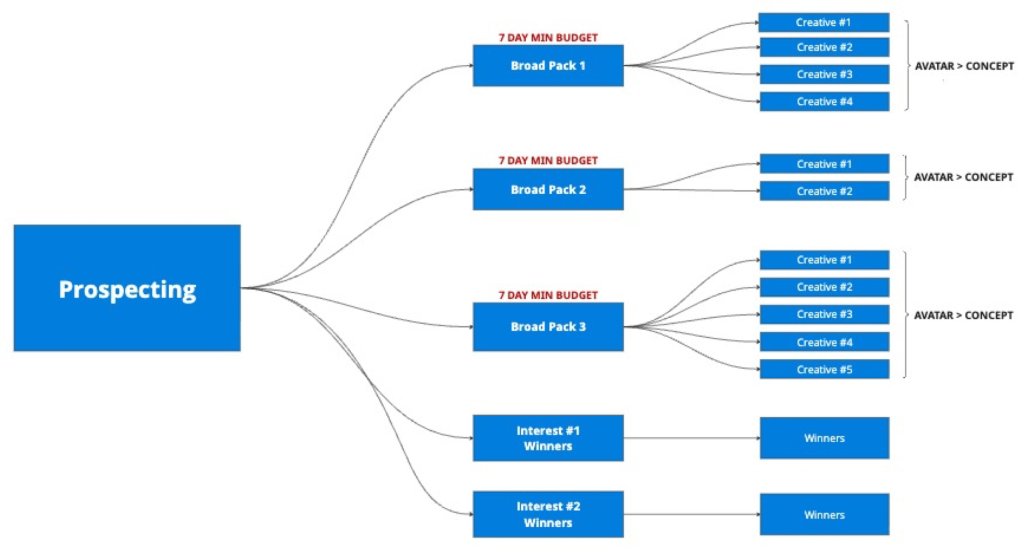
The first stage involves organizing the account to ensure budget flows toward performance rather than inertia. Piliero advocates for a single "Prospecting Campaign" utilizing Campaign Budget Optimization (CBO). Within this campaign, ads are grouped into "packs" (ad sets), where each new round of creative receives its own pack.

Key structural components include:
- Prospecting CBO: Allows the algorithm to distribute budget freely to the highest-converting creative.
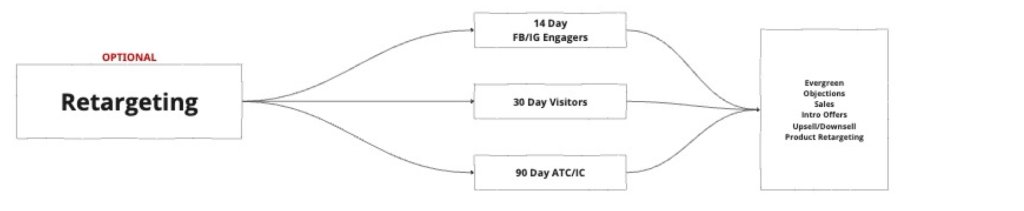
- Retention Campaigns: Separate campaigns targeting existing customers to ensure clear data on acquisition versus retention costs.
- Value Rules and Constraints: Using ad set minimums to guarantee spend on new creative and maximums to prevent declining "hero" ads from consuming the entire budget.
Stage 2: Creative as the Primary Targeting Lever
Following Meta’s "Andromeda" update, the algorithm now uses the content of the ad itself to identify the audience. "What your ad says determines who it reaches," Piliero explains. This necessitates a "Problem-Solution" creative strategy.
Instead of generic branding, ads must speak to specific customer avatars. For instance, a back-brace company should not just advertise "relief for back pain," but rather create specific content for construction workers, showing people in that environment. This signals the algorithm to find more users within that specific demographic.
Stage 3: Deep-Dive Analytical Audits
Once the structure and creative are generating data, the third stage is a deep-dive analysis to find "hidden" pockets of efficiency. This involves pulling 90 to 180 days of historical data—excluding outliers like Black Friday—to identify patterns in performance based on:
- Day of the Week: Identifying if weekends or specific weekdays yield higher conversion rates.
- Geography and Demographics: Pinpointing high-performing regions or age brackets.
- Placement: Evaluating the delta between Feed, Reels, and Stories.
The goal is to find a 20–30% difference in efficiency. Rather than cutting underperforming segments, which can "starve" the top of the funnel, the strategy is to shift the budget to capitalize on peak performance windows.
Stage 4: Systematic Scaling
Scaling is only initiated when an account is stable and profitable. The M4 Method utilizes three scaling vectors:
- Vertical Scaling: Increasing the budget of the primary CBO by 10–30% every two to three days.
- Horizontal Scaling: Launching separate, short-term campaigns for promotions or product launches.
- Twin Engine Scaling: The most powerful method, which involves creating iterations of "hit" ads (ads that capture 10%+ of spend at target ROAS) and re-injecting them into the prospecting campaign while simultaneously raising the vertical budget.
Supporting Data: The Impact of Algorithmic Alignment
The efficacy of the M4 Method is evidenced by the growth trajectories of brands that have moved away from manual micro-management. Piliero cites five specific eCommerce clients who began with an ad spend of less than $30,000 per month and total revenue under $100,000. By committing to creative volume and structural stability, all five transitioned into the $50 million-plus annual revenue range within approximately one year.
Further data points emphasize the importance of creative iteration. Piliero defines a "hit" ad as one that not only meets ROAS targets but also commands a significant share of the account’s total spend. In high-performing accounts, these "hits" are rarely left to fatigue; instead, they are iterated upon—changing only the hook, the setting, or the headline—to extend their lifecycle. According to the M4 framework, deep-dive optimizations (Stage 3) typically result in a 20% improvement in ROAS by aligning spend with consumer behavior patterns discovered in historical data.

Official Responses: Expert Perspectives on the "King Goal"
Reflecting on his experience at high-growth brands like BarkBox, Piliero emphasizes the necessity of a "King Goal"—a single North Star metric that overrides all others. At BarkBox, that metric was Cost Per Acquisition (CPA).
"If cost per click looked strange or CPMs (Cost Per Thousand Impressions) were high, but the King Goal was being met, the instruction was to ignore the noise and keep spending," Piliero notes. This perspective challenges the common tendency among marketers to overreact to secondary metrics.
Furthermore, industry experts note that the "misconception of control" is the greatest psychological barrier to scaling. Advertisers often feel they are "doing more" by creating complex account structures, but in the modern Meta environment, complexity often leads to data fragmentation. The "official" stance of the M4 Method is that the advertiser’s job is to provide the "engine" (structure) and the "body" (creative), while letting the "fuel" (the algorithm) handle the distribution.
Implications: The Future of eCommerce Advertising
The shift toward the M4 Method signals a broader trend in digital marketing: the professionalization of creative production and the simplification of technical execution. As AI continues to take over the roles of bidding and audience selection, the competitive advantage for eCommerce brands will reside in two areas: supply chain agility and creative strategy.
The Inventory Constraint Exception:
The M4 Method carries a significant implication for supply-constrained businesses. For brands that cannot fulfill massive demand—such as artisanal goods or limited-run manufacturers—the goal of advertising must flip. Instead of scaling for raw volume, these businesses must use the deep-dive and creative stages to maximize efficiency per order. Scaling aggressively without the infrastructure to fulfill orders leads to a degraded customer experience and long-term brand erosion.
The Role of "Semi-Pro" UGC:
The framework also highlights a shift in content production. High-gloss, expensive commercial production is being replaced by "semi-professional" User-Generated Content (UGC). By utilizing micro-influencers (1,000 to 20,000 followers) who receive detailed scripts but maintain their authentic delivery, brands can produce high-volume, feed-native content for a few hundred dollars per asset. This democratizes the ability to achieve "creative volume," which is now the prerequisite for scaling on Meta.
In conclusion, "blowing up" an eCommerce business in the current landscape is not a matter of finding a secret button in the Facebook Ads Manager. It is an exercise in structural discipline and creative endurance. By focusing on contribution margin and treating the algorithm as a partner rather than a tool to be manipulated, brands can move from volatile, unpredictable results to a system of compounding growth.