The Battery Frontier: Leaked Specs Suggest iPhone 18 Pro Max Will Outpace Rivals
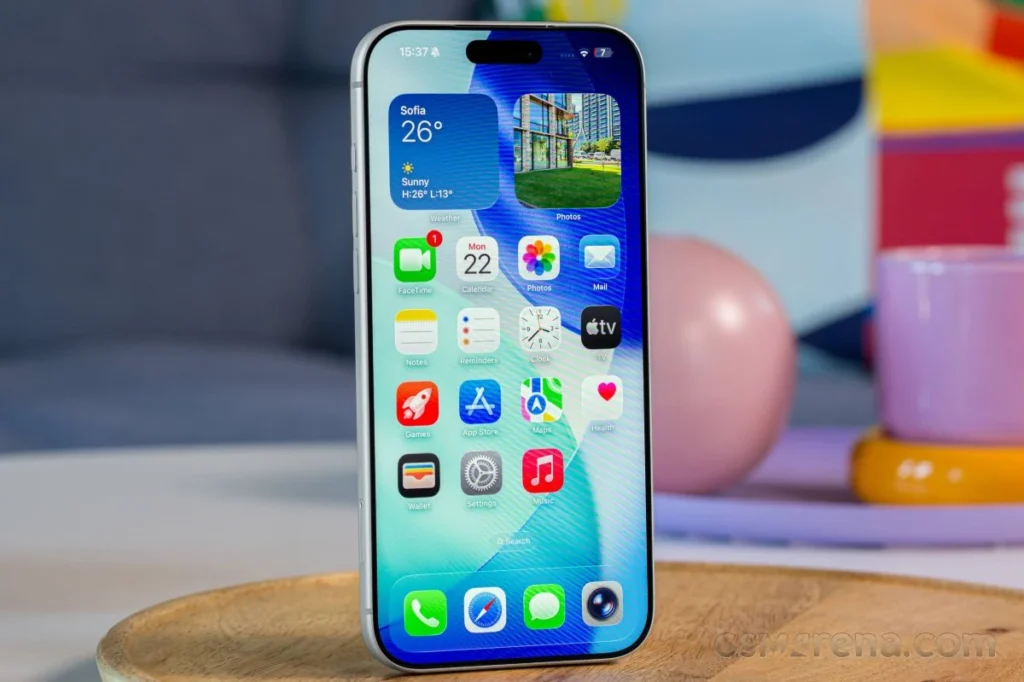
The landscape of flagship smartphone competition is shifting, moving away from pure megapixels and raw processing clock speeds toward the most practical metric of all: longevity. A new, detailed leak regarding the upcoming Apple iPhone 18 Pro Max suggests that Cupertino is preparing a significant internal overhaul to its flagship handset. If these reports hold true, the device will feature the largest battery capacity ever integrated into a non-folding iPhone, signaling a potential paradigm shift in Apple’s power management strategy.
Main Facts: The Capacity Surge
According to the latest industry intelligence, the iPhone 18 Pro Max is expected to arrive in two distinct configurations, specifically tailored to regional requirements regarding connectivity. Following the precedent set by previous generations, Apple will maintain a divide between eSIM-only models and those equipped with traditional physical SIM slots.
The leaked data provides precise capacity figures:
- eSIM-only model: 5,425 mAh
- Physical SIM model: 5,235 mAh
These figures represent a departure from the conservative battery scaling that has historically characterized the iPhone lineup. For years, Apple has focused on software optimization—leveraging the synergy between iOS and proprietary silicon—rather than sheer battery volume to achieve all-day endurance. However, the move to push past the 5,000 mAh threshold suggests that the engineering team is prioritizing hardware density to keep pace with increasingly power-hungry features, such as advanced on-device AI processing and high-refresh-rate display technologies.
Chronology: A History of Iterative Growth
To understand the magnitude of this reported jump, one must look at the recent trajectory of the iPhone Pro Max series. The evolution of battery capacity in these devices has been a steady, incremental climb, reflecting advancements in battery cell density and internal space management.
The iPhone 17 Pro Max Baseline
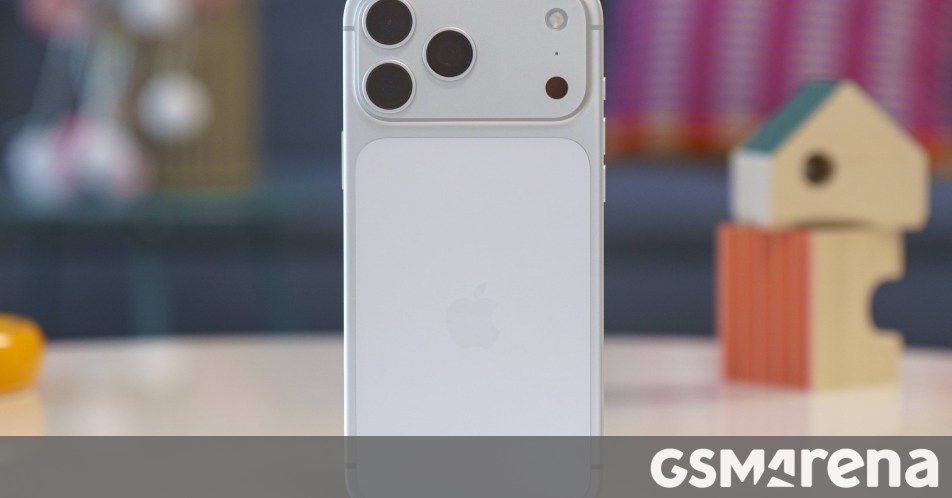
Last year’s flagship, the iPhone 17 Pro Max, served as the current benchmark for Apple’s internal architecture.
- The eSIM-only variant offered a capacity of 5,088 mAh.
- The physical SIM variant provided 4,823 mAh.
The Leap to iPhone 18
When comparing the projected numbers for the iPhone 18 Pro Max against its immediate predecessor, the increase is notable. The physical SIM model is expected to see a significant boost of approximately 412 mAh, while the eSIM-only variant is slated for an additional 337 mAh.
This chronology demonstrates a clear intent by Apple to aggressively reclaim the "battery life crown" in the flagship segment. While 300 to 400 mAh may seem modest in isolation, in the context of mobile power management, it represents a substantial improvement in total watt-hours available for background tasks and sustained performance.
Supporting Data: Comparative Analysis and Industry Benchmarks
The smartphone market is currently embroiled in a "battery arms race." Historically, Android manufacturers—specifically Samsung—have been more aggressive in stuffing large-capacity cells into their chassis. The Samsung Galaxy S26 Ultra, for instance, carries a standard 5,000 mAh battery.
If the current rumors regarding the iPhone 18 Pro Max are accurate, Apple will officially surpass the Galaxy S26 Ultra in raw battery capacity. This is a significant psychological and marketing milestone. For years, critics have pointed to the smaller battery sizes in iPhones compared to their Android counterparts as a weakness. While Apple’s superior power efficiency usually mitigated these differences in real-world usage tests, the move to 5,425 mAh eliminates that talking point entirely.
Energy Density and Design Constraints
The challenge for Apple lies in maintaining the sleek, premium industrial design that the Pro Max series is known for. Increasing battery capacity is not simply a matter of swapping in a larger cell; it requires a complete reorganization of the logic board, camera modules, and thermal cooling systems. The existence of two different capacities—one for the eSIM-only model and one for the physical SIM model—highlights the internal space premium created by the physical SIM tray. The removal of this component allows for a larger battery, confirming that every cubic millimeter inside the chassis is accounted for.
Official Responses and Corporate Strategy
As is standard practice, Apple has maintained a policy of "no comment" regarding unverified reports and leaked specifications. However, the company’s broader strategic direction provides context for these leaks. During recent investor calls and technical keynotes, leadership has emphasized the importance of "computational efficiency" and "all-day performance" as pillars of the user experience.
While Apple does not publicly discuss battery capacity in its marketing materials—preferring instead to frame performance in terms of "hours of video playback"—the internal hardware shift suggests a response to increasing power demands. As features like advanced Neural Engine tasks and more complex camera computational photography become standard, the power draw on the SoC (System on Chip) increases. To maintain the "all-day" battery life guarantee, Apple is left with two choices: make the chip more efficient or provide more "gas in the tank." With the iPhone 18 Pro Max, they appear to be pursuing both simultaneously.
Implications: What This Means for the User
The implications of these leaked specifications extend far beyond mere numbers on a spec sheet. If realized, this development will have three primary effects on the consumer market.
1. Sustained Peak Performance
A larger battery allows for better thermal headroom. When a phone has a larger power reservoir, the device can sustain higher performance levels for longer periods without triggering thermal throttling. For power users, gamers, and video editors who use their iPhones as primary workstations, the 5,425 mAh cell could be a game-changer, allowing for extended editing sessions in 4K without a sudden drop in frame rates or brightness.

2. The Longevity of the Device
One of the most overlooked benefits of larger batteries is the extended lifespan of the device itself. All lithium-ion batteries degrade over time. By starting with a larger capacity, the battery health will remain in a "usable" range for a longer period. An iPhone 18 Pro Max with 5,425 mAh will likely retain a functional charge long after a smaller battery would have degraded to the point of requiring a service, enhancing the resale value and long-term viability of the handset.
3. Setting a New Standard for Flagships
By crossing the 5,000 mAh threshold, Apple is effectively forcing the hand of its competitors. The "standard" for a flagship phone has been set at 5,000 mAh for several years. By moving to 5,400+ mAh, Apple is shifting the goalposts. We can expect future iterations of Android flagships to attempt to match or exceed this capacity in their subsequent cycles, potentially leading to a new era of multi-day battery life for the average smartphone user.
Conclusion: A Skeptical Outlook on Rumors
While the prospect of a massive battery upgrade is undeniably exciting, it is prudent to maintain a degree of skepticism. As noted in the reports, these numbers are based on leaks that, while sourced from established supply chain channels, are not official. Battery technologies are notoriously difficult to finalize until the very last stages of mass production.
Furthermore, a battery is only as good as the software that manages it. Apple’s reputation for excellence in battery life is built on the foundation of iOS, which is uniquely optimized to sleep background processes and manage power consumption at a granular level. The true test of the iPhone 18 Pro Max will not be the capacity of the cell, but how effectively the next generation of Apple silicon manages the power delivery.
If these leaks are confirmed, the iPhone 18 Pro Max will stand as a testament to Apple’s commitment to hardware evolution. It will be a device that doesn’t just rely on software cleverness to last through the day, but one that is physically equipped to handle the most demanding mobile workloads of the next decade. As the official announcement approaches, the tech community will be watching closely to see if Apple can indeed deliver on the promise of the biggest battery in iPhone history.