The State of Blogging: Why Effort, Strategy, and "Rented Land" are Redefining Content Success
In the rapidly shifting landscape of digital marketing, the corporate blog has long been a staple of the content ecosystem. Once viewed as the undisputed king of SEO and brand authority, the medium is currently undergoing a significant identity crisis. According to the 11th Annual Blogger Survey from Orbit Media, the era of "easy traffic" is waning, forcing marketers to pivot from volume-based strategies toward high-effort, high-impact content.
As generative AI floods the internet with automated text, the value of human-centric, strategic content has never been higher—even if the time required to produce it remains stubbornly high.
The Persistence of Effort: Why Quality Still Demands Time
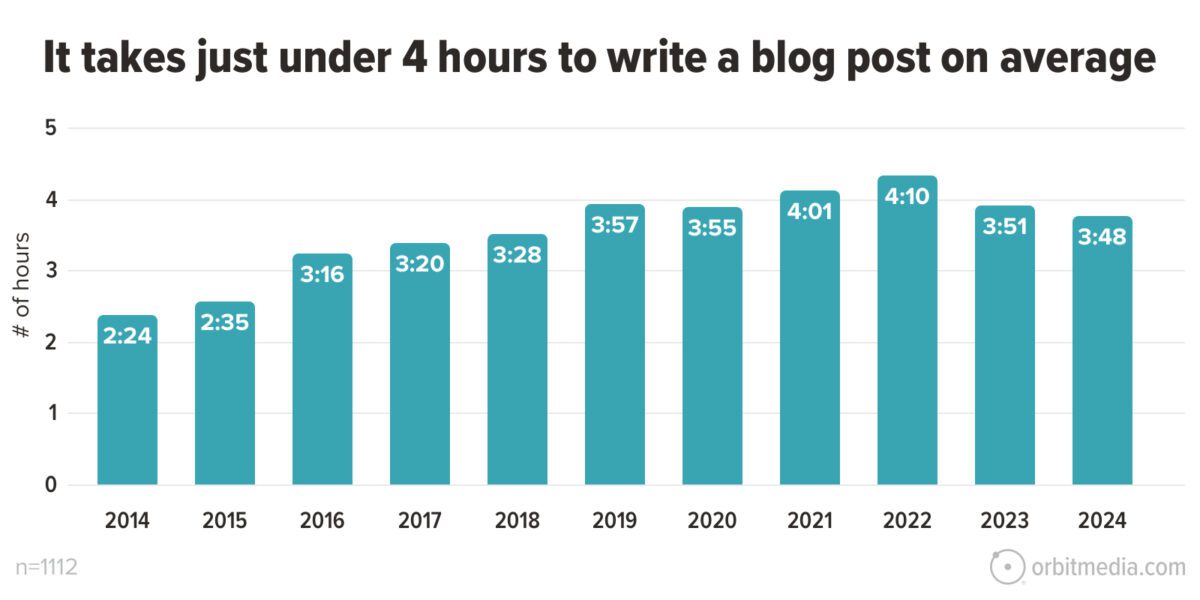
One of the most counterintuitive findings of this year’s research is the stability of production time. Despite the widespread integration of generative AI—which has seen adoption rates among bloggers skyrocket from near-zero in 2022 to 80% in 2024—the time required to write an average blog post has remained nearly unchanged.

The study reveals that the average blog post takes three hours and 48 minutes to complete, a mere three-minute decrease from the previous year. This suggests that while AI is assisting in the drafting phase, it is not serving as a "magic button" for content creation. Instead, the human element—strategic direction, factual verification, brand voice, and creative nuance—remains the primary driver of production time.
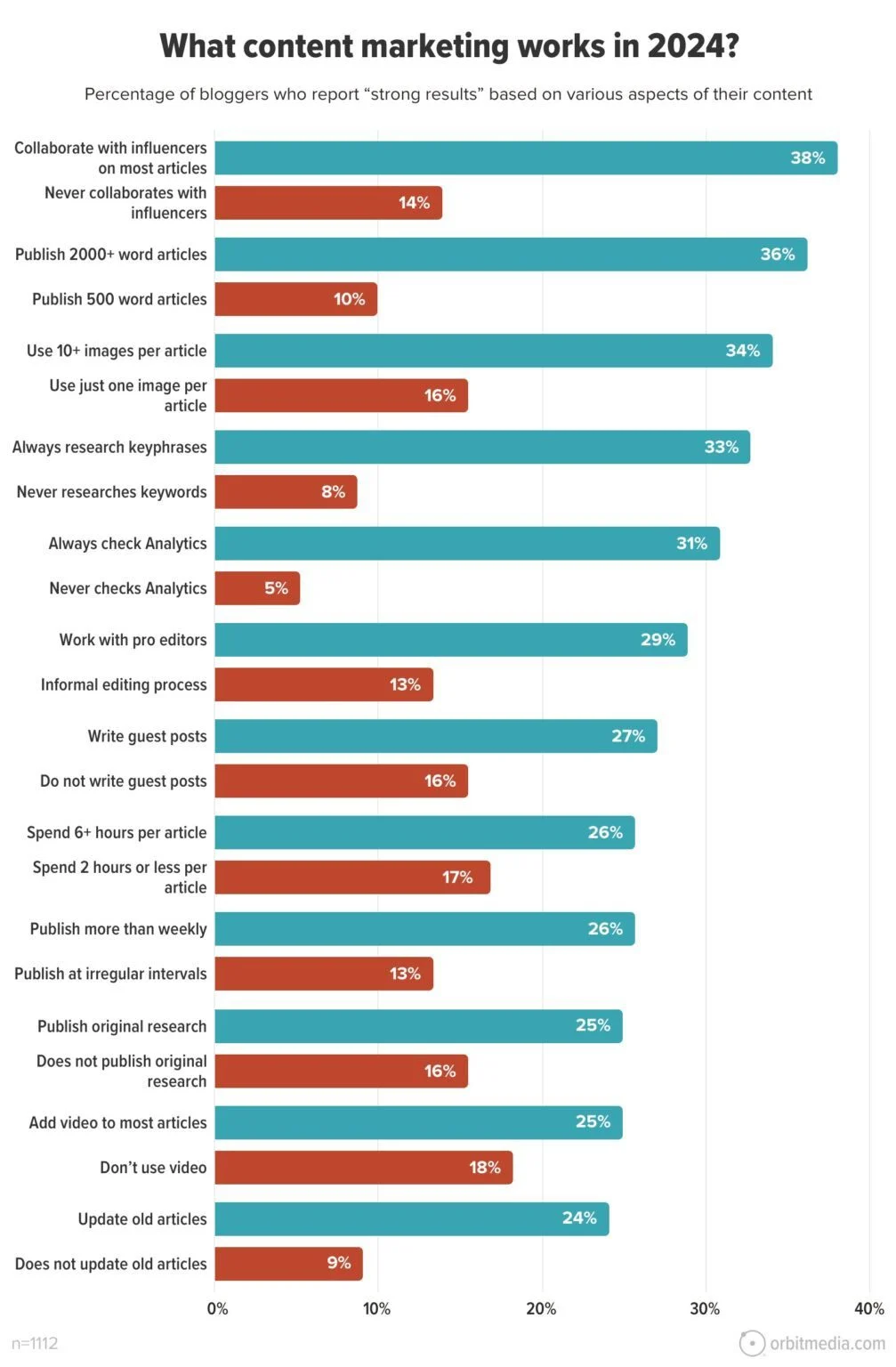
The data confirms a simple truth: there is no shortcut to quality. Bloggers who invest more than four hours per post and consistently produce long-form content (2,000+ words) are significantly more likely to report "strong results" than those prioritizing speed or brevity.
The Evolution of the Content Calendar: Beyond the Monthly Update
For years, the gold standard for many brands was a sporadic or monthly posting cadence. However, the 11th Annual Blogger Survey suggests that the minimum threshold for maintaining audience interest and search visibility has shifted.
The data indicates that a bi-weekly posting schedule is now the baseline for any brand hoping to maintain a competitive edge. Modern audiences have developed high expectations for content consumption; they are increasingly intolerant of subpar, filler posts and are unwilling to wait long periods for high-value insights.
Perhaps the most provocative recommendation from the research is to treat a brand’s blog feed with the same rigor as a professional social media stream. Social media platforms spend millions optimizing for user engagement, testing headlines, visual hooks, and cadence. By adopting this "social-first" mentality—focusing on scroll-stopping visuals, concise hooks, and audience-first value—bloggers can bridge the gap between static articles and dynamic community engagement.
AI: A Tool, Not a Replacement
The widespread adoption of AI has led to a common misconception: that automation will inevitably lead to better performance. The research paints a more nuanced picture. While 80% of respondents are using AI for tasks ranging from brainstorming to visual generation, there is currently no statistical correlation between AI usage and improved performance outcomes.

The takeaway for content leaders is clear: AI is a productivity accelerator, not a strategy. Without the "human in the loop" to provide strategic oversight and verify accuracy, AI-generated content risks blending into the noise. The competitive advantage no longer lies in the ability to produce text, but in the ability to curate, verify, and infuse human expertise into that text.
Insights from the Expert: A Conversation with Andy Crestodina
To understand the real-world implications of these findings, we spoke with Andy Crestodina, CMO and Co-Founder of Orbit Media, regarding the "hard truths" revealed by the data.
Q: What research findings were the most surprising to you personally?
Andy Crestodina: "The data is telling us, year after year, that big efforts drive big outcomes. It’s not necessarily a surprise, but the contrast between low-effort and high-effort performance is becoming increasingly stark. Many programs are still stuck in the same cycle: short-form posts, monthly cadences, no original research, no guest contributors, and no video. When marketers continue these low-effort habits, they shouldn’t be surprised when their results are equally low."

Q: The data suggests podcasters see stronger results. Why?
Andy Crestodina: "It’s about the ecosystem of the creator. Podcasters rarely work in a vacuum; they collaborate, they interview, and they produce multi-format content. They aren’t just typing on a keyboard alone. That collaborative, multi-dimensional approach to content is exactly what the data identifies as a marker of success."
Q: How should we define "results" when traditional metrics like traffic are declining?
Andy Crestodina: "We are seeing a decline in search-driven traffic across the board. The most visible metrics—like simple page views—are often the least important. We need to look deeper. The most powerful outcomes of marketing are often the hardest to measure: word-of-mouth, top-of-mind awareness, and bottom-of-funnel conversions. As search traffic becomes more elusive, marketers must pivot toward these indirect but high-value outcomes."
The "Rented Land" Strategy: Embracing LinkedIn
One of the most significant shifts in Crestodina’s own strategy involves a departure from the traditional dogma of "never build on rented land."

"Years ago, I realized that LinkedIn newsletters were gaining traction," Crestodina explains. "While we have less direct traffic to our website than we did four years ago, we have significantly more visibility. We aligned ourselves with the platforms where our audience spends their time. Launching a LinkedIn newsletter is currently my number-one recommendation for B2B brands. If you want to reach your audience, you must go where they are, rather than waiting for them to find your blog."
Strategic Implications for 2025
For content marketing leaders, the path forward requires a re-evaluation of current practices. The data supports a move away from volume-at-all-costs and toward high-value, high-effort production.
Key Recommendations for Content Teams:
- Prioritize Depth Over Frequency: If you must choose between one high-effort, 2,000-word piece and four low-effort, 500-word pieces, the data suggests the former will yield better long-term results.
- Diversify Formats: Incorporate audio, video, and guest contributions. These elements signal to both algorithms and human readers that the content is authoritative and collaborative.
- Redefine Success Metrics: Move beyond vanity metrics like raw traffic. Focus on engagement, conversion, and brand sentiment. As search becomes more fragmented, your direct relationship with your audience becomes your most valuable asset.
- Lean into "Rented" Platforms: Do not fear building on platforms like LinkedIn. Use these channels to distribute your content where your audience already lives, and use that reach to drive your broader brand goals.
Conclusion: The New Standard of Performance
The 11th Annual Blogger Survey makes one thing clear: the "easy" days of blogging are over. However, this is not the end of blogging; it is a maturation. The brands that will win in 2025 are those that treat content as a strategic investment rather than a checklist item. By combining the power of AI-assisted efficiency with the undeniable value of human creativity, original research, and strategic distribution, marketers can still cut through the noise. The data is available—now, it is up to the industry to evolve.