The Digital Frontier or a Digital Safe Haven? Telegram Faces Scrutiny in Delhi High Court
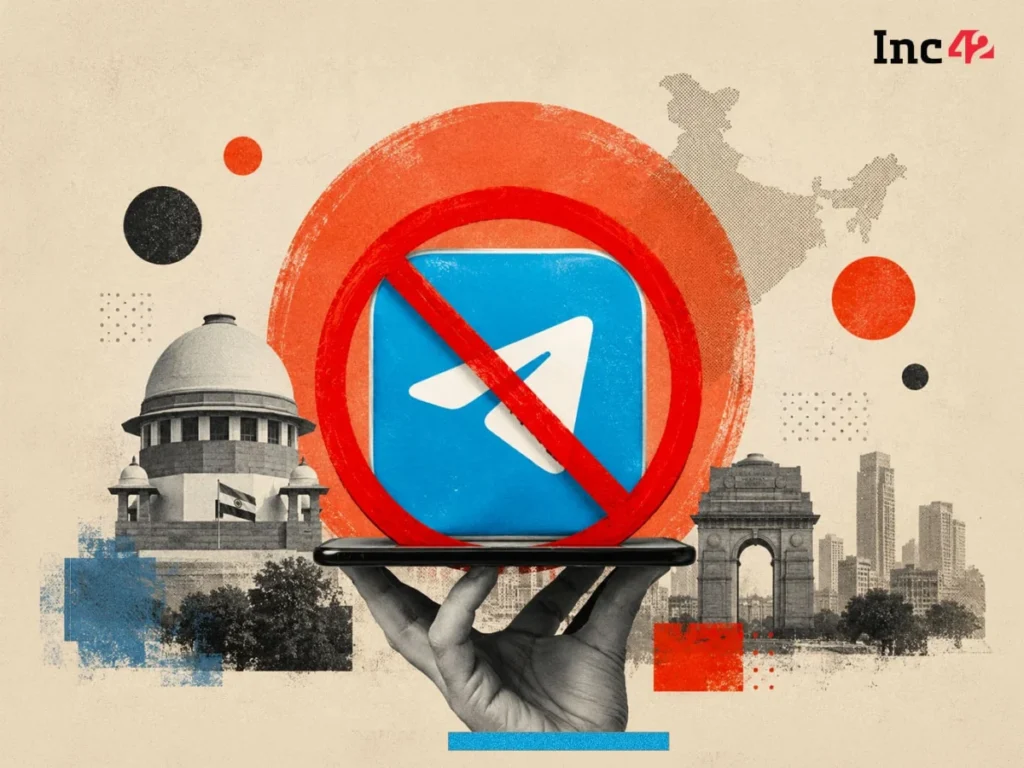
The landscape of digital communication in India is currently at a volatile crossroads. As the messaging giant Telegram battles the Indian government in the Delhi High Court, the discourse has shifted from simple regulatory compliance to a profound debate on national security, individual privacy, and the role of tech platforms in curbing organized crime. At the center of this firestorm is a government affidavit that labels the platform nothing less than a "new dark web."
The Core Allegation: A "New Dark Web"
In a scathing counter-affidavit filed before the Delhi High Court, the Union Ministry of Electronics and Information Technology (MeitY) has leveled serious allegations against Telegram. The government argues that the platform’s architectural design—specifically its reliance on cloud-based storage, massive group capacity, and robust anonymity features—has turned it into an incubator for illegal activities.
According to the Centre, Telegram is no longer just a communication tool; it is a nexus for "threat actors." The government contends that the platform’s features, such as the use of usernames instead of phone numbers and the deployment of automated bots, allow criminals to operate with near-total impunity. These features, the government claims, facilitate a wide range of illicit activities, including but not limited to drug trafficking, terrorism, financial fraud, cyber scams, and widespread media piracy.
The government’s stance is that Telegram provides the infrastructure for criminals to pivot seamlessly between surface-level communication and deep-web forums, effectively bypassing traditional investigative methods. By masking user identities and enabling the rapid dissemination of data to groups of up to 200,000 members, the platform has created a logistical nightmare for law enforcement agencies tasked with attribution and tracking.
Chronology of the Conflict: From NEET-UG to the Courtroom
The current legal confrontation was precipitated by the fallout of the NEET-UG examination controversy. Following allegations that organized cheating networks were using Telegram to leak sensitive question papers, the government moved swiftly to impose a temporary restriction on the platform.
- Mid-June: Reports surfaced suggesting that organized syndicates were utilizing encrypted Telegram channels to circulate leaked NEET-UG question papers.
- The MeitY Directive: In response to the breach, MeitY issued an emergency order under Section 69A of the Information Technology Act. This order mandated a temporary restriction on Telegram’s access in India and, crucially, directed the company to disable its "message-editing" feature until June 30.
- Telegram’s Legal Recourse: Denouncing the order as unconstitutional and overreaching, Telegram moved the Delhi High Court to challenge the restrictions. The company argued that such blanket bans disproportionately punish millions of legitimate users.
- The Court Proceedings: As of this week, the Delhi High Court has heard arguments from both sides and has reserved its judgment. The temporary restrictions are currently slated to remain in place until June 22, pending further judicial review.
The NEET-UG Catalyst
The NEET-UG exam cancellation has become the flashpoint for this regulatory crackdown. The government specifically cited a channel titled "NEET Mafia," which commanded over 18,600 subscribers, as evidence of the platform’s vulnerability to exploitation.
Solicitor General Tushar Mehta, representing the Centre, highlighted a particularly alarming technical feature: the ability of users to alter the metadata, specifically the date and time, of previously sent messages. This feature, Mehta argued, has been weaponized by bad actors to manufacture fake "leaked" documents, creating the appearance that a paper was leaked before the exam when it was actually posted afterward. This has not only undermined the integrity of the examination process but has fueled widespread public unrest and panic among thousands of students.
Official Responses: The Battle of Arguments
The Government’s Position
The government’s legal team, led by Solicitor General Tushar Mehta, has remained steadfast. Beyond the specific NEET-UG issues, the Centre claims that Telegram has been fundamentally non-compliant despite receiving repeated notices. The government alleges that the platform’s "proactive measures" are non-existent, and that when requested to take down illegal content, the response is often sluggish or insufficient.
Furthermore, the government raised concerns about the "fluidity" of the platform, noting that Telegram allows administrators to migrate an entire subscriber base to a new channel within seconds, effectively staying one step ahead of takedown orders. Mehta emphasized that these are not merely technical glitches but design choices that facilitate global terror operations, citing precedents where the app was linked to extremist activities in other jurisdictions.
Telegram’s Defense
Telegram has characterized the government’s actions as an existential threat to the right to privacy and freedom of speech. In its submissions to the court, the company asserted that it has taken concrete steps to address the government’s grievances, including the removal of over 900 links that were facilitating access to illegal NEET-related content.
Telegram argues that the government’s approach is a "sledgehammer to crack a nut." By imposing a country-wide restriction, the state is infringing upon the rights of millions of legitimate users—businesses, students, and journalists—who rely on the platform for secure communication. The company maintains that it operates in accordance with the laws of the land and that the blanket ban constitutes a violation of the constitutional principles governing digital platforms in India.
The Judiciary’s Dilemma: Security vs. Liberty
During the hearings, the Delhi High Court bench expressed a degree of skepticism regarding the government’s "sweeping approach." The judiciary raised a critical question: Can the rights of the general public be curtailed simply because a minority of users are exploiting a platform for criminal ends?
This dilemma touches upon the broader global debate regarding the regulation of Big Tech. If a platform is built on the principle of absolute privacy, does it bear the responsibility for the criminal acts committed by its users? Conversely, if a government forces a platform to break its own encryption or architecture to facilitate surveillance, does that fundamentally compromise the integrity of the internet as a free space?
Broader Implications and Future Outlook
The outcome of this case will likely set a landmark precedent for how India regulates foreign messaging platforms.
- Compliance Standards: If the court upholds the government’s position, it could signal a new era of strict accountability for platforms operating in India. It may necessitate the appointment of local grievance officers with more authority, or force platforms to alter their technical architectures to comply with Indian law.
- The Privacy Debate: A ruling against Telegram could lead to a massive migration of users to other platforms, or conversely, it may force Telegram to introduce "backdoor" access for Indian law enforcement, a move that would likely alienate its global user base.
- Digital Governance: The government’s use of Section 69A of the IT Act in this context highlights the increasing frequency with which the state is using emergency powers to manage digital crises. This raises concerns among civil society groups about the potential for government overreach in the name of "national security."
As the Delhi High Court prepares to deliver its judgment, the tech community remains on high alert. Whether the court rules in favor of the government’s security mandate or Telegram’s digital autonomy, the implications will ripple far beyond the borders of India, influencing the global conversation on how we balance the dangers of the "dark web" with the fundamental necessity of secure, private communication.
For now, the status quo remains a tenuous standoff, with millions of Indian users caught in the middle of a struggle that defines the future of the nation’s digital sovereignty.