The Digital Trojan: How a 25-Foot Scrap-Metal Horse is Redefining Cyber Awareness in Kochi
By Editorial Staff
October 10, 2026
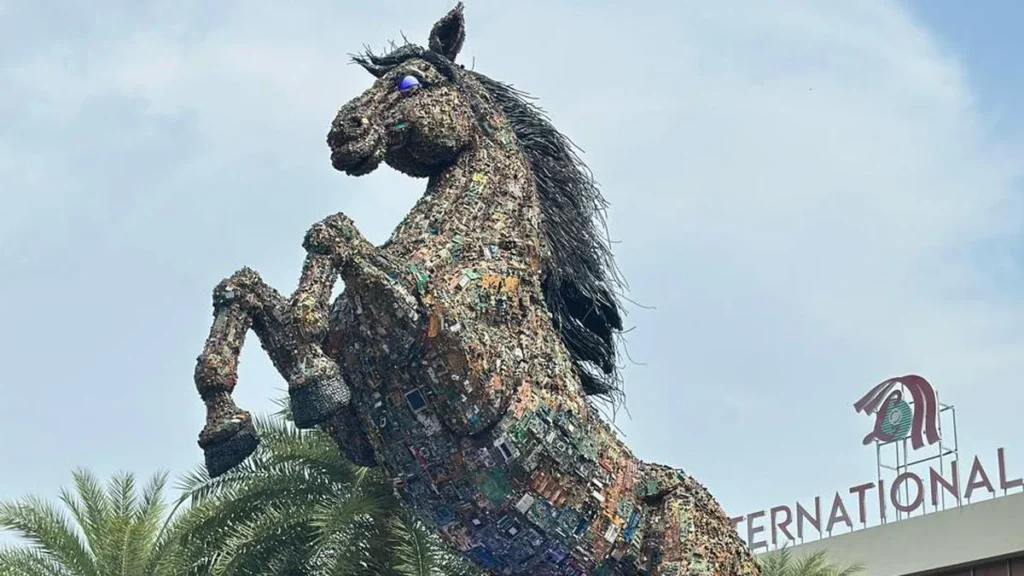
In the heart of Kochi, where the tradition of the ancient Spice Route meets the cutting edge of global cybersecurity, a new sentinel stands guard. At the 19th edition of c0c0n, India’s premier cybersecurity and hacking conference, attendees were greeted not just by lines of code and keynote addresses, but by a towering, two-tonne colossus: "The Trojan Project." This 25-foot statue of a horse, forged entirely from the discarded skeletons of our digital lives, serves as a haunting reminder of the threats lurking behind the screens we trust every day.
The Genesis of a Digital Icon
The installation, unveiled this week, is the brainchild of acclaimed artist DaVinci Suresh. Standing at an imposing 25 feet, the sculpture is a masterpiece of sustainable art. Suresh spent over six weeks painstakingly assembling the piece, utilizing approximately 850 individual components of electronic waste.
The anatomy of this "Cyber Trojan Horse" is a literal graveyard of modern technology: motherboards, processors, tangled clusters of fiber-optic cables, circuit boards, and memory modules that once powered the personal and professional lives of users. By repurposing this e-waste, Suresh has created more than just a statue; he has created a physical manifestation of the digital detritus that characterizes the 21st century.
"The Trojan Project draws inspiration from the legendary Trojan Horse of antiquity—a symbol of peril concealed behind an apparently harmless or attractive exterior," noted an event organizer during the unveiling ceremony. "By bringing this concept to life, we aim to make the abstract, often invisible risks of the digital world—malware, phishing, and social engineering—tangible and understandable to the general public."

Chronology: From Concept to Monument
The journey of the Cyber Trojan Horse began as a visionary proposal to bridge the gap between technical security discourse and public consciousness.
- Late August 2026: Initial conceptualization of the project began, focusing on the synergy between electronic waste management and cyber education.
- September 2026: Artist DaVinci Suresh commenced the construction process. The logistical challenge was significant, requiring the sourcing and sanitization of over 850 pieces of e-waste to ensure structural integrity and safety.
- October 1, 2026: The final touches were applied to the two-tonne structure, ensuring it could withstand outdoor elements while maintaining its aesthetic impact.
- October 7, 2026: The statue was transported to the c0c0n 2026 venue in Kochi, serving as the centerpiece for the opening of the 19th annual conference.
- October 10, 2026: As the conference concludes, authorities and stakeholders finalize plans for the permanent relocation of the installation to Nehru Park in Fort Kochi.
Bridging Cybersecurity and Child Safety
While the primary objective of the sculpture is to raise awareness about general cybersecurity, its scope has broadened significantly through a strategic partnership. The project was launched in collaboration with Childlight – Global Child Safety Institute, a prestigious data institute hosted by the University of Edinburgh.
This partnership elevates the sculpture from a mere art installation to a global advocacy tool. The statue now serves as a high-visibility monument dedicated to the fight against online child sexual exploitation and abuse (OCSEA). By using the symbolism of the Trojan Horse—which represents the deceptive nature of predators hiding behind digital anonymity—the organizers aim to sound a global alarm.
"The visibility of this monument allows us to extend our reach far beyond the walls of this conference," stated a representative from the Childlight institute. "When people see this horse, they are forced to confront the reality that the internet, while a tool for progress, can also be a medium for profound harm if not monitored and secured."
The Dual Mandate: Cyber Awareness and Environmental Stewardship
The project carries a secondary, equally vital message: the environmental cost of our digital addiction. Electronic waste is one of the fastest-growing waste streams in the world, often containing toxic materials that leach into soil and water systems when disposed of improperly.

By constructing the Trojan Horse from e-waste, DaVinci Suresh demonstrates a circular economy model. The installation proves that "waste" is a relative term; in the hands of an artist, a failed processor or a defunct motherboard becomes a building block for public education. This intersection of environmental science and digital security highlights a growing trend in public policy: the need for "digital sustainability," where the life cycle of hardware is managed with as much rigor as the data that runs on it.
Future Prospects: A Permanent Landmark
As c0c0n 2026 wraps up its final sessions today, the fate of the statue has become a point of public interest. Artist DaVinci Suresh has confirmed that discussions are underway to permanently install the horse in Nehru Park, Fort Kochi.
"If the plan succeeds, we will make the necessary structural modifications to ensure the statue remains a permanent, weather-resistant feature of the city’s landscape," Suresh said. The potential move to a public park would ensure that the message of cybersecurity—the need for constant vigilance and skepticism of "gifts" from unknown sources—remains at the forefront of the public mind, even long after the conference delegates have departed.
Implications for Public Security
The presence of the Cyber Trojan Horse at a state-sponsored conference—organized by the Kerala Police in association with the Information Security Research Association—signals a shift in how law enforcement agencies approach public awareness. Traditional seminars and pamphlets are often insufficient in an era of sophisticated cybercrime. By utilizing experiential art, the organizers are engaging the public through emotion and visual impact rather than just technical jargon.
The Human Element of Security
The "Trojan" metaphor is particularly apt for the modern era. Today’s cyber threats do not always arrive through brute-force attacks; they often arrive as "harmless" emails, attractive apps, or deceptive social media profiles. The statue serves as a daily reminder that the human element is the final, and often most vulnerable, line of defense.

A Global Message from Kochi
As the conference concludes, the ripple effects of this initiative are expected to be felt internationally. By aligning with the University of Edinburgh’s data institute, the organizers have ensured that the lessons learned in Kochi are applicable on a global scale. The Trojan Horse of 2026 is a warning: just as the Greeks realized too late that the wooden horse was a vessel for their downfall, modern users must realize that every digital interaction carries the potential for both immense opportunity and catastrophic risk.
Conclusion
The 19th edition of c0c0n will likely be remembered not just for the technical breakthroughs discussed by the experts, but for the 25-foot horse that stood watch over the proceedings. It is a testament to the fact that cybersecurity is not merely a task for IT professionals; it is a shared societal responsibility.
As the sun sets on the final day of the conference, the Trojan Horse remains in Kochi—a silent, metallic sentinel, reminding every passerby that in the digital age, the most dangerous things are often those that look the most inviting. Whether it finds its permanent home in Nehru Park or elsewhere, the impact of this installation is clear: the conversation surrounding digital safety has just become much larger, and much more difficult to ignore.