The End of Information Overload: Why Marketing Leaders Are Choosing Curation Over Chaos
In the modern digital landscape, the paradox of choice has become the primary adversary of the marketing professional. Every day, the average executive is bombarded by a deluge of industry reports, LinkedIn think-pieces, podcasts, and "must-read" whitepapers. This saturation, rather than informing, often leads to analysis paralysis.
The prevailing wisdom in the industry has long been to produce more—more content, more touchpoints, and more noise. However, a significant shift is underway. Marketing leaders are realizing that they do not need more content; they need better filters. As attention becomes the most scarce commodity in the corporate world, the newsletter is experiencing a renaissance, evolving from a simple distribution channel into an essential strategic asset.
The Data-Driven Pivot: Why Newsletters Still Rule
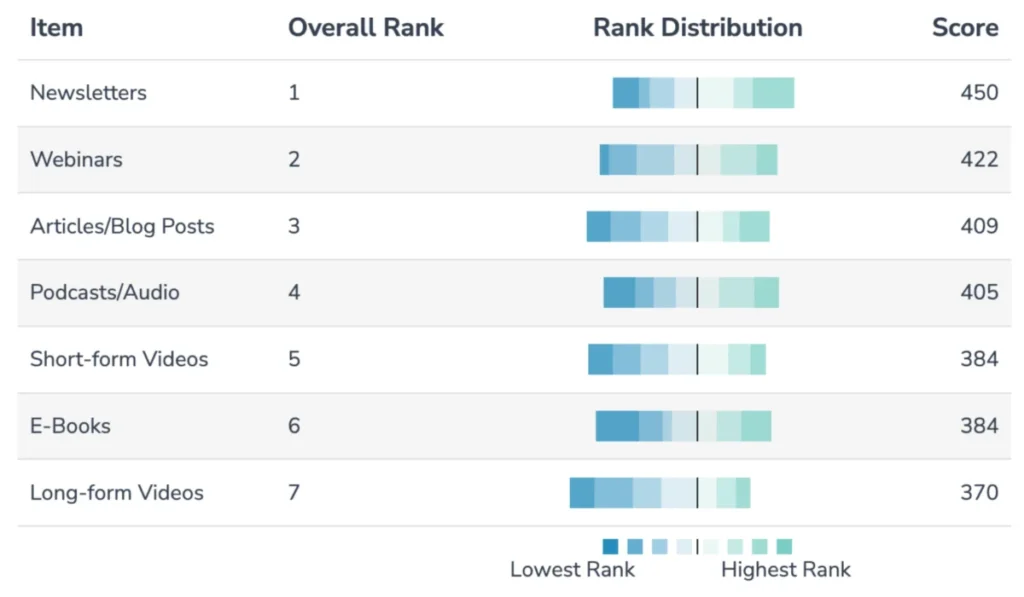
At Convince & Convert (C&C), a leading voice in digital strategy, this realization hit home after a comprehensive annual survey of their audience. When asked to rank their preferred formats for consuming marketing trends and professional insights, the results were unequivocal: newsletters outperformed short-form video, webinars, blogs, and podcasts by a significant margin.
Respondents were asked to rank seven distinct content formats from one to seven. Newsletters were nearly twice as likely to claim the top spot as any other medium. This data point is not merely a preference for text; it is a signal of a behavioral shift. Marketing leaders are time-poor and decision-heavy. They are not looking for more raw data; they are looking for synthesis.
This is the "curation gap." Audiences are increasingly craving smart, high-level summaries that not only explain what happened in their industry but also articulate why it matters and how it should influence their strategic planning.
Chronology of a Rebrand: From ‘ON’ to ‘The Trendline’
For years, C&C maintained a newsletter titled ON, which served as a repository for their various content outputs—blog posts, podcast episodes, and training materials. While functional, the model eventually hit a wall of diminishing returns. As the team observed the changing habits of their readership, it became clear that the legacy "link-list" format was failing to provide the immediate value required by today’s fast-paced, high-stakes marketing environment.
The transition to the new format, now branded as The Trendline, did not happen overnight. It was a calculated evolution based on three core insights:

- The Need for Synthesis: Readers were tired of clicking through to external pages to find out if a piece of content was relevant.
- The "Value-Upfront" Mandate: The new editorial strategy prioritizes delivering core insights directly within the email body.
- Strategic Hierarchy: The format was shifted away from a chronological "content medium" layout to a topical, insight-led structure.
This shift marks a departure from traditional "broadcasting" to a "debriefing" model, where the newsletter acts as an executive summary for the professional marketing community.
Supporting Evidence: The Psychology of Curation
The success of modern newsletters—and the subsequent pivot by major brands—is rooted in cognitive psychology. When a professional is faced with a wall of links, the friction required to process that information often leads to abandonment. Conversely, a well-curated "debrief" reduces cognitive load.
By framing information through a specific strategic lens, publishers like Convince & Convert act as a trusted filter. This is a crucial distinction. In an era of AI-generated content and infinite social media feeds, the most valuable asset a brand can possess is "editorial authority"—the ability to tell an audience what is signal and what is noise.
Data from the recent C&C survey confirms that when senior marketing decision-makers are presented with information, they prioritize problem-solving over raw data points. They don’t need twenty charts; they need the one insight that allows them to adjust their trajectory for the coming quarter.
Official Strategy: The Pillars of ‘The Trendline’
The rebranding of The Trendline was not just a name change; it was a fundamental overhaul of the editorial workflow. The team identified four specific improvements designed to optimize the reader’s experience:
- Topical Focus: Rather than organizing by format (e.g., "Our latest podcast"), the newsletter is organized by industry impact.
- The Executive Lens: Each story is filtered through the C&C team’s strategic perspective, explicitly stating why a trend matters to the reader.
- Actionable Takeaways: Every segment is designed to prompt a "what should we do next" thought process.
- Interactive Engagement: The inclusion of "Sound Off" polls provides a direct feedback loop, allowing the editors to capture data on reader sentiment without relying on opaque metrics like clicks or opens.
These changes represent a commitment to "owned media." By investing in a newsletter, companies can bypass the volatility of social media algorithms and build a direct, trusted relationship with their audience.
Implications for Marketing Leaders
The transition of The Trendline serves as a case study for any organization looking to refine its content marketing strategy. The implications for the broader industry are profound:

1. The Quality Bar Has Been Raised
Strategies that worked five or ten years ago—such as simply aggregating links or repurposing blog content—are no longer sufficient. If your newsletter is not providing unique, condensed value that can be consumed without clicking, it is likely being ignored.
2. Know Your Audience’s Pain Points
Before launching a newsletter or a campaign, the essential first step is audience research. You must identify exactly how your specific audience prefers to consume information. For CMOs and senior leaders, that means high-level, actionable insights delivered in a format that saves time, not one that requires more of it.
3. Move Toward ‘Owned’ Authority
The volatility of external platforms means that "rented" audiences on social media are not enough. Building a newsletter that functions as a high-value, exclusive resource allows a brand to own the relationship with its prospects and clients. It creates a space where the brand isn’t just selling, but teaching and guiding.
4. Optimize for Efficiency
The most successful modern newsletters are designed for the "skim-and-absorb" reader. By utilizing clear hierarchies, summary sections, and a consistent voice, brands can ensure their message is received even if the reader only has ninety seconds to spare.
A New Era of Email Marketing
The shift from ON to The Trendline is not a lateral move; it is a vertical climb in the value chain of content marketing. It requires more effort, more editorial oversight, and a deeper commitment to understanding the reader’s day-to-day challenges.
As we look toward the future of digital engagement, it is evident that the "content explosion" phase of the internet is nearing its end. We are entering an era of "curated intelligence." For marketing leaders, the goal is no longer to be the loudest voice in the room; it is to be the most helpful filter.
By prioritizing the reader’s time and focusing on actionable strategic insights, brands can transform their newsletters from forgotten inbox clutter into essential business tools. The lesson is clear: if you want to gain trust, stop shouting and start curating. The era of the "debrief" has arrived, and it is the most effective way to cut through the noise of the modern digital landscape.