The End of the Free Ride: AWS WAF Launches AI Traffic Monetization to Curb the Data Scraping Gold Rush
In a significant shift for the digital economy, Amazon Web Services (AWS) has unveiled a groundbreaking feature for its Web Application Firewall (WAF): AI Traffic Monetization. This capability allows publishers and content owners to treat AI bots and automated agents as paid customers, effectively turning the massive, uncompensated surge in AI scraping into a viable revenue stream. By implementing per-request pricing directly at the network edge, AWS is providing a structural solution to a problem that has plagued the web since the rise of Large Language Models (LLMs).
The Main Facts: Turning Scraping into Revenue
For years, the relationship between web publishers and AI crawlers has been fundamentally one-sided. While traditional search engines like Google or Bing crawl websites to index content—thereby driving traffic back to the source—AI bots consume content to synthesize answers within their own interfaces. This "zero-click" architecture leaves publishers with the infrastructure costs of hosting and serving data, while the AI companies capture the value, often without providing ad impressions, subscriptions, or referral traffic in return.
AWS WAF’s new monetization capability directly addresses this imbalance. It allows site owners to:
- Set Granular Pricing: Configure costs per request based on specific content paths, bot categories, or verification tiers.
- Bypass Complex Integration: Manage these policies directly within the AWS WAF console without writing application code or modifying origin infrastructure.
- Direct Payments: Collect revenue in stablecoins (USDC) directly into preferred digital wallets, with settlement facilitated by Coinbase’s x402 protocol.
- Automated Enforcement: Use the HTTP 402 "Payment Required" status code to trigger an automated, machine-to-machine payment flow.
This feature is currently available for all Amazon CloudFront distributions, positioning AWS as the first major cloud provider to bake automated "AI taxation" into the infrastructure layer.
A Chronology of the AI Scraping Conflict
The necessity for this tool is rooted in a rapid, three-year evolution of web traffic patterns:
- The Rise of the Scraping Economy (2023–2024): As generative AI gained mainstream traction, the volume of automated requests skyrocketed. AI-specific crawlers began to account for over 50% of web traffic for many publishers, with growth rates exceeding 300% year-over-year.
- The Visibility Gap: Initially, tools like AWS WAF Bot Control provided the ability to see and block this traffic. However, publishers were forced into a binary choice: either allow the bot to drain server resources for free or block it entirely and lose potential exposure to AI-driven discovery.
- The Demand for Reciprocity: As the financial burden of serving AI bots grew, publishers began demanding compensation for their training data. Until now, this required individual licensing agreements—a process too slow and expensive for the vast, distributed nature of the web.
- The Infrastructure Solution (2026): AWS integrated the x402 protocol, a machine-readable payment standard, directly into its edge network. This allows for the programmatic negotiation of content access in milliseconds, moving the conversation from legal battlegrounds to automated, real-time micro-payments.
Supporting Data: The Impact of Bot Traffic
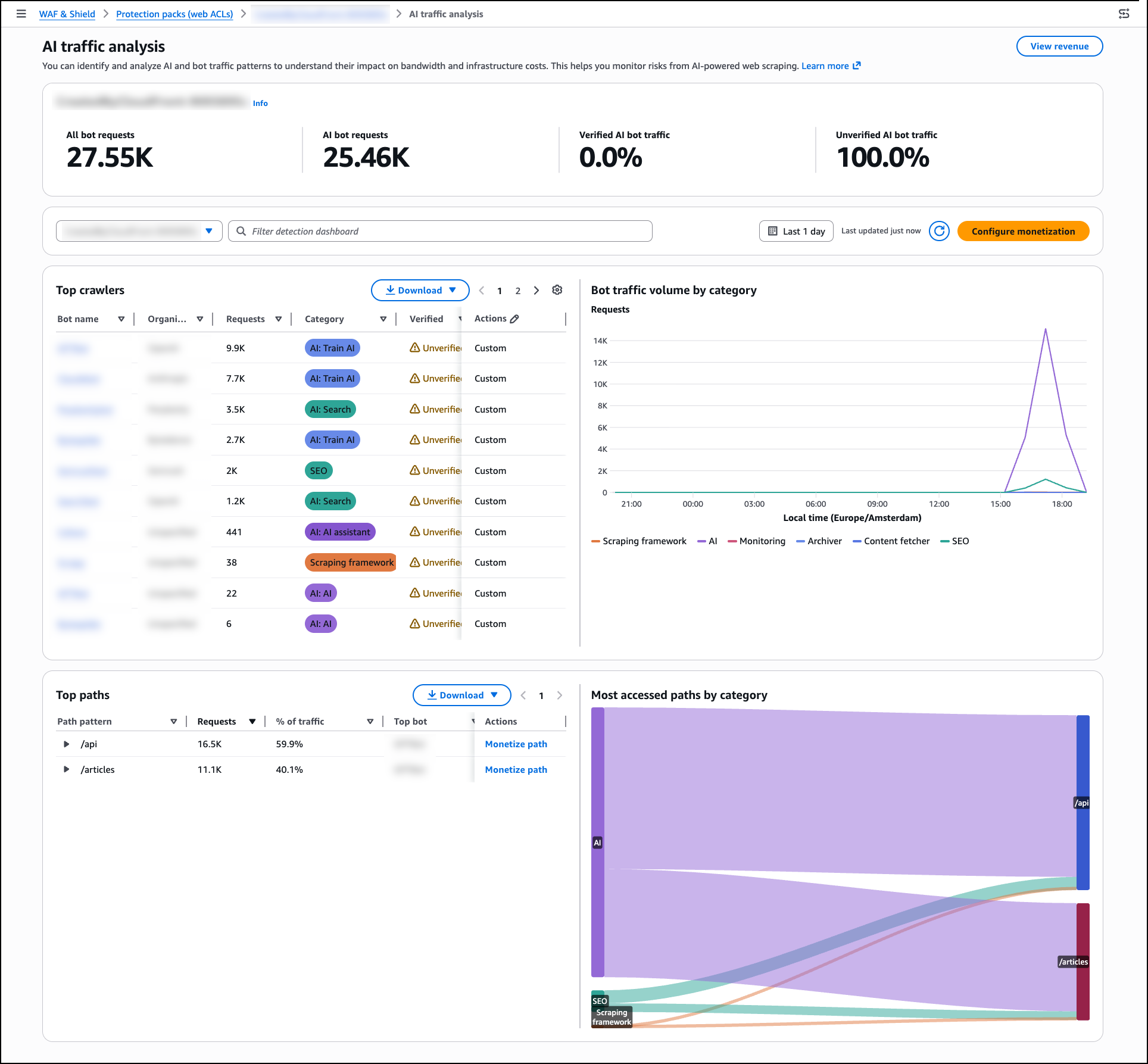
The economic case for this monetization tool is bolstered by the metrics provided in the new AI traffic analysis dashboard. For many content providers, the "infrastructure tax" is no longer negligible.

- Traffic Composition: According to AWS, AI bots now constitute more than half of the web traffic for typical content providers.
- Infrastructure Costs: The dashboard allows users to monitor bandwidth consumption and peak request rates, which often reveal that a handful of unverified bots are responsible for significant, non-revenue-generating server loads.
- Categorization Accuracy: AWS WAF Bot Control now classifies over 650 distinct AI bot types, including high-profile agents like GPTBot, Claude-Web, and Perplexity-Bot. This granularity allows publishers to charge different rates based on the perceived value of the data being scraped.
- Revenue Potential: Through the "Real" and "Test" modes, publishers can analyze the potential revenue generated by their content paths before committing to a final pricing strategy, ensuring that the monetization model is aligned with actual traffic patterns.
Official Responses and Strategic Vision
While AWS has not issued a singular public manifesto on the ethical implications of this move, the technical documentation suggests a philosophy of "neutral infrastructure." By providing the tools for monetization rather than dictating the prices, AWS is positioning itself as the intermediary of a new "Data Exchange" economy.
The integration with Coinbase’s x402 facilitator is a strategic endorsement of blockchain-based settlement. By utilizing stablecoins like USDC, AWS avoids the friction of cross-border banking, currency conversion fees, and the delay of traditional payment gateways. This allows for near-instant, trustless settlement, which is essential for micro-transactions occurring at the speed of a web request.
Furthermore, by announcing upcoming integrations with Stripe and the Machine Payments Protocol (MPP), AWS is signaling that this is not a niche feature for crypto-native companies, but a foundational update aimed at mainstream e-commerce and media platforms.
The Broader Implications: A Shift in Web Value
The introduction of AI Traffic Monetization is a watershed moment for the internet. Its implications ripple across three main areas:
1. The Preservation of the Open Web
Without a way to monetize their content, many publishers have been forced to implement "walled gardens," restricting access to bots and humans alike. By enabling a paid access model for bots, AWS provides a middle path that keeps content accessible to AI models while ensuring the creator is compensated. This could prevent a mass exodus of publishers from the public web into private, paywalled repositories.
2. The Standardization of "Machine-to-Machine" Payments
The x402 protocol represents a fundamental shift in how the web handles transactions. Historically, payments have been human-centric—requiring login forms, credit card inputs, and session cookies. The 402 "Payment Required" response creates a standardized, machine-to-machine economy. If this becomes a standard, we may see a future where every API call or data scrape is a transaction, effectively turning the internet into a high-frequency, automated marketplace.
3. A New Power Dynamic in AI Training
Large AI companies have historically treated the web as a "public good" available for free training. This new tool changes the leverage dynamic. Large publishers, using AWS WAF, can now effectively "gate" their high-value data, forcing AI companies to decide whether the training value of that data is worth the per-request price. This could lead to a more equitable distribution of AI wealth, where data owners are compensated based on the utility their information provides to the model.
Getting Started: A Practical Outlook
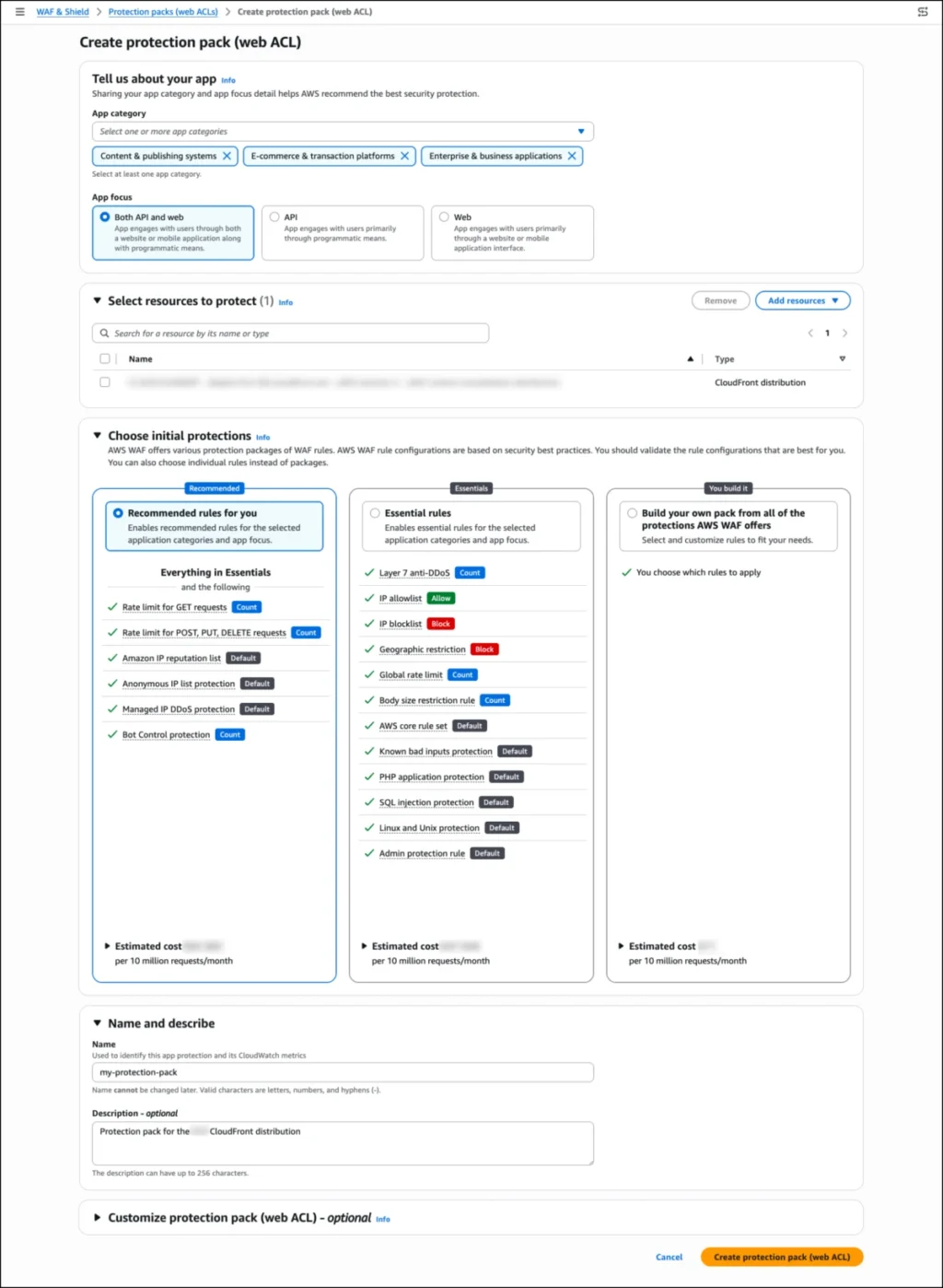
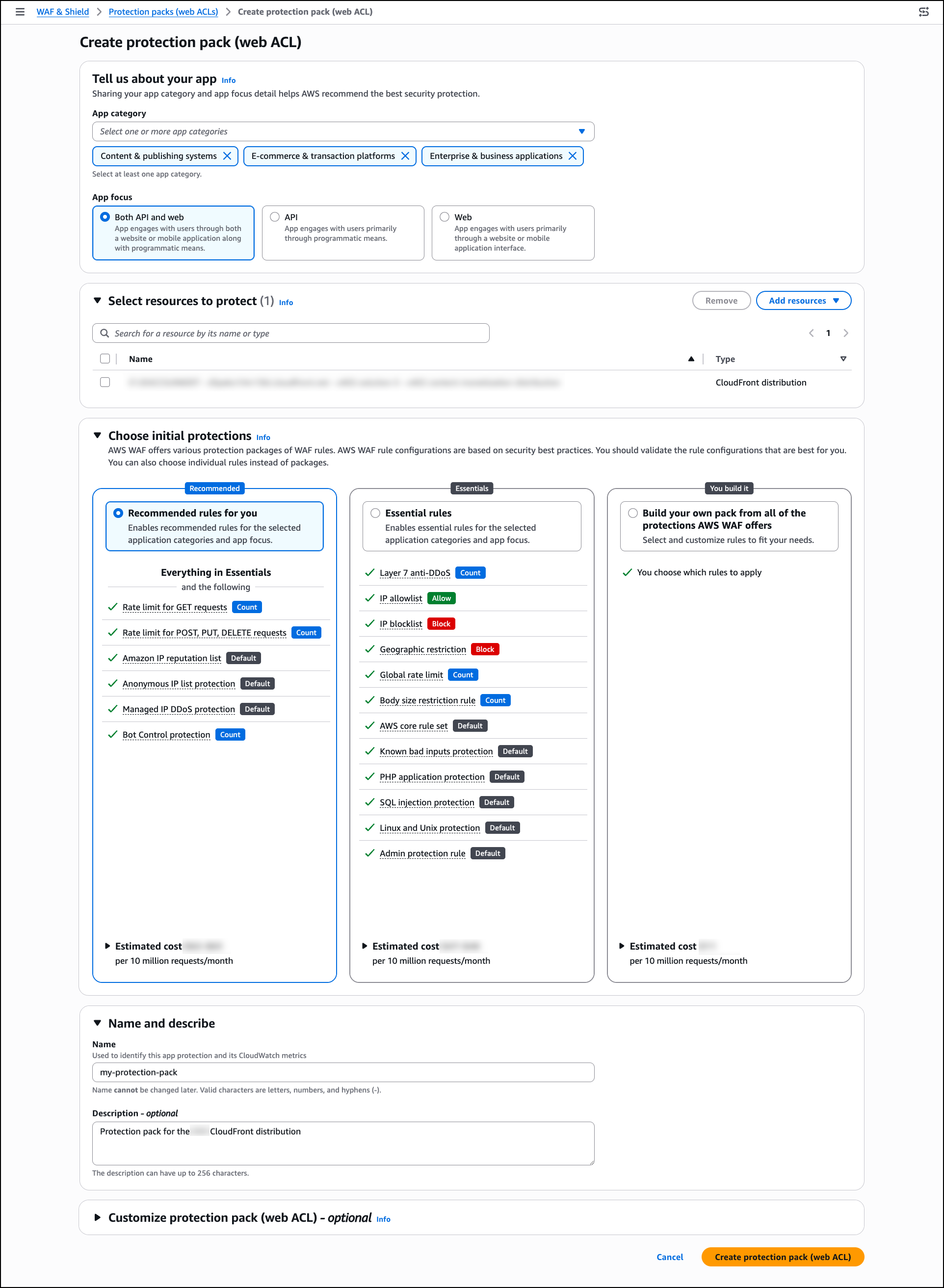
For the average AWS customer, the barrier to entry is relatively low. The process is handled through "Protection Packs," which consolidate security and monetization rules. By following these steps, organizations can transition from passive victims of scraping to active participants in the data economy:
- Audit: Enable WAF Bot Control on CloudFront distributions to gain visibility.
- Analyze: Use the new AI Traffic Analysis dashboard to identify the most valuable content paths.
- Configure: Create a Protection Pack, define your pricing tiers per bot category, and set up your crypto-wallet address for settlement.
- Test: Utilize the "Test" currency mode to validate the payment flow using testnets, ensuring that the integration does not interrupt legitimate human traffic.
- Go Live: Toggle to "Real" mode and begin receiving automated payments for the data that powers the next generation of AI.
As the digital landscape continues to adapt to the reality of generative AI, AWS’s latest move suggests that the future of the web will be defined by automated, real-time value exchange. The era of the "free lunch" for AI crawlers is coming to an end, replaced by a more structured, compensated ecosystem that promises to sustain the creators who feed the machines.