The End of the Free Ride: Decoding UPI’s New MDR Regime, EV Innovation, and India’s Evolving Startup Ecosystem
Main Facts
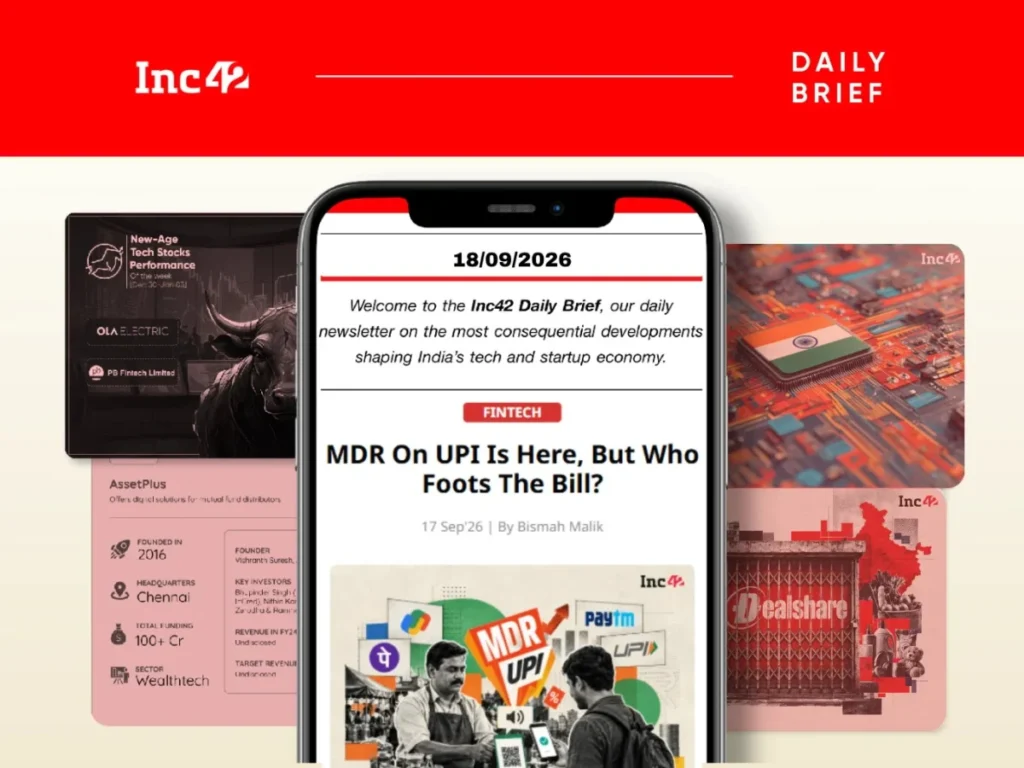
India’s digital payments landscape is undergoing its most profound structural shift since the inception of the Unified Payments Interface (UPI). Effective October 15, the era of universally free UPI transactions is drawing to a close for high-value commerce. Under a newly notified regulatory framework, Peer-to-Merchant (P2M) UPI transactions exceeding ₹2,000 will now attract a Merchant Discount Rate (MDR) capped at 0.4%, with an absolute ceiling of ₹300 for transactions valued at ₹75,000 and above.
While smaller merchants—specifically those processing up to ₹1 Lakh per month via QR codes—remain exempt, businesses crossing this volume threshold repeatedly will be pulled into the MDR net. This policy adjustment arrives at a crucial juncture for India’s fintech sector, balancing the push for financial sustainability against the foundational convenience that drove UPI’s meteoric rise.
Simultaneously, the broader Indian startup ecosystem is witnessing a wave of high-impact developments, ranging from multi-million-dollar funding rounds in indigenous deep-tech (such as DheyaTech’s ₹43 Cr injection) to high-profile market debuts (RentoMojo’s 19% premium listing) and innovative cleantech pivots by startups like Swapp Design.
Chronology of Events
The evolution of the digital payments framework and its intersection with current market trends trace a clear timeline:

- Pre-2026 (The Growth Era): UPI operates under a zero-MDR mandate, heavily subsidized by ecosystem stakeholders and government support to achieve ubiquitous adoption across retail and street-side vendors.
- Early 2026: Mounting financial pressures on payment aggregators and fintech startups spark intense industry debate regarding the long-term viability of a completely subsidy-reliant payments infrastructure.
- Mid-2026 (Policy Formulation): Regulatory bodies review the operational costs borne by payment service providers (PSPs) and fintechs, paving the way for a calibrated reintroduction of transaction fees for high-ticket commercial transfers.
- October 15, 2026 (The New Regime Implementation): The formal imposition of the 0.4% MDR on P2M transactions above ₹2,000 goes live. Small-scale vendors below the ₹1 Lakh monthly QR code threshold are shielded, protecting grassroots commerce.
- Concurrent 2026 Ecosystem Milestones: Concurrently, events like SEMICON India 2026 highlight hardware and deep-tech manufacturing commitments, while companies like RentoMojo and DealShare navigate public market debuts and restructuring phases.
Supporting Data & Financial Metrics
A closer look at the numbers defining the new UPI MDR framework and concurrent startup market highlights reveals the scale of economic transformation:
- MDR Threshold: 0.4% levied on P2M UPI transactions exceeding ₹2,000.
- MDR Cap: Capped at ₹300 for transactions valued at ₹75,000 and higher.
- Exemption Limit: Merchants with cumulative monthly receipts under ₹1 Lakh via QR codes remain entirely exempt from MDR.
- EV Battery Swapping Market: Projected to reach a $517.9 Mn market opportunity in India by 2034, driven by commercial fleet demands.
- Swapp Design Unit Economics: Robotic battery-swapping stations reduce upfront station infrastructure costs from approximately ₹4 Crore down to ₹15 Lakh, scaling throughput from 6 to 48 EVs per hour.
- Recent Funding & Financial Highlights:
- DheyaTech: Secured ₹43 Cr to scale indigenous gas turbine engines.
- Aakash: Trimmed FY26 losses by 16% down to ₹186.5 Cr, with a flat top line of ₹2,040 Cr.
- RentoMojo: Achieved a bumper market debut, listing at a nearly 19% premium.
Official Responses & Industry Perspectives
The announcement of the UPI MDR rollout has triggered robust discussions among policymakers, fintech innovators, and merchants.
The Fintech Perspective: Sustainability Over Subsidies
Fintech startups and digital payment aggregators have largely welcomed the policy shift. Industry advocates argue that relying indefinitely on subsidies is unsustainable for maintaining heavy technology upgrades, fraud detection systems, and expansive payment infrastructure. By introducing a predictable revenue pool through MDR, smaller payment players gain a fighting chance to compete against dominant consumer-facing super-apps, ensuring a healthier and more competitive market ecosystem.
The Government Stance: Defending the Grassroots
Addressing external pressure claims, central authorities have emphasized that the framework is meticulously designed to protect the smallest economic units. By exempting merchants processing under ₹1 Lakh monthly via QR codes, the policy ensures that street vendors, local kirana stores, and low-volume sellers continue to enjoy friction-free, cost-free digital acceptance. The government maintains that the regulation strikes a pragmatic chord between nurturing grassroots digital adoption and fostering commercial accountability.

Merchant Concerns and Consumer Impact
While the government has explicitly prohibited merchants from directly passing on MDR fees as separate checkout surcharges to consumers, retail associations express anxiety. Facing compressed profit margins, businesses may choose to absorb the cost through broad, quiet price adjustments across their product portfolios. Furthermore, retail analytics suggest that high-value buyers, accustomed to entirely frictionless transactions, might occasionally revert to cash or alternative channels if psychological friction increases at checkout.
Implications for the Indian Startup & Economic Ecosystem
The structural adjustments brought on by the UPI MDR framework and the broader market trends documented this quarter carry profound implications for stakeholders across the board.
1. Reshaping Retail Margins and Omnichannel Strategy
For Direct-to-Consumer (D2C) brands, electronics retailers, and high-ticket service providers, MDR is no longer a non-issue. Businesses must now incorporate payment acceptance costs directly into their unit economics, weighing MDR alongside logistics fees, gateway charges, and marketplace commissions. This could accelerate the adoption of smarter pricing strategies and incentivize merchants to optimize their transaction channel mixes.
2. Deep-Tech and Cleantech Momentum
Beyond fintech, India’s deep-tech and cleantech sectors are demonstrating remarkable resilience and ingenuity. Startups like Swapp Design are addressing critical pain points in the commercial EV space. By deploying autonomous SwappBot robotics that switch depleted battery packs in under a minute—and slashing station setup costs from ₹4 Cr to ₹15 Lakh—they are transforming asset utilization for delivery fleets. Simultaneously, funding rounds such as DheyaTech’s ₹43 Cr capital infusion underscore investor appetite for indigenous engineering solutions in aerospace and heavy machinery.

3. Public Markets and Corporate Restructuring
The public markets continue to present a mixed yet maturing picture. While legacy direct-to-consumer and rental platforms like RentoMojo are celebrating successful market debuts with strong investor demand (listing at a nearly 19% premium), other players like DealShare face strategic pivots and house-of-cards realignments as they hunt for final acquisition deals. Education and test-prep giants like Aakash are signaling fiscal discipline by trimming FY26 losses by 16% despite flat top-line growth.
4. The Future of Digital Payments
Ultimately, the central question remains: Can UPI become financially viable without losing the low-cost advantage that made it indispensable?
As India steps into this new regulatory chapter on October 15, the success of the UPI MDR policy will depend entirely on execution, vigilance against illegal merchant surcharging, and the ability of fintechs to reinvest newly unlocked revenues into superior, safer, and faster payment infrastructure. If balanced correctly, India’s digital public infrastructure will emerge stronger, proving that scale and financial sustainability can indeed coexist.