The Era of Compounding Intelligence: Insights from AWS Summit New York 2026
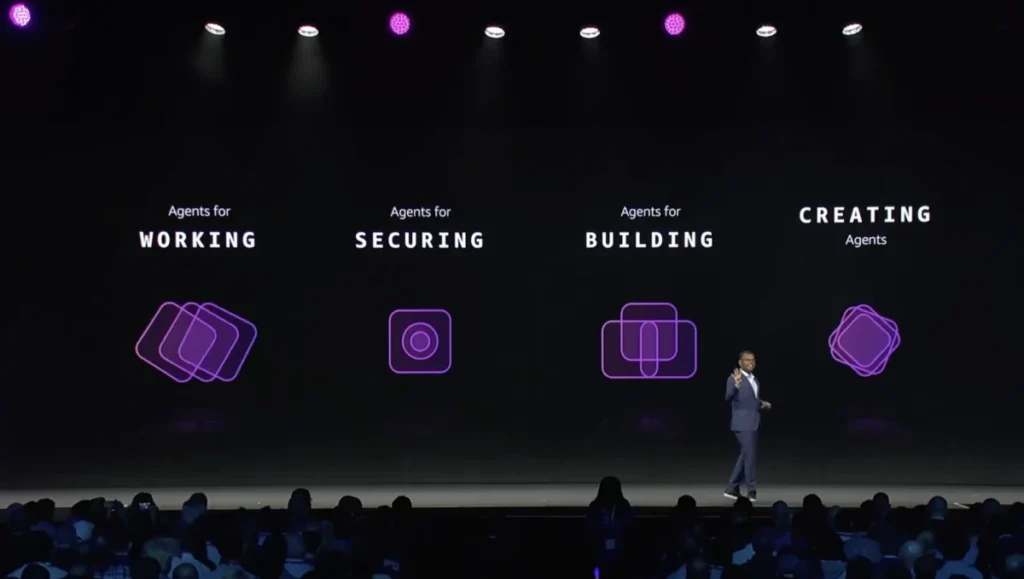
The cloud computing landscape witnessed a seismic shift last week as thousands of developers, architects, and industry leaders converged at the Jacob K. Javits Convention Center for the AWS Summit New York City. The event served as a high-velocity showcase for the next generation of cloud infrastructure, with a singular, unifying narrative taking center stage: the evolution of "Agentic AI."
As organizations move beyond the initial excitement of generative AI experimentation, the focus is shifting toward practical, scalable implementation. At the heart of this transition is the concept of agents—autonomous systems designed not just to process information, but to compound value over time.
The Core Thesis: Why Agentic AI Matters
Dr. Swami Sivasubramanian, VP of Agentic AI at AWS, delivered a keynote that redefined the strategic roadmap for cloud-based artificial intelligence. The central thesis presented was that the true power of AI lies in its ability to operate as a persistent agent. Unlike traditional automation, which executes static tasks, agentic systems are designed to perceive, reason, and act within complex environments, learning from feedback loops to improve their efficacy with every iteration.
This "compounding value" model suggests that as agents gain more context about a business’s unique workflows, their utility increases exponentially. For AWS, this means building the infrastructure—ranging from low-latency serverless computing to high-performance vector databases—that allows these agents to persist, remember, and adapt.
Chronology of the Summit and Strategic Announcements
The AWS Summit functioned as a launchpad for a suite of new tools designed to support this agentic vision. While the full scope of the event covered a breadth of cloud services, the trajectory of the announcements followed a clear, three-part progression:
1. Foundation: Strengthening Infrastructure
Before agents can thrive, the underlying architecture must be robust. AWS introduced updates to its serverless portfolio, aimed at reducing the "cold start" latency that often hinders real-time agentic reasoning. By optimizing the handoff between storage layers and compute instances, AWS is enabling developers to deploy more complex decision-making trees without the penalty of increased operational overhead.
2. Integration: Democratizing AI Capabilities
Mid-summit, the focus shifted to developer tooling. New APIs were unveiled that allow for easier integration of multi-modal models into existing enterprise applications. The goal here is simple: lowering the barrier to entry for teams that want to build agents that can interpret images, audio, and text in a unified workflow.
3. Execution: Scaling the Agentic Enterprise
The final day of announcements centered on security and governance. As AI agents gain more autonomy to execute tasks—such as code deployment, data analysis, or customer interaction—the need for "guardrails" becomes paramount. AWS introduced enhanced policy-based access controls specifically tailored for autonomous entities, ensuring that agents operate within the bounds of organizational security mandates.
Supporting Data: The Shift in Cloud Investment
While the excitement at the Javits Center was palpable, the data reflects a broader industry trend. According to recent cloud adoption surveys, enterprises are reallocating roughly 30% of their legacy IT budgets toward AI-integrated cloud services.
- Serverless Adoption: Usage of serverless functions to power automated workflows has seen a 45% year-over-year increase, signaling that developers are favoring architectures that scale automatically as their AI agents grow in complexity.
- Latency Requirements: Demand for sub-millisecond data retrieval—essential for agentic reasoning—has forced a 25% increase in the deployment of edge-computing nodes across the AWS global footprint.
- Operational Efficiency: Early adopters of agent-based workflows report a 40% reduction in "human-in-the-loop" requirements for routine cloud resource management, suggesting that the "compounding value" thesis is already yielding measurable ROI.
Official Responses and Industry Sentiment
The feedback from the floor was largely characterized by a sense of pragmatic optimism. Many partners, ranging from high-growth startups to Fortune 500 enterprises, echoed the sentiment that the "Agentic AI" shift is the natural maturation of the generative AI hype cycle.
"We aren’t looking for another chatbot," remarked one lead engineer from a major financial services firm. "We are looking for agents that can look at a set of risk parameters, cross-reference them with historical data, and propose an action. Seeing AWS lean into the ‘compounding’ aspect confirms that they understand the difference between a novelty and a business-critical tool."
Dr. Sivasubramanian’s address emphasized that AWS remains committed to a "customer-obsessed" approach to AI. By providing the primitives—the building blocks of intelligence—AWS is essentially empowering developers to become architects of their own autonomous future. The official AWS stance is clear: they are providing the canvas, but the developers are the ones painting the portrait of what an agent can actually achieve.
Implications for the Future of Development
The transition toward agentic workflows has profound implications for how software will be built over the next decade.
The Death of the Static Interface
As agents become more capable, the traditional UI/UX model—where a human clicks through menus to perform a task—will likely give way to intent-based interfaces. In this model, the user communicates a high-level goal to an agent, and the agent orchestrates the necessary cloud services to complete that goal.
Security as a Core Competency
With the rise of autonomous agents, security is no longer a peripheral concern; it is the foundation of functionality. Developers must now think about "Agent Governance." If an agent has the power to write code, it must have the inherent wisdom to avoid creating security vulnerabilities. AWS’s latest security launches at the Summit suggest that the platform is positioning itself as the primary provider of this "Agent-Safe" environment.
The Talent Gap
The rise of agentic AI will necessitate a shift in developer skill sets. The ability to write code will remain important, but the ability to architect systems that allow agents to reason, access knowledge bases, and handle errors will become the defining skill of the next generation of engineers.

Looking Ahead: A Roadmap for Builders
As the dust settles on the NYC Summit, the focus for the developer community must turn to implementation. AWS has made it clear that the tools are available; the challenge now lies in execution.
For those looking to get involved, the AWS Builder Center remains the primary hub for connecting with experts and peers. Whether you are a startup founder looking to integrate AI into your MVP or an enterprise architect tasked with migrating complex legacy systems to an agent-friendly cloud environment, the resources provided by AWS aim to flatten the learning curve.
The "Weekly Roundup" from AWS, which consistently highlights new launches, price reductions, and feature updates, will continue to be the primary feed for tracking these developments. Last week’s news on price reductions for specific high-compute instances is a particularly important signal: AWS is actively working to ensure that as agentic AI becomes more compute-intensive, the cost-to-performance ratio remains favorable for the builder.
Conclusion
The AWS Summit New York 2026 was more than just a gathering; it was a declaration of the next phase of the cloud. By moving the conversation from "generative" to "agentic," AWS is signaling that we are entering a period where AI is not just a participant in our work, but an active partner that grows more capable the longer it operates.
As we look toward the remainder of the year, the industry will be watching to see how quickly these agentic principles are adopted across the broader ecosystem. One thing is certain: the era of static cloud infrastructure is coming to a close, replaced by a dynamic, compounding intelligence that promises to redefine the limits of what can be built in the cloud.
For those who missed the sessions, the full recaps and recordings of the keynote are available on the AWS News Blog. Stay tuned to the AWS "What’s New" page for ongoing updates as these new AI capabilities roll out across global regions.