The Fall of Scattered Spider: How Two British Teenagers Crippled London’s Transport Network
In a landmark development for international cybersecurity, two young British men appeared in a London courtroom this week to enter guilty pleas for their roles in a catastrophic cyberattack that paralyzed Transport for London (TfL) in August 2024. The pleas, entered on the first day of what was scheduled to be a six-week trial, mark a significant turning point in the global effort to dismantle "Scattered Spider," a prolific and destructive cybercrime syndicate that has wreaked havoc on critical infrastructure, retail giants, and healthcare providers across the globe.
Thalha Jubair, 20, of East London, and Owen Flowers, 18, of Walsall, stood before the court to admit their involvement in a conspiracy to launch unauthorized attacks on TfL’s computer systems—actions that prosecutors argued posed a severe risk to human welfare by destabilizing the public transport network serving millions in the Greater London area.
The Faces of Modern Cyber-Terrorism
The sentencing of Jubair and Flowers, scheduled for July 15, 2026, will conclude a high-profile investigation led by the UK’s National Crime Agency (NCA). The youth of the defendants—Flowers was just a teenager when the TfL attack occurred—underscores a troubling trend in digital crime: the rise of highly sophisticated, youthful actors who leverage advanced social engineering and technical exploitation to hold massive corporations and municipal entities for ransom.
While Flowers and Jubair face justice in the UK, their digital footprints span the Atlantic. U.S. prosecutors have long tracked the duo, with Jubair appearing in a sweeping 2025 indictment in New Jersey. The allegations against them paint a picture of a relentless criminal enterprise that treated the world’s most secure networks as playgrounds for profit.
A Chronology of Chaos
To understand the gravity of the Scattered Spider threat, one must look at the timeline of their operations, which evolved from petty digital mischief into multi-million dollar extortion schemes.
2022: The SMS Phishing Spree
The seeds of the group’s notoriety were sown in the summer of 2022, when a massive SMS phishing campaign targeted employees at hundreds of organizations. By masquerading as internal IT support or HR departments, the group successfully harvested single sign-on credentials. This campaign served as the "proof of concept" for later, more devastating attacks. Victims included prominent tech and service platforms such as LastPass, DoorDash, Mailchimp, Plex, and Signal.
2023: The Las Vegas Siege
By late 2023, Scattered Spider had moved into the big leagues. The group famously targeted Las Vegas hospitality giants MGM Resorts and Caesars Entertainment. The resulting ransomware attacks were so disruptive that they crippled check-in systems, slot machines, and hotel booking portals for days. Investigative reports suggest that Owen Flowers was the voice behind the scenes during this period, anonymously granting media interviews to boast about the group’s successes and sow further chaos.
2024–2025: The UK Rampage
The group’s attention shifted toward the United Kingdom, where they targeted major British retailers, including Harrods, Marks & Spencer, and the Co-op Group. The climax of this domestic campaign was the August 2024 attack on Transport for London. By infiltrating the agency’s internal networks, the group demonstrated that no infrastructure—regardless of how essential—was beyond their reach.
The Anatomy of an Attack: From "Star Chat" to Ransom
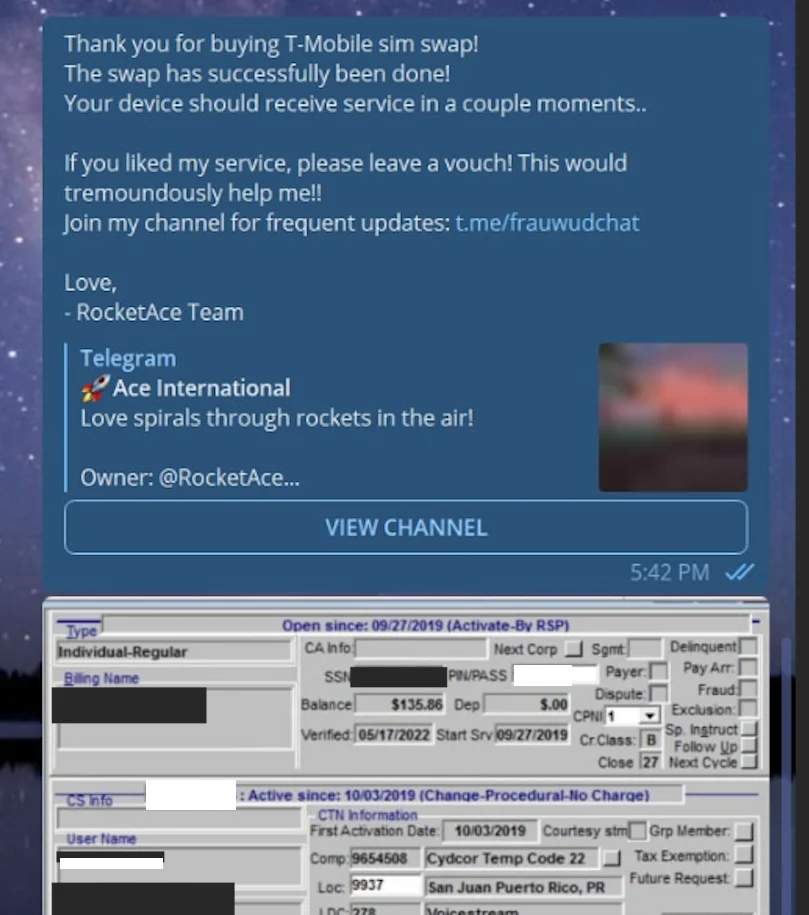
Central to the group’s methodology was a Telegram channel known as "Star Chat." Managed in part by Jubair, the channel functioned as an illicit marketplace and command-and-control center for SIM-swapping operations.

SIM-Swapping and Social Engineering
The group utilized a dual-pronged approach:
- SIM-Swapping: By compromising internal tools at major wireless providers, the group could redirect a victim’s phone number to a device under their control. This allowed them to intercept two-factor authentication (2FA) codes, effectively bypassing the primary security barrier for most corporate accounts.
- Emergency Data Requests (EDRs): Even as early as age 15, Jubair—operating under the handle "Everlynn"—was pioneering the use of fraudulent EDRs. By spoofing police and government email addresses, he coerced tech companies into surrendering private user data by claiming the requests were matters of life and death, thereby bypassing the need for a court order.
Supporting Data: The Cost of the Scattered Spider Era
The scale of the damage caused by Scattered Spider is staggering. According to the U.S. Department of Justice, the group’s activities between May 2022 and September 2025 involved at least 120 separate network intrusions across 47 U.S. entities.
- Ransom Demands: Victims are estimated to have paid at least $115 million in ransom payments to recover their data and restore operations.
- Cryptocurrency Theft: During the 2022 phishing spree alone, the group, including cohorts like Tyler "Tylerb" Buchanan, managed to siphon at least $8 million in cryptocurrency from unsuspecting victims.
- Global Enforcement: The international community has responded with vigor. In August 2025, Noah Michael Urban, a Florida-based member of the group, was sentenced to 10 years in federal prison and ordered to pay $13 million in restitution.
Official Responses and the Judicial Response
The UK and U.S. governments have characterized the prosecution of these individuals as a victory for international cooperation. The NCA’s ability to track the group to their residences in East London and Walsall represents a significant advancement in the attribution of cybercrimes.
However, the U.S. Department of Justice continues to hunt for other key members. Ahmed Hossam Eldin Elbadawy, Evans Onyeaka Osiebo, and Joel Martin Evans remain on the list of high-priority targets. The message from the DOJ is clear: the digital borders of the United States are protected, and those who target American infrastructure will be pursued across jurisdictions.
The Lasting Implications: What Comes Next?
The guilty pleas of Jubair and Flowers serve as a warning to the next generation of cyber-criminals. The "Scattered Spider" model—characterized by decentralized operations, the use of encrypted communication platforms, and the exploitation of human psychology rather than just code—forced the cybersecurity industry to evolve.
1. The Death of 2FA Reliance
The group’s success in bypassing SMS-based 2FA has accelerated the corporate transition toward FIDO2-compliant hardware security keys and phishing-resistant authentication methods. Companies can no longer rely on simple SMS codes to secure their staff.
2. A New Era of International Policing
The collaboration between the NCA, the FBI, and other international agencies has set a precedent for how global cyber-syndicates are dismantled. The ease with which these individuals moved between U.S. and UK targets required a seamless exchange of intelligence that was, until recently, difficult to achieve.
3. The Human Welfare Threshold
The specific charge of "causing risk of serious damage to human welfare" in the TfL case is significant. It moves the legal perception of a cyberattack from a "property crime" or "financial fraud" toward a crime against public safety. This shift in legal classification is likely to lead to harsher sentencing guidelines for cyber-attackers who target critical infrastructure in the future.
As the London court prepares to hand down its sentences on July 15, the legacy of Scattered Spider remains a sobering reminder of how vulnerable our modern, interconnected society truly is. For Jubair and Flowers, the digital high-life has come to a definitive, and permanent, end. For the rest of the world, the work of securing the digital backbone of society continues, with the hard lessons learned from the collapse of this notorious syndicate serving as the new blueprint for defense.