The Future of Mobile Hardware: A Recap of September’s Most Disruptive Tech Announcements
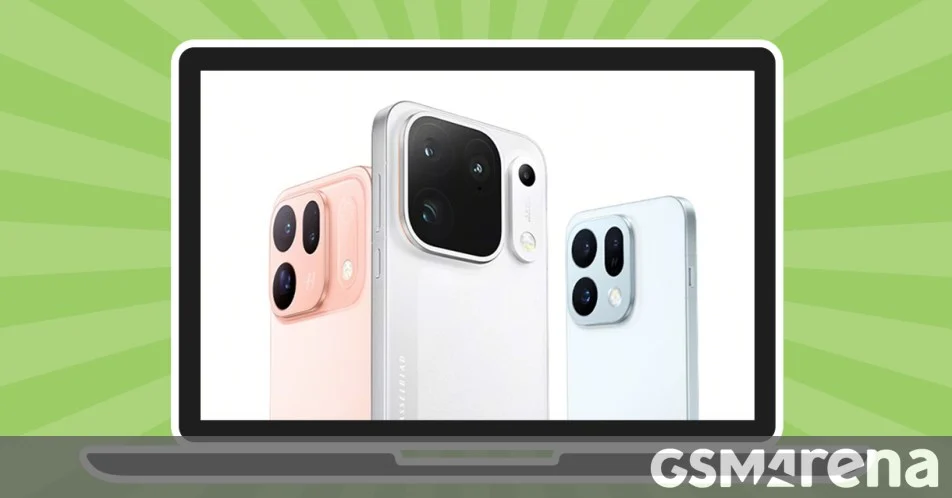
The third week of September has proven to be a watershed moment for the global smartphone industry. As manufacturers prepare for the final quarter of the year, the race to integrate advanced silicon, next-generation battery chemistries, and AI-centric display technologies has accelerated. From the looming launch of the Oppo Find X10 series to the early whispers of Samsung’s 2027 flagship lineup, this week has provided a roadmap for what consumers can expect in the coming months and years.
Main Facts: The New Industry Standard
The most significant trend observed this week is the pivot toward massive power capacity and high-performance silicon. Oppo, Xiaomi, and iQOO are leading the charge, effectively moving the goalposts for what constitutes a "flagship" battery. With devices like the upcoming iQOO 16 boasting 8,400mAh capacities and the Honor Magic9 Super Edition rumored to hit a staggering 11,000mAh, the industry is clearly moving toward silicon-carbon battery technology to bypass the limitations of traditional lithium-ion density.
Parallel to this, the chipset wars remain fierce. The debut of the Dimensity 9600 Pro and the Snapdragon 8 Elite Gen 6 Extreme suggests that mobile performance is entering a phase where raw throughput is being married to dedicated neural processing units (NPUs) designed to handle real-time generative AI tasks directly on the device.
Chronological Overview: A Week of Rapid-Fire Innovation
The week began with a flurry of leaks and confirmed launch dates, establishing a clear schedule for the remainder of the month.
- September 15-16: Initial reports confirmed the upcoming release of the Oppo Find X10 series, scheduled for September 22. Simultaneously, industry analysts began tracking the rollout of Samsung’s M16 OLED material.
- September 17-18: Focus shifted toward the mid-to-high-end market, with the unexpected arrival of the Samsung Galaxy A18 4G. This signaled Samsung’s intent to maintain dominance in the budget segment while upgrading their entry-level hardware to Android 17 and OneUI 9.
- September 19-20: Leaks surrounding the vivo V80 and the Honor Magic9 series dominated the conversation. The visual confirmation of Honor’s "Popcorn Yellow" variant for their Super Edition device sparked significant interest in the design-led market.
- September 21-22: The week closes with final preparations for the iQOO 16 launch, scheduled for September 29, which will serve as the commercial debut for the Samsung M16 OLED panel.
Deep Dive: Key Device Specifications and Technical Breakthroughs
The Oppo Find X10 Series
Oppo is set to dominate the September 22 launch window with three distinct offerings: the Find X10, the Find X10 Pro Max, and the budget-conscious Find X10 E. The Pro Max is the clear star, boasting a triple 200MP camera array. By utilizing a 200MP sensor for the primary, ultrawide, and telephoto lenses, Oppo is clearly targeting mobile photography enthusiasts who demand high-fidelity cropping and zooming capabilities. The inclusion of the Dimensity 9600 Pro and an 8,000mAh silicon-carbon battery positions this device as a powerhouse for both productivity and media consumption.
iQOO 16 and the Samsung M16 OLED
The iQOO 16, launching on September 29, is more than just a performance handset; it is a display benchmark. The integration of Samsung’s M16 OLED material—offering a 2K resolution at 165Hz—represents the cutting edge of mobile visual fidelity. When paired with the Snapdragon 8 Elite Gen 6 Extreme, the iQOO 16 is expected to set a new internal heat management standard to support its 8,400mAh battery.
The Honor Magic9 Ecosystem
Honor’s strategy for the Magic9 series involves a tiered approach, targeting distinct market segments with the vanilla, Pro Max, and Super Edition models. The design language, ranging from sophisticated Olive Green to the bold, experimental "Popcorn Yellow," indicates a strategy to capture both professional and youth-oriented demographics. The Super Edition’s 11,000mAh battery is arguably the most ambitious spec seen in a non-ruggedized smartphone to date.
Xiaomi’s AI Integration
Perhaps the most intriguing development comes from the Xiaomi 18 series. The implementation of an updated back display that allows for "AI-built apps" marks a fundamental shift in user interface design. By allowing users to interact with and potentially build simple software modules on a secondary screen, Xiaomi is leaning into the democratization of software development through generative AI.
Official Responses and Strategic Implications
While many of these announcements originated from leaks and supply-chain reports, the implications for the broader market are profound.
Samsung’s official announcement regarding the M16 OLED material confirms a deliberate supply-chain strategy. By debuting the technology in a partner device like the iQOO 16 before bringing it to the Galaxy S27 Pro and Ultra in 2027, Samsung is effectively "stress-testing" their new display technology in a competitive environment. This ensures that when the technology reaches their flagship Galaxy lineup, it will be optimized for longevity and color accuracy.
Furthermore, the emergence of the Galaxy A18 4G, featuring the Exynos 1610 chipset, demonstrates Samsung’s commitment to internal silicon. Even at the budget level, Samsung is ensuring that their devices are future-proofed with IP64 ingress protection and the latest software iterations, providing a compelling alternative to competitors who often cut corners on build quality in the entry-level segment.
The Future of Mobile Computing: What to Expect in 2027
As we look toward the 2027 release of the Galaxy S27 Ultra, the roadmap revealed this week suggests a focus on sensor miniaturization and optical performance. The rumored 5x telephoto camera (50MP) using a dedicated Sony sensor, coupled with a 50MP ultrawide, suggests that Samsung is aiming for a "consistent lens" experience. By standardizing high-resolution sensors across the board, the manufacturer aims to eliminate the disparity in image quality that often plagues the transition between lenses.
Similarly, the trajectory of vivo, particularly with the V80 and the X500 Pro series, shows that mid-cycle refreshes are becoming increasingly aggressive. By moving to Android 17 and OriginOS 7 earlier than the global market, vivo is positioning its devices to handle the next generation of background data processing and AI-driven predictive OS management.
Conclusion: A Market in Flux
The convergence of record-breaking battery capacities, specialized AI-capable chipsets, and next-generation OLED materials indicates that we have exited the "incremental update" phase of smartphone development. Manufacturers are no longer simply refining existing designs; they are fundamentally rethinking the components that define the mobile experience.
Whether it is the 11,000mAh battery of the Honor Magic9 or the AI-integrated rear displays of the Xiaomi 18 series, the hardware of the coming year will be characterized by extreme specifications and increased user-customization. For the consumer, this translates to longer periods between charges, higher levels of performance, and a more intuitive, AI-assisted interface. As we move out of September and into the final months of the year, the industry’s focus will undoubtedly shift toward how these hardware advancements will be optimized through software, ensuring that the 2025-2027 window remains the most innovative period in modern mobile history.
As always, the market will serve as the ultimate judge. With the upcoming launches of the Oppo Find X10 and the iQOO 16, we will soon have empirical evidence of whether these ambitious engineering feats can transition successfully from the laboratory to the hands of the everyday user. The coming weeks will be crucial in determining which manufacturers will lead the next epoch of mobile technology.