The Great Logistics Pivot: How Amazon and Flipkart Are Rewriting India’s $300 Billion Supply Chain Playbook
The Indian logistics landscape is undergoing a seismic shift, one that has caught industry incumbents off guard. When Delhivery moved to acquire Ecom Express in 2025, the market interpreted the deal as a classic consolidation play—a dominant player absorbing a struggling rival to solidify its footprint. However, the transaction triggered a vacuum in the hinterlands. Ecom Express had long been the backbone for last-mile connectivity in remote pin codes, servicing D2C brands and niche marketplaces that larger organized players often bypassed.
As the combined Delhivery-Ecom Express entity began scaling back operations in non-demand centers and aggressively hiking prices, a massive gap emerged. Into this void stepped two corporate titans that the traditional logistics industry had never truly categorized as third-party providers: Amazon and Flipkart.
The Genesis of a New Competitor
For the better part of a decade, logistics was viewed by Amazon and Flipkart as a necessary cost center—an expensive, high-stakes arms race to achieve the fastest delivery speeds. They poured billions into building warehouses, trucking fleets, and a massive delivery workforce.
However, as these networks matured, a realization dawned: outside of peak festive windows and heavy promotional sales, this gargantuan infrastructure remained significantly underutilized. Recognizing these idle assets as a liability, both companies pivoted toward monetization. By opening their proprietary logistics networks to third-party brands, they transformed a cost-heavy burden into a high-margin revenue stream.
“Essentially, Ecom Express was servicing some of the remotest centers and pin codes of the country. After the acquisition by Delhivery, the operations were either scaled down in non-demand centers or the consolidated entity’s pricing went so high that Amazon and Flipkart were seen as viable alternatives,” says Raju Sinha, Chief Business Officer at logistics aggregator FShip.
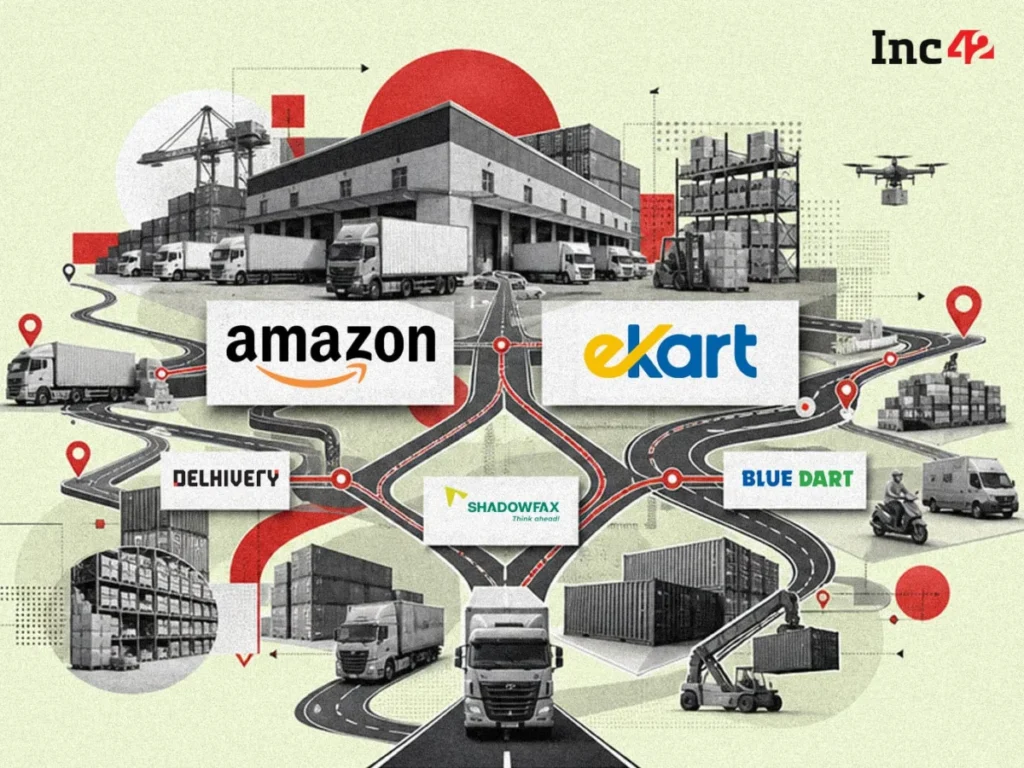
This strategic shift has effectively turned the two e-commerce giants into direct competitors to logistics stalwarts like Delhivery, Blue Dart, Shadowfax, and DTDC.
Chronology: From Internal Utility to Market Disruptor
The evolution of this strategy can be traced through key milestones that signaled a departure from internal-only operations:
- December 2024: Amazon launches Amazon Freight in India, entering the full-truckload transport market for intra-city and inter-city movement, independent of its marketplace activity.
- March 2025: Ekart signs a landmark partnership with IKEA to handle end-to-end last-mile delivery for large-format furniture in the Delhi-NCR region.
- May 2026: Amazon announces Amazon Supply Chain Services (ASCS), extending its full logistics suite—freight, warehousing, and fulfillment—to any business, regardless of their association with the Amazon marketplace.
- April 2026: Ekart expands its IKEA collaboration to Chennai, signaling the success of its enterprise-grade, specialized supply chain model.
Today, companies that are direct market rivals to Flipkart—such as Nykaa—rely on Ekart for fulfillment. Similarly, Amazon is currently processing logistics for healthcare and automotive manufacturers that have never listed a single product on their platform.
Supporting Data: The Scale of the Moat
The competitive advantage wielded by Amazon and Flipkart is the compound effect of two decades of capital deployment and technological refinement. Their "moat" is built on three pillars:
1. Multi-Channel Fulfillment (MCF)
Amazon’s MCF has gained significant traction, with over 1,000 D2C brands, including Himalayan Organics and Satthwa, using the network to fulfill orders originating from their own websites and Shopify stores.

2. Specialized Sector Depth
Ekart has moved beyond simple parcel delivery. By handling complex inventory for automotive companies like Ather Energy and large-format home solutions for IKEA, they have proven their ability to manage bespoke, high-precision supply chains.
3. The Franchise Model
To penetrate Tier 2, Tier 3, and rural markets without the full capital burden of direct ownership, both companies are experimenting with franchise-led centers. By allowing local entrepreneurs to run facilities backed by the giants’ proprietary technology, they are rapidly closing the reach gap that historically favored traditional logistics players.
The "AWS Logic": Engineering Platform Lock-in
The industry is watching a familiar playbook unfold. Just as Amazon Web Services (AWS) began as an internal project before becoming the global gold standard for cloud infrastructure, Amazon and Flipkart are deliberately engineering "platform lock-in" for logistics.
When a brand starts with last-mile delivery and subsequently integrates warehousing, returns management, and freight, the switching costs become prohibitive. Once a business embeds itself into the AI-powered forecasting and inventory placement tools of Amazon or Ekart, the operational friction of moving to a different provider becomes a major deterrent.
Dough Herrington, CEO of Worldwide Amazon Stores, explicitly noted this parallel: “This is an exciting step in bringing the logistics network we built for our customers to all businesses, much like we did for cloud infrastructure when we launched Amazon Web Services.”
Strategic Implications: A Shifting Competitive Landscape
The market reaction has been immediate. Following the launch of ASCS, Delhivery’s shares faced downward pressure as investors began pricing in the reality of a competitor with unparalleled scale.
However, the incumbents are not defenseless. Delhivery, with its 18,850 pin codes and 20 million square feet of infrastructure, remains a formidable player. Companies like Shadowfax (hyperlocal dominance) and Blue Dart (premium air express) continue to hold defensible niches. The real battleground, however, is the mid-market—the segment where integrated B2B supply chain contracts are won on price, reliability, and technology breadth.
Challenges: The Friction of Expansion
Despite their massive infrastructure, the entry into B2B logistics brings significant structural challenges:
- The Data Exposure Dilemma: For any brand, handing over inventory data, demand patterns, and fulfillment economics to Amazon—a competitor that operates its own marketplace and private-label business—is a strategic risk. The potential for "platform bias" remains a top-of-mind concern for prospective clients.
- Capacity Prioritization: During peak seasons, will these giants prioritize their own marketplace sales over third-party enterprise clients? This question remains the "elephant in the room" for many prospective B2B partners.
- Regulatory Complexity: Moving into pharmaceuticals, cold-chain, and chemical freight introduces a web of compliance hurdles. Unlike standardized e-commerce parcels, these sectors require damage tolerance standards and specialized handling protocols that demand a different level of operational rigor.
- Pricing Discipline: While the e-commerce giants have the capital to undercut competitors, sustained below-market pricing creates an unhealthy environment, compressing margins across an industry already struggling with fuel costs and inflationary pressures.
Conclusion: A New Chapter for Indian Logistics
The dynamics of India’s e-commerce ecosystem are being rewritten. The logistics firms that once relied on Amazon and Flipkart for their primary business volumes now find themselves in a precarious dance with their largest clients.
For the broader market, the question is no longer just about who can deliver a package the fastest. The test has evolved into whether these platforms can offer external clients the same neutrality, data security, and specialized reliability that would be expected of a partner with no competing commercial interests. As the lines between "marketplace" and "logistics utility" blur, the winners will not just be those with the most trucks, but those who can most effectively navigate the complex, data-driven demands of modern Indian enterprise.