The New Economics of AI Content: How Google, Cloudflare, and Microsoft Are Rewriting the Rules of Publisher Compensation
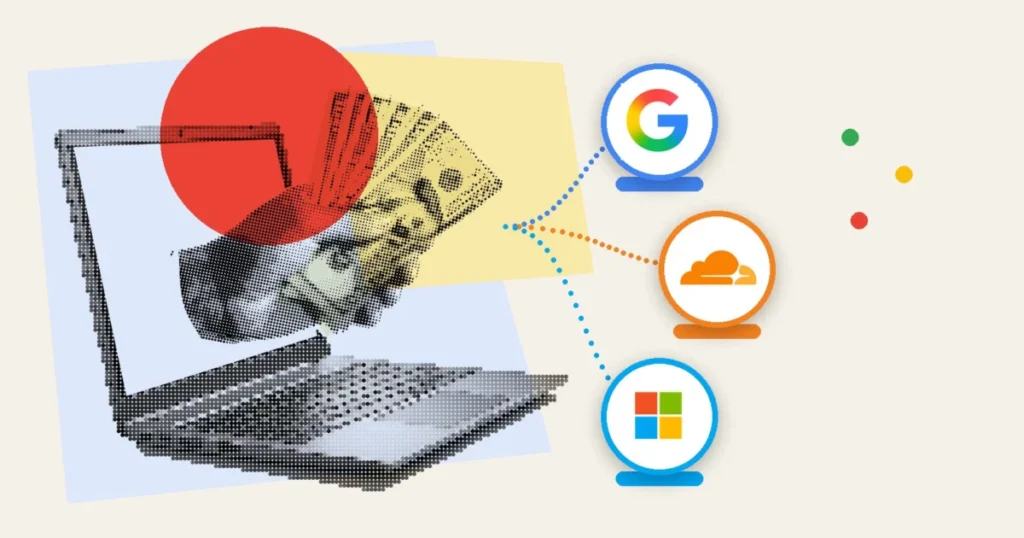
As generative artificial intelligence transforms how users discover and consume information, the digital publishing industry has reached a crucial inflection point. For decades, the foundational economic engine of the web relied on a simple trade-off: publishers provided content, search engines directed traffic via links, and websites monetized that traffic through advertising or subscriptions.
Generative AI—powered by large language models (LLMs), AI Overviews, and conversational agents—short-circuits this pipeline. Users increasingly get direct answers synthesized on search engine results pages, diminishing click-through rates and threatening the traditional revenue models of digital journalism.
In response, tech giants are racing to establish frameworks to compensate content creators. Google, Cloudflare, and Microsoft are actively testing and deploying distinct monetization models. However, their approaches reveal stark differences in what triggers payment, how value is defined, what degree of control content owners possess, and what analytics are returned to the publisher.
Understanding these evolving systems is essential for site owners navigating the precarious intersection of search engine optimization (SEO) and artificial intelligence licensing.
1. Main Facts: The Current AI Payment Ecosystem
The race to build a sustainable content economy for the "agentic web" has yielded three primary models from major tech players, each operating under a different philosophical and technical framework.
Google’s AI Contribution Pilot
Google has rolled out an invitation-only pilot program designed to compensate publishers whose content "contributes significantly" to AI-generated responses across Gemini, AI Overviews, and Google’s dedicated AI Mode.
- The Trigger: Payment is bound directly to whether a site’s material grounds an AI answer. Merely confirming a fact or providing a trailing hyperlink after an answer is generated does not qualify.
- The Control: Participants can opt out via Google Search Console, but the program is strictly invitation-only, and terms remain non-public.
- The Payout and Reporting: Participating publishers see a monthly earnings figure and historical data within a dedicated Search Console panel. However, the exact calculation remains a "black box," with Google providing no granular insight into how individual payouts are mathematically derived.
Cloudflare’s Pay Per Crawl and Pay Per Use
Cloudflare has approached the problem from the infrastructure layer, offering tools that allow site owners to directly monetize automated traffic.
- Pay Per Crawl: Active in private beta since 2025, this system charges AI crawlers a site-defined fee (with a $0.001 minimum) for every successful retrieval resulting in an HTTP 200 response. Site owners can vary prices dynamically by path and selectively charge, allow, or block specific crawlers.
- Pay Per Use: Evolving from its crawler-centric model, Cloudflare is experimenting with partner-integrated systems. For instance, partner Ceramic.ai pays participating sites when their content surfaces in search results, providing rich reporting on queries, specific pages, snippets, and average search positions. Meanwhile, You.com operates an on-demand micropayment model for premium content.
Microsoft’s Publisher Content Marketplace
Announced in February 2026, Microsoft’s Publisher Content Marketplace provides a formalized licensing structure to supply data for Microsoft Copilot responses.
- The Model: Microsoft states that publishers will be paid based on "delivered value" while retaining full ownership and editorial independence.
- Publisher Agency: Unlike Google’s opaque criteria, Microsoft’s marketplace allows publishers to actively define their own licensing and usage terms.
- Integration: Microsoft Copilot serves as the initial demand partner for the marketplace, with Yahoo onboarding as a key participant at launch.
2. Chronology: The Evolution Toward Paid AI Content
The transition from a click-based internet economy to paid AI data licensing has accelerated rapidly over the past year.

- December 2024: Industry analysts and digital publishers began evaluating early monetization experiments. These included early revenue-sharing models from Perplexity and ProRata, flat-fee corporate licensing deals like OpenAI’s partnership with News Corp, and various pending legal settlements. At this stage, Google relied entirely on traditional traffic referral arrangements.
- July 2025: Cloudflare sparked an intense SEO and publisher debate by launching its Pay Per Crawl system, introducing a technical mechanism for websites to charge automated bots per fetch.
- Late 2025 / Early 2026: Recognizing the limitations of charging merely for a crawl—since a single page might be fetched once and cited thousands of times, or crawled repeatedly and never used—Cloudflare began pivoting toward outcome-based models like Pay Per Use.
- February 3, 2026: Microsoft officially announced its Publisher Content Marketplace, creating a structured venue for publishers to negotiate licensing terms for Copilot.
- June 2026: Google published policy updates confirming its early-stage learning phase, laying the groundwork to test payment models for websites that structurally ground generative AI responses.
- August 31, 2026: Google rolled out its generative AI performance report worldwide in Search Console, giving publishers greater visibility into impressions on AI surfaces, though initially separate from pilot payout mechanics.
- September 2026: Cloudflare introduced updated mixed-use crawler controls, allowing publishers to decouple AI training preferences from traditional search indexing, highlighting the delicate balance site owners must maintain between earning revenue and preserving organic search visibility.
3. Supporting Data & Comparative Frameworks
To visualize how these ecosystems diverge, it is helpful to contrast their mechanics across four critical vectors: Value Creation, Publisher Control, Data Reporting, and Access Mechanics.
| Program | What Creates Value? | What the Site Controls | What Data Comes Back | Access Level |
|---|---|---|---|---|
| Google AI Contribution Pilot | "Significant contribution" defined internally by Google. | Opt-in / opt-out via Search Console. | Monthly earnings total and limited history; calculation details hidden. | Invitation-only |
| Cloudflare Pay Per Crawl | Paid retrieval of a page (HTTP 200). | Set crawl price, dynamic path pricing, block/allow lists. | Charge activity and frequency; total earned balance requires direct request. | Closed beta (Cloudflare network) |
| Cloudflare Pay Per Use | Partner-defined usage (e.g., query, result). | Joining specific partner programs. | Partner-specific reporting (e.g., Ceramic provides query, page, snippet, position). | Experimental partner network |
| Microsoft Publisher Content Marketplace | Delivered value via AI grounding scenarios. | Publisher-defined licensing and usage terms. | Usage-based reporting (exact granularity not publicly detailed). | Pilot / Application-based |
The structural differences highlight a fundamental tension: Google’s model is top-down and opaque, Cloudflare’s is mechanical and granular, and Microsoft’s leans toward bilateral negotiation and co-designed marketplace rules.
4. Official Responses and Industry Perspectives
Reactions from publishers, legal experts, and platform executives illustrate the friction points in this nascent market.
- The Publisher Critique of Google: Executives participating in Google’s pilot have noted that the initial financial offers are often too low to justify participation, describing the payout algorithm as a "black box." One participating executive told Digiday that they desire an analytics feedback loop for AI inference comparable to what Search Console provides for traditional search traffic.
- The Publisher Coalition Perspective: David Buttle of the publisher coalition Spur emphasizes that the immediate psychological and economic victory is establishing the vital precedent that creators deserve clear notification when their work informs an AI-generated response.
- Cloudflare’s Infrastructure Philosophy: In its official blog posts, Cloudflare has been candid about the flaws of raw crawling metrics. Because a URL can be fetched once and heavily exploited or fetched endlessly and ignored, Cloudflare stresses that actual outcomes must dictate value.
- Microsoft’s Focus on Sustainable Economics: Microsoft’s public communications emphasize a commitment to building a "sustainable content economy for the agentic web," framing its marketplace as a collaborative space where publishers maintain editorial autonomy while supplying high-intent data.
5. Strategic Implications for Site Owners
For digital publishers and SEO professionals, participating in these emerging ecosystems requires balancing immediate monetization against long-term search visibility.
The Googlebot Paradox
Implementing aggressive crawler monetization carries substantial risks. Cloudflare’s Pay Per Crawl can technically be applied to any bot in its directory, including major search engine crawlers. However, returning a 402 Payment Required (or any 4xx status code other than 429) signals to search engines that the page is unavailable. According to Google’s crawling guidelines, indexed URLs returning persistent 4xx errors are eventually purged from the index.
Consequently, putting a paywall in front of Googlebot risks devastating organic search traffic. Publishers must carefully separate their AI training preferences from traditional search indexing. Cloudflare’s updated controls allow sites to apply a "Disallow AI Training" preference via robots.txt—which companies like Google and Apple honor while continuing to crawl for search—rather than issuing a blanket block that halts search bots entirely.
Evaluating Your Next Steps
- Assess Invitation Status: If your publication is large enough to be courted by Google’s pilot or Microsoft’s marketplace, evaluate the payout against potential traffic cannibalization. Demand transparent reporting terms before signing away broad rights.
- Utilize Infrastructure Controls: For sites leveraging Cloudflare, explore Pay Per Crawl and Pay Per Use cautiously. Test dynamic path pricing on non-essential archives before applying restrictions to high-value core content.
- Monitor Generative AI Reporting: Regularly audit Google Search Console’s generative AI performance report to track how AI Overviews and Gemini features impact your organic traffic flows, ensuring you understand the true trade-off between AI citation and traditional referral traffic.
Looking Ahead
The monetization of AI content will continue to evolve rapidly. Cloudflare plans to make its search-signals and content-summarization controls broadly available, while Google prepares to roll out more granular URL-level transparency tools for its Google-Extended crawler.
Ultimately, the long-term viability of digital publishing depends on whether these experimental pilots mature into transparent, predictable revenue streams, or remain fragmented experiments dictated entirely by the tech platforms that control the gateways of the modern web.