The New Era of Blogging: Insights from Orbit Media’s 11th Annual Blogger Survey
For over a decade, the corporate blog has been a cornerstone of digital marketing. From driving organic search traffic to establishing brand authority and nurturing leads, the blog is the "owned media" engine of the modern enterprise. However, as the digital landscape shifts—impacted by the rise of generative AI, changes in search engine behavior, and evolving audience habits—many marketers are finding that their traditional blogging strategies are yielding diminishing returns.
To navigate this period of transformation, many look to the Orbit Media 11th Annual Blogger Survey. As an authoritative, data-backed pulse check on the industry, this annual report serves as a benchmark for content marketers globally. We sat down with Andy Crestodina, CMO and Co-Founder of Orbit Media, to dissect these findings and understand how brands can adapt to a landscape where "more content" is no longer the magic formula.
The State of Content: Key Findings and Benchmarks
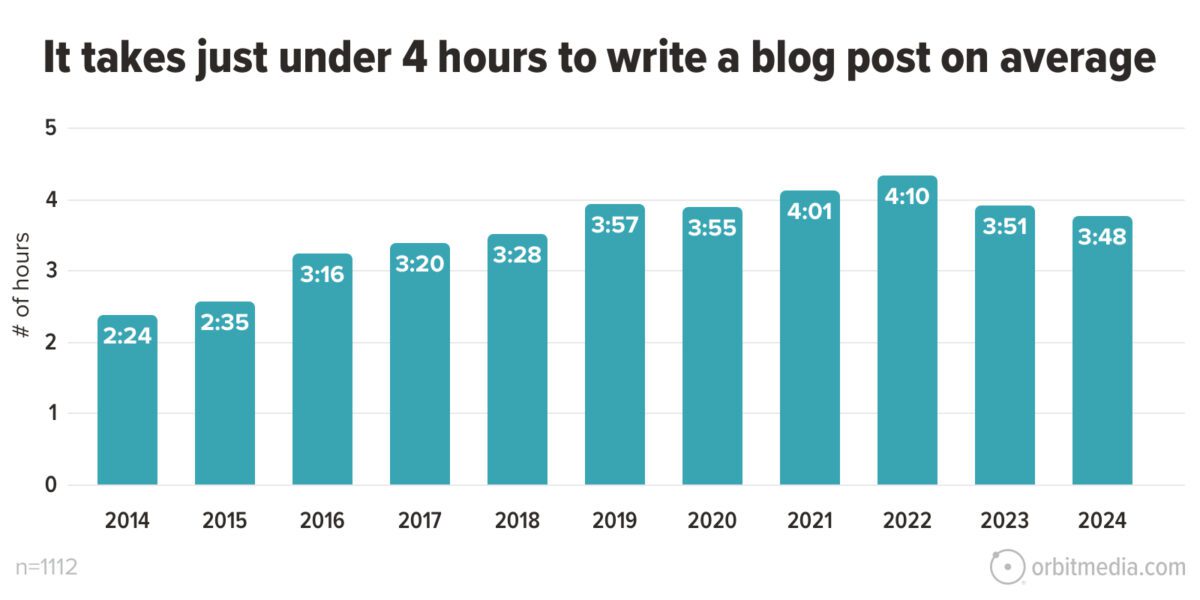
Despite the hype surrounding artificial intelligence, the fundamentals of high-performing content have remained surprisingly static. According to the survey, the average time spent writing a single blog post is three hours and forty-eight minutes—a figure that has dropped by a mere three minutes year-over-year.

The Myth of AI-Driven Speed
Many industry observers expected the widespread adoption of generative AI to drastically shorten production times. While 80% of bloggers now report using AI in their workflows—a massive leap from near-zero adoption in 2022—the time investment hasn’t cratered. Why? Because the most successful content still requires human oversight. AI may assist with brainstorming or drafting, but the "human layer"—strategic direction, fact-checking, and original, brand-specific storytelling—remains the bottleneck that prevents subpar content from reaching the market.
The Correlation Between Effort and Outcome
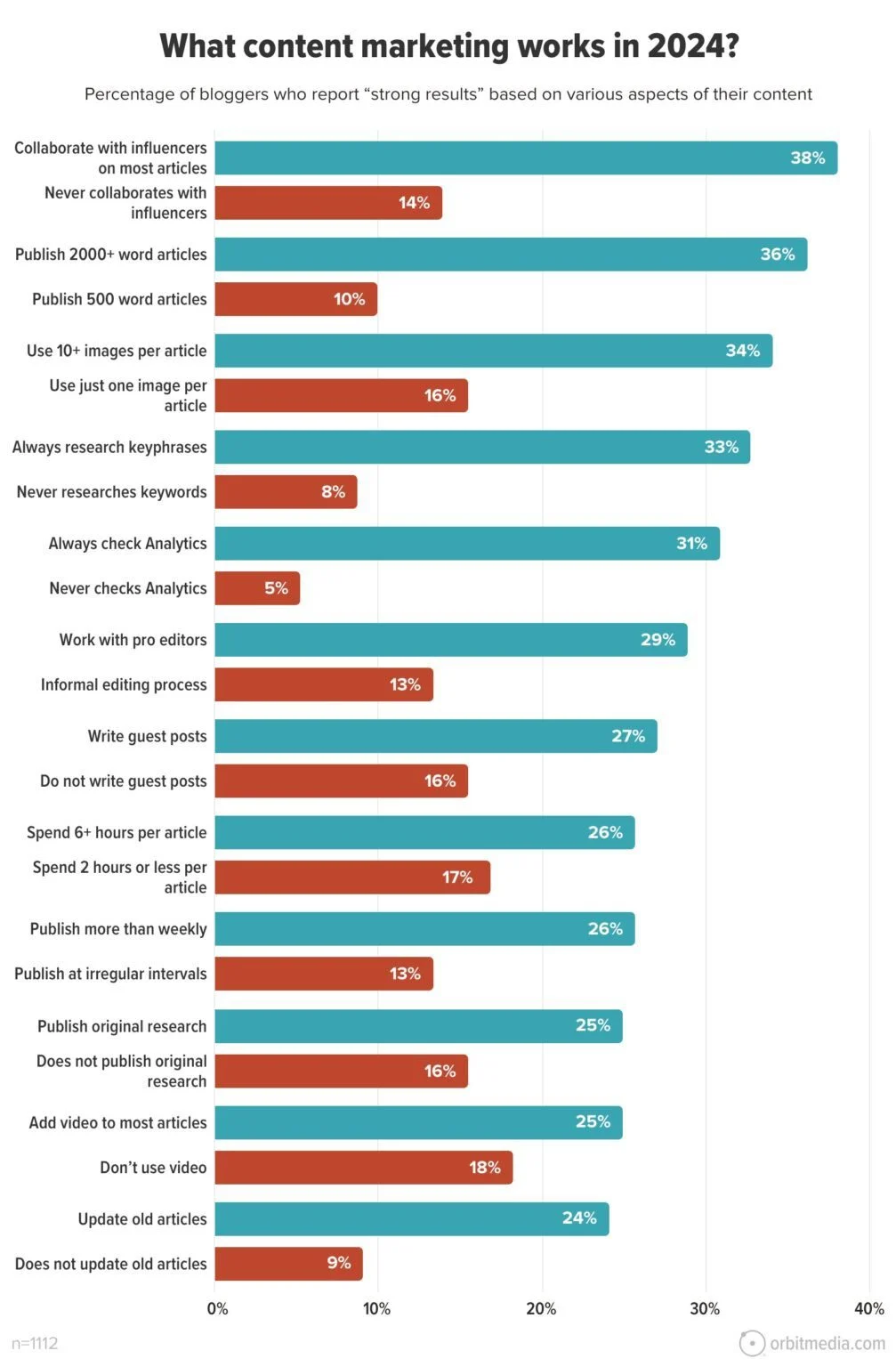
The data reveals a clear, persistent trend: High-effort content yields high-level results. Bloggers who consistently produce long-form articles (2,000+ words) and spend four or more hours per post are significantly more likely to report "strong results."
However, this doesn’t necessitate a sacrifice in frequency. The survey suggests that a bi-weekly posting cadence is the minimum threshold for maintaining audience engagement. Users today are sophisticated; they have little patience for thin, low-effort content, nor do they want to wait months for a valuable insight.
Treating Your Blog Like a Social Feed
One of the most profound takeaways from the 11th Annual Blogger Survey is the shift in how high-performing blogs are structured. Orbit Media’s research suggests that successful blogs are increasingly adopting the behavioral patterns of social media streams.
Social platforms have invested billions in user testing to determine exactly what keeps a reader engaged. Marketers should stop viewing their blog as a static archive and start treating it as a dynamic feed. This means:
- Prioritizing visual hierarchies that mirror social engagement patterns.
- Fostering community interaction through comments and direct engagement.
- Creating content that is "share-ready," optimized not just for Google, but for the human reader who might amplify it on LinkedIn or X.
Expert Q&A: A Conversation with Andy Crestodina
To better understand the human impact behind the data, we spoke with Andy Crestodina, a veteran in the digital marketing space and the architect behind this extensive research.

Q: What research findings were the most surprising to you personally?
Andy Crestodina: "The data tells us, year after year, that big efforts drive big outcomes. It’s not necessarily surprising in theory, but when you see the side-by-side performance of low-effort versus high-effort programs, it’s stark. The real surprise is seeing how many marketers continue to stick with low-effort, low-frequency programs despite the lack of results. They aren’t doing research, they aren’t collaborating with influencers, and they aren’t diversifying into video. If you keep doing the same thing, you should set your expectations accordingly."
Q: The data suggests that podcasters are twice as likely to report strong results. Why is that?

Andy Crestodina: "It’s a pattern of behavior. The podcaster is usually the one who is also hitting the record button, collaborating with guests, and repurposing their content across channels. It’s not just the audio format itself; it’s the commitment to multi-channel, high-value production that drives those results. They aren’t just typing on a keyboard in a silo."
Q: You mentioned that the ‘most visible’ metrics are the least important. How should marketers measure success today?
Andy Crestodina: "Traffic is the most visible metric, but it’s often a vanity metric. With the rise of ‘zero-click’ searches and changes in how Google displays information, traffic is harder to come by. We need to look deeper. We should be measuring bottom-of-funnel impact: lead quality, brand sentiment, and direct client inquiries. The most important outcomes—word-of-mouth, top-of-mind awareness, and sales conversions—are the hardest to track, but they are the ones that actually sustain a business."

Implications for Content Marketing Leaders
For leaders looking to optimize their 2025 strategy, the path forward is clear: move away from the "volume trap." Here are four actionable recommendations derived from the research:
- Shift Focus from Traffic to Depth: Stop optimizing solely for search volume. Focus on high-intent topics that solve specific customer problems.
- Prioritize Originality over Generative Speed: Use AI to handle the heavy lifting of formatting or research, but ensure your core value proposition is human-led. If your content could be replaced by a basic ChatGPT prompt, it will not rank or convert.
- Adopt a "Rented Land" Strategy: As Crestodina notes, sometimes breaking the rules is necessary. If your audience is on LinkedIn, build your community there. Don’t be afraid to publish on third-party platforms if that is where your customers are spending their time.
- Repurpose Relentlessly: Every piece of content should be the start of a chain. A blog post can become a newsletter, a video, a series of social posts, and a guest appearance on a podcast.
The Future of the Blog: A Strategic Pivot
As the data shows, we are currently in a "low-traffic" phase for many traditional blogs. However, this is not a death knell for blogging; it is a call for a strategic pivot.
The decline in organic search traffic is a reality, but it offers an opportunity to double down on brand building. When traffic is harder to acquire, the visitors you do get become more valuable. By shifting the focus from broad-spectrum traffic to high-value, deep-funnel engagement, brands can create a resilient content program that survives the volatile shifts of the digital ecosystem.

As Crestodina puts it, "The low-traffic future of content isn’t necessarily a problem—it’s a constraint that forces us to be better marketers." By adopting a more sophisticated approach, integrating multi-modal content like podcasts, and focusing on the metrics that actually move the needle, organizations can ensure their blog remains an indispensable asset for years to come.
For those looking to dive deeper into the full methodology and data sets, we highly recommend reading the 11th Annual Blogger Survey in its entirety. It is more than a report; it is a blueprint for the future of professional content creation.