The New Frontier: Navigating the Defining Marketing Trends of 2024 and Beyond
Marketing is, much like the e-commerce industry it fuels, in a state of perpetual flux. As consumer behaviors shift, influenced by rapidly advancing technology and an increasingly discerning global audience, the strategies required to capture market share must evolve in tandem. Each year, we witness a paradigm shift—sometimes driven by the bold strategies of multinational conglomerates, and other times sparked by boutique agencies pioneering fresh, experimental promotional concepts.
In the past few years, the heartbeat of marketing has been dominated by social interaction. Whether through the viral nature of short-form video or the community-driven ethos of social commerce, the landscape is now defined by participation rather than just observation. As businesses pour more capital into both organic and paid digital acquisition channels, the stakes for precision have never been higher. Today, successful marketing is less about shouting the loudest and more about hitting the right consumer, on the right channel, at the precise moment of intent.
In this analysis, we examine the primary marketing trends emerging for the coming period, providing a roadmap for brands looking to remain relevant in a competitive, tech-saturated ecosystem.
1. Responsible Artificial Intelligence: The New Ethical Standard
The rapid proliferation of generative AI has transformed operational efficiency, but it has also triggered a counter-movement: the demand for Responsible Artificial Intelligence. This is no longer just a technical consideration; it is a critical marketing pillar.
The Core Principles of Ethical AI
As brands automate content creation and data analysis, consumers are increasingly wary of deepfakes, algorithmic bias, and data privacy erosion. Responsible AI focuses on:
- Transparency: Clearly disclosing when content is AI-generated.
- Bias Mitigation: Rigorously testing datasets to ensure marketing algorithms do not perpetuate systemic stereotypes.
- Data Stewardship: Ensuring that personal customer data used to train AI models is protected and handled with consent.
Chronology of the AI Shift
- 2022-2023: The "Wild West" era of AI, where generative tools exploded into the public consciousness with little regard for standard industry regulations.
- 2024: The era of "AI Accountability." Legislators and industry watchdogs began implementing strict guidelines (such as the EU AI Act), forcing brands to pivot toward transparent and ethical deployment.
- The Future: AI integration will be judged not by its power, but by its "trust score."
Implications for Brands
Brands that fail to prioritize ethical AI risk a significant "trust deficit." In the coming year, companies that prominently display their ethical AI policies will likely see higher customer loyalty compared to those that treat AI as a "black box" solution.
2. Sustainability: From Niche Value to Core Strategy
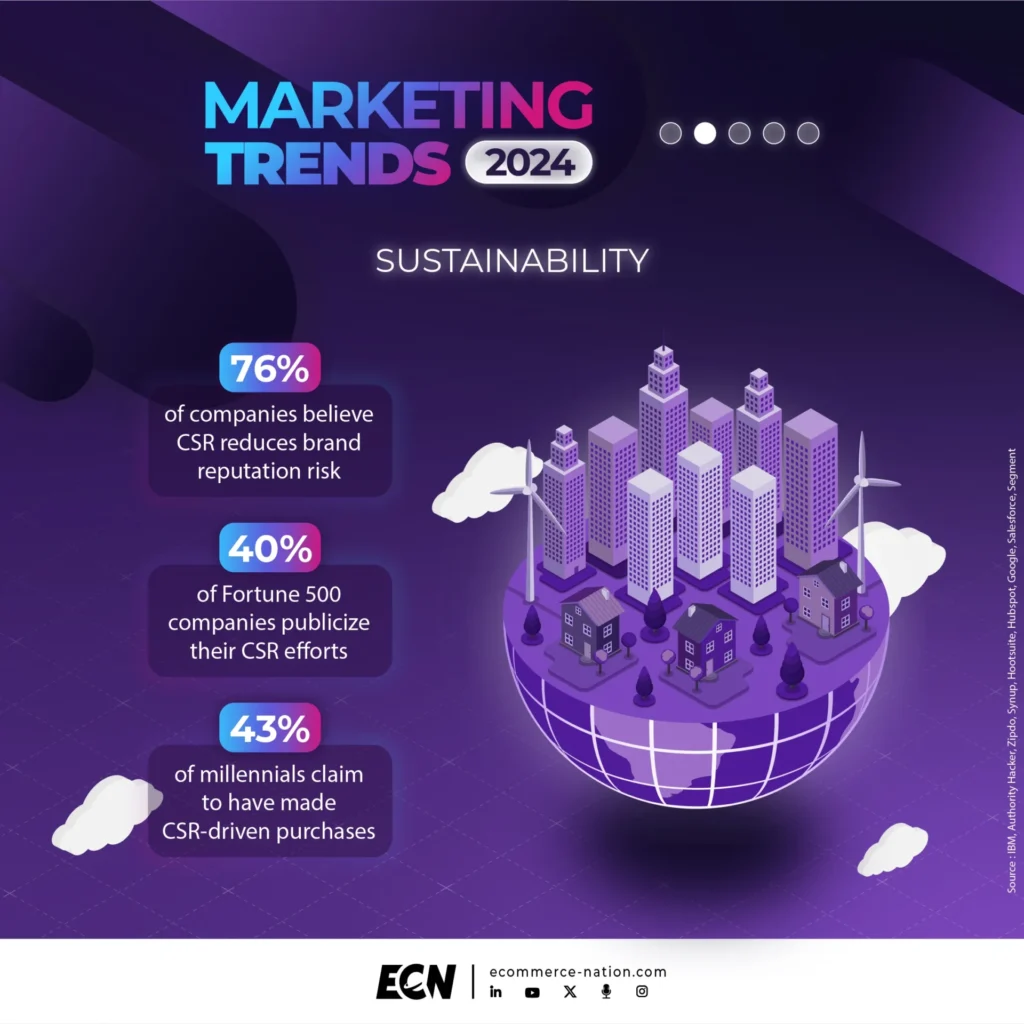
Sustainability has transitioned from a Corporate Social Responsibility (CSR) footnote to a primary driver of purchasing intent. In the digital marketing sphere, "greenwashing" is being replaced by radical transparency and authentic storytelling.
Communicating Value through Digital Channels
Sustainability is no longer just about the product; it is about the story of the supply chain. Brands are now leveraging social media to provide "behind-the-scenes" glimpses into their manufacturing processes. Educational content—explaining the lifecycle of a product or the carbon footprint of a shipment—creates a layer of trust that traditional advertising cannot match.

The Role of Technology in Traceability
One of the most profound developments in this space is the integration of Blockchain. By using immutable digital ledgers, companies can now offer consumers verifiable proof of a product’s origin. Whether it is a fair-trade coffee bean or a sustainable cotton garment, the ability to scan a QR code and trace the journey from source to shelf is becoming a gold standard for luxury and ethical brands.
Supporting Data: The Consumer Shift
According to recent industry sentiment surveys, over 70% of Gen Z and Millennial consumers state they are willing to pay a premium for sustainable products. Furthermore, engagement metrics on social platforms show that posts highlighting a brand’s eco-initiatives generate 30% more shares than generic promotional content, indicating that sustainability is a powerful driver of organic reach.
3. Conversational Search: The Rise of the Semantic Web
The days of typing rigid keyword strings like "best running shoes cheap" into a search bar are rapidly fading. We have entered the era of Conversational Search.
Adapting to Natural Language
Modern consumers use smart assistants like Siri, Google Assistant, and Alexa as digital concierges. They ask full questions: "What is the best running shoe for a flat-footed marathoner on a budget?" This shift necessitates a move toward Semantic SEO. Marketers must optimize for intent and context, answering specific questions rather than just "stuffing" keywords.

The AI-Search Intersection
The integration of Large Language Models (LLMs) into search engines (such as Google’s SGE or Perplexity) means that search results are becoming more personalized. For brands, this means the "Featured Snippet" is now the ultimate goal. If your content provides the most accurate, concise, and helpful answer to a user’s question, the AI will prioritize your brand as the authoritative source.
Implications for Strategy
- Content Tone: Shift from formal, corporate language to a conversational, helpful, and authoritative tone.
- FAQ Optimization: Expand FAQ sections on product pages to include long-tail, conversational queries.
- Accessibility: Ensure content is structured in a way that AI crawlers can easily parse and summarize.
4. Short-Form Video: The Attention Economy
If the internet has a currency, it is attention. In an era where the average human attention span is reportedly shorter than that of a goldfish, short-form video has become the primary mechanism for brand survival.
The Psychology of the Scroll
Platforms like TikTok, Instagram Reels, and YouTube Shorts have conditioned audiences to expect immediate value. A video that fails to capture attention within the first 1.5 seconds is effectively invisible. This has forced brands to adopt a "hook-first" strategy, utilizing high-energy storytelling, humor, and rapid visual cuts to maintain momentum.
Immersive and Interactive Content
Beyond the standard 60-second clip, we are seeing the rise of Immersive Marketing. Augmented Reality (AR) filters that allow users to "try on" products—from glasses to lipstick—are turning passive viewers into active participants. When a customer can virtually experience a product, the psychological barrier to purchase is significantly lowered, leading to higher conversion rates and lower return rates.

Supporting Data: The ROI of Video
Studies from major social platforms indicate that video content receives twice the engagement of static images. Furthermore, campaigns that utilize interactive elements, such as AR trials, report a 20-25% increase in purchase intent compared to traditional display ads.
5. Hyper-Personalization: The End of Mass Marketing
"One-size-fits-all" is officially dead. The final, and perhaps most impactful, trend is Hyper-Personalization. Using AI and machine learning, brands are now capable of delivering individual experiences at scale.
Analyzing the Data Lake
Hyper-personalization goes beyond using a customer’s first name in an email. It involves analyzing purchase history, browsing patterns, and even real-time site behavior to predict the next likely action. If a user consistently browses athletic gear on a Tuesday, an AI-driven system can automatically trigger a personalized offer for running socks on that day, effectively anticipating the consumer’s needs.
The Pillars of Personalization
- Predictive Analytics: Using historical data to forecast future trends.
- Dynamic Content: Modifying website headers, recommendations, and email copy based on the specific visitor.
- Omnichannel Consistency: Ensuring the personalized experience on the mobile app matches the experience on the desktop site.
The Official Stance of Industry Leaders
Major marketing organizations emphasize that hyper-personalization is the only way to combat "ad fatigue." When consumers are bombarded with thousands of messages daily, the only ones that break through are those that feel specifically tailored to their life. However, this comes with a caveat: personalization must be balanced with privacy. Brands that cross the line into "creepy" surveillance-based marketing risk permanent brand damage.

Conclusion: The Path Forward
The marketing landscape of the coming period is defined by a paradox: the more technological and automated our tools become, the more important "human-centric" values like trust, sustainability, and authenticity become.
To succeed, businesses must not simply adopt these trends in isolation. Instead, they must create a cohesive strategy where Responsible AI protects the data used for Hyper-Personalization, while Conversational Search and Short-Form Video provide the channels to communicate a brand’s Sustainability mission.
The investment required—in both time and capital—is significant. However, for those willing to adapt to these shifts, the reward is not just a higher conversion rate, but the building of a resilient, long-term relationship with the modern consumer. The future of marketing is here; it is intelligent, it is ethical, and it is profoundly personal.