The State of Blogging: Why Effort, Strategy, and Direct Distribution Are Replacing Traditional SEO Tactics
In the rapidly shifting landscape of digital marketing, the corporate blog has long been a foundational pillar. For years, businesses have relied on a predictable formula: publish high-quality articles, optimize for search engines, and watch the organic traffic roll in. However, the 11th Annual Blogger Survey from Orbit Media suggests that the era of "set it and forget it" content marketing is officially over.
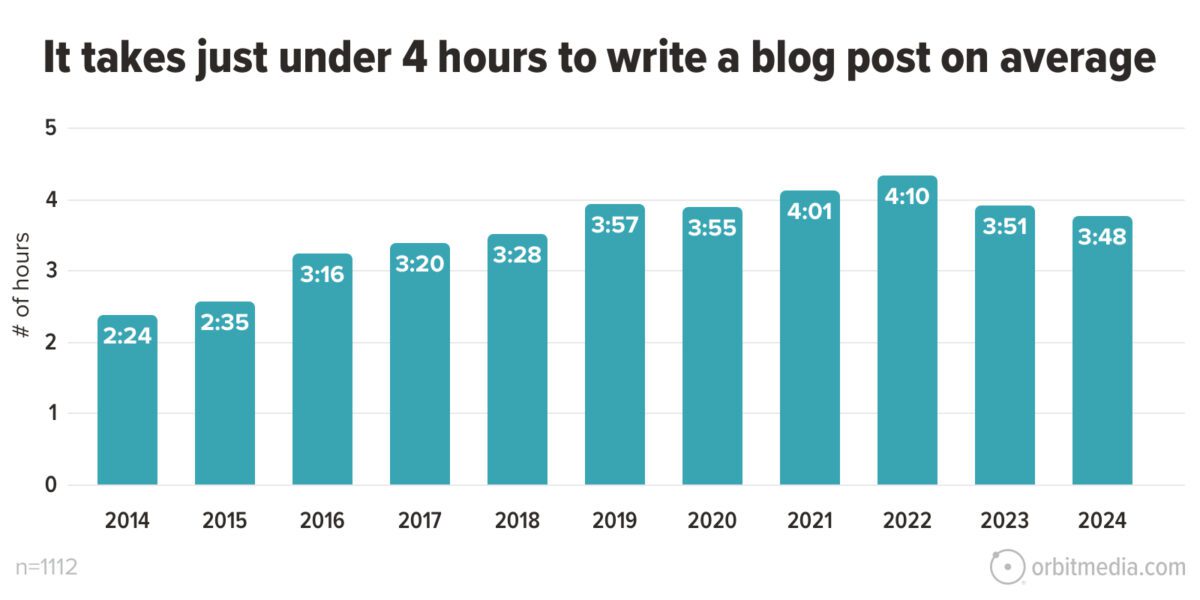
As generative AI floods the internet with automated content and search engine results pages (SERPs) prioritize "zero-click" experiences, marketers are facing a paradox. Despite the proliferation of AI tools designed to streamline production, the time required to create a high-performing blog post remains stubbornly high.
The Core Data: Time, Effort, and the AI Mirage
The latest data from Orbit Media’s extensive survey of over 1,000 bloggers reveals a surprising stagnation in production efficiency. The average time required to write a blog post is currently three hours and forty-eight minutes—a mere three-minute decrease from the previous year.

This finding challenges the prevailing narrative that artificial intelligence is drastically shortening the content creation cycle. While AI adoption among marketers has surged from near-zero in 2022 to 80% in 2024, there is currently no measurable correlation between AI usage and improved content performance.
The implication is clear: while AI can assist in brainstorming, drafting, and visualization, it cannot replace the strategic oversight, human creativity, and rigorous fact-checking required to produce content that truly resonates with an audience. In an ocean of AI-generated noise, high-quality, human-centric content remains a competitive differentiator.
A Chronology of Declining Organic Reach
To understand the current crisis in content marketing, one must look at the trajectory of the last decade. Historically, bloggers measured success through the lens of traffic growth. Search engine optimization (SEO) acted as a reliable engine for lead generation and brand awareness.
However, the survey highlights a multi-year trend of declining "strong results" reported by content creators. As search platforms evolve to answer user queries directly within the SERP, the traditional "click-through" model is under siege.
The Evolution of the Struggle
- The Early 2010s: Focus was on volume and keyword density to capture organic search traffic.
- The Mid-2010s: Shift toward long-form, comprehensive content (the "Skyscraper" technique) became the standard for ranking.
- The Post-2020 Era: Fragmentation occurs. Social media algorithms and AI-powered search results begin to capture user attention, leading to a rise in "zero-click" searches.
- 2024 and Beyond: The focus shifts from "traffic-driving" content to "audience-building" content, with a heavy emphasis on direct distribution and community engagement.
Strategic Pillars for Modern Content Success
The data suggests that the most successful content programs are those that treat their blog feed with the same rigor as a social media stream. Top-performing brands are no longer just "writing articles"; they are building multimedia ecosystems.
1. The Value of Heavy-Lift Content
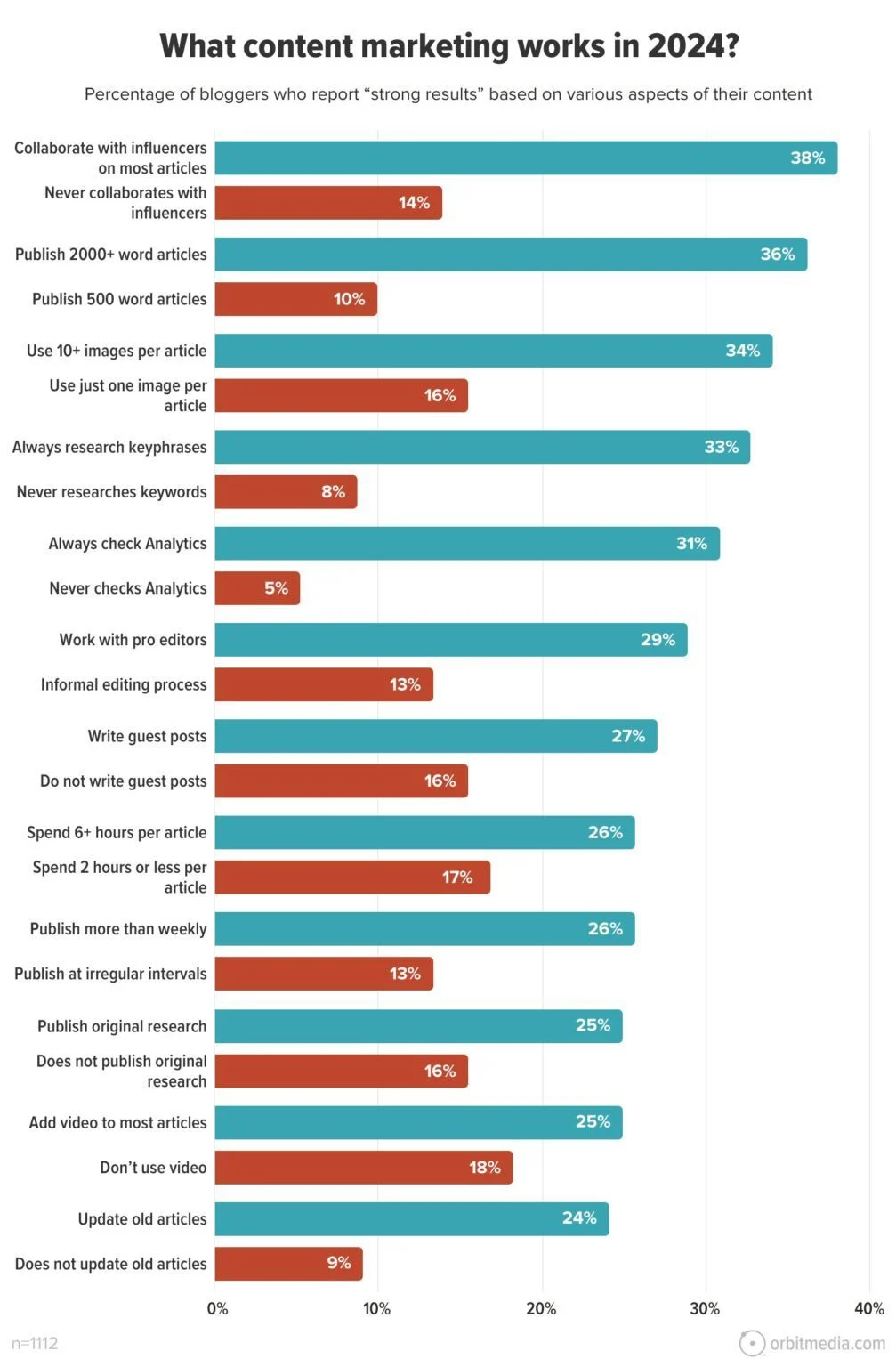
There is a direct correlation between the length of an article and its perceived success. Bloggers who consistently produce content exceeding 2,000 words are statistically more likely to report strong results. This depth allows for original research, data visualization, and comprehensive subject coverage—elements that AI struggles to replicate authentically.

2. The Bi-Weekly Minimum
Consistency remains the bedrock of audience retention. The research indicates that a bi-weekly posting cadence is the absolute minimum for maintaining relevance in a crowded digital space. Brands that post sporadically fail to build the necessary trust or "top-of-mind" awareness required for high-intent conversions.
3. The Power of Audio and Collaboration
Perhaps the most striking data point in the survey is the performance of podcasts. Marketers who integrate audio content are twice as likely to report strong results. While this segment of the survey represents a smaller group of respondents, it underscores a vital truth: content that facilitates a human connection—whether through the voice of a podcaster or the collaboration with industry experts—outperforms static, text-only content.
Insights from the Frontlines: A Conversation with Andy Crestodina
To contextualize these findings, we spoke with Andy Crestodina, CMO and Co-Founder of Orbit Media, who has spent over two decades at the forefront of digital marketing innovation.

Q: What is the most surprising takeaway from this year’s research?
"The data tells us, year after year, that big efforts drive big outcomes. What is truly surprising is that despite this clear correlation, so many marketers continue to stick to the same low-effort, high-volume strategies. They avoid original research, shy away from collaboration, and ignore video or audio, yet they expect high results. If you aren’t putting in the effort, you have to set your expectations low."
Q: How should marketers redefine "success" in a world of declining organic search traffic?
"The most visible marketing metrics—like raw traffic—are often the least important. We are seeing a decline in search-driven clicks, but that shouldn’t be the end of the road. We need to look deeper into the funnel. We need to measure brand affinity, word-of-mouth, and the influence our content has on bottom-of-funnel decision-making. Traffic is easy to track, but it doesn’t always pay the bills."
Q: What is your primary advice for B2B brands struggling to find an audience in 2025?
"Stop trying to force traffic back to your own website if your audience is elsewhere. Launch a LinkedIn newsletter. It sounds like the old rule of ‘don’t build on rented land,’ but today, you have to go where the audience is. By publishing directly to platforms like LinkedIn, you align your goals with the platform’s desire to keep users engaged, and they will reward you with reach."

Implications for Content Marketing Leaders
The findings from Orbit Media’s survey demand a fundamental pivot in how marketing departments allocate their budgets and human capital.
Moving Beyond the "Traffic" Metric
Content leaders must move away from vanity metrics. Instead of asking, "How many people visited this page?" teams should ask:
- Did this piece of content build authority with our target demographic?
- Did it facilitate a deeper conversation with a potential client?
- Can this content be repurposed into a video, a social snippet, or a newsletter segment to extend its lifecycle?
The "Rented Land" Strategy
As Crestodina points out, the fear of "rented land" (social media platforms) is becoming an outdated dogma. In 2025, a robust content strategy must be omni-channel. If your audience spends their time on LinkedIn, your best work should appear there first. The goal is to build an audience that is accessible, regardless of whether they click through to your domain on the first encounter.

Prioritizing High-Touch Production
The data makes one thing clear: mediocrity is the greatest enemy of performance. Because AI has lowered the barrier to entry for generating basic, generic content, the "middle of the road" is becoming increasingly crowded and invisible. To stand out, brands must commit to:
- Original Data: Conduct proprietary surveys to become the primary source of industry insights.
- Human-Centric Storytelling: Use AI for the grunt work, but use humans for the narrative arc and the strategic voice.
- Collaborative Content: Interviewing experts and partnering with influencers creates natural distribution channels and increases the credibility of the content.
Conclusion: The Path Forward
The 11th Annual Blogger Survey serves as both a warning and a roadmap. The "easy" days of blogging are gone, replaced by a competitive environment where only the most strategic, high-effort, and audience-centric programs will thrive.
For the modern marketer, the path forward is not about writing more posts; it is about writing more impactful posts. It is about leveraging the efficiency of AI to free up time for the creative, human, and collaborative efforts that machines cannot replicate. By embracing platforms where audiences live, focusing on deep-funnel impact, and committing to a consistent, high-value cadence, brands can ensure their content remains a vital asset in an increasingly noisy digital world.

As we look toward 2025, the message from the data is simple: The effort you invest today is the only predictor of the results you will harvest tomorrow. It is time to stop playing the volume game and start playing the value game.