The Tech Landscape at Mid-2026: Apple’s Foldable Ambitions, Xiaomi’s Powerhouse, and the Changing Smartphone Guard

As we cross the threshold into the second half of 2026, the global smartphone market is exhibiting a fascinating dichotomy. On one hand, legacy giants are pushing the boundaries of material science and internal architecture to maintain their premium stronghold; on the other, mid-range contenders are aggressively normalizing high-capacity battery tech and specialized cooling solutions that were once reserved for niche gaming devices.
From the anticipation surrounding Apple’s first foray into the foldable form factor to the unexpected battery milestones achieved by the likes of Xiaomi and OnePlus, the industry is currently in a state of rapid, high-stakes evolution. This report breaks down the critical developments defining the third quarter of 2026.
Main Facts: The Convergence of Innovation and Capacity
The industry narrative this week is dominated by two distinct themes: the crystallization of Apple’s late-year product strategy and the "capacity arms race" occurring within the Android ecosystem.
For Apple, the focus is squarely on the iPhone 18 series and the elusive "iPhone Ultra." Leaks regarding the iPhone 18 Pro and Pro Max have shifted from speculative rumors to concrete technical specifications, particularly regarding power management. The decision to differentiate battery capacities based on connectivity—5,235 mAh for physical SIM models versus 5,425 mAh for eSIM-only variants—suggests that Apple is optimizing internal board space with extreme precision.
Simultaneously, the Chinese market has served as a launchpad for the Redmi K90 Ultra, a device that effectively challenges the conventional wisdom of what a "mid-range" flagship should offer. With an 8,550 mAh battery, the K90 Ultra signals a shift in consumer demand: users are no longer satisfied with "all-day" battery life; they are demanding multi-day endurance paired with rapid-recovery charging solutions.
Chronology of Developments: A Week in Review
The technological landscape shifted rapidly over the past seven days. Here is the sequence of events that has defined the current market outlook:
- July 1–2: Initial reports confirm the iPhone 18 Pro series’ internal design, focusing on the integration of Qualcomm modems for the US market versus Apple’s proprietary C2 modem for international territories.
- July 3: The Redmi K90 Ultra is officially unveiled in China, showcasing its active cooling system and massive 8,550 mAh battery, setting a new benchmark for power density.
- July 4: Nothing releases a series of teasers regarding the Phone (4b), confirming a July 7 launch date and highlighting a design-first philosophy for the upcoming mid-range entry.
- July 5: A leaked drop test video of the iPhone 18 Pro surfaces, providing the first glimpse of the chassis, which appears to maintain the aesthetic continuity established by the iPhone 17 Pro.
- July 6: The Samsung Galaxy A27 arrives at major review outlets, while the OnePlus N6 officially launches in the Indian market, further saturating the high-capacity, mid-price segment.
Supporting Data and Technical Specifications
Apple’s iPhone 18 Pro Series: The Efficiency Play
The shift toward 5,000+ mAh capacities in the iPhone 18 Pro Max represents a significant departure from the more conservative battery scaling seen in previous years. By segmenting the battery capacity between physical SIM and eSIM versions, Apple is effectively reclaiming internal volume—a move likely intended to offset the power consumption of the anticipated C2 modem.
| Model | Battery (SIM) | Battery (eSIM) | Key Feature |
|---|---|---|---|
| iPhone 18 Pro | 4,200 mAh (est) | 4,350 mAh (est) | C2 Modem / A20 Bionic |
| iPhone 18 Pro Max | 5,235 mAh | 5,425 mAh | Enhanced thermal management |
The Redmi K90 Ultra: Gaming at Scale
Xiaomi’s latest offering is a masterclass in aggressive hardware integration. By utilizing an active cooling fan in a 6.83-inch chassis, the K90 Ultra maintains high clock speeds on the Snapdragon 8 Elite chipset without thermal throttling.
- Display: 6.83-inch AMOLED, 165Hz Refresh Rate.
- Imaging: 50MP primary (1/1.55" sensor) + 8MP ultrawide.
- Endurance: 8,550 mAh battery, 100W wired / 22.5W reverse charging.
- Market Positioning: CNY 2,999 ($441) – Expected to rebrand as the Poco series for global distribution.
The Mid-Range Contender: Nothing Phone (4b)
Nothing continues to lean into its "stripped-back" aesthetic. With a 6,000 mAh battery and a Snapdragon 6 Gen 4 SoC, the device targets the efficiency-conscious consumer who prioritizes standby time over raw processing power.
Official Responses and Industry Context
While Apple remains characteristically silent regarding leaks, the proliferation of "dummy units" of the iPhone Ultra suggests that the supply chain is already in the mass-production phase. Analysts suggest that the September 8 launch date is strategically chosen to maximize momentum heading into the Q4 holiday shopping season.
On the Android side, OnePlus’s aggressive pricing for the N6 ($243/INR 22,999) in India highlights a clear strategy: dominate the emerging markets by providing massive battery reserves—an essential feature in regions with fluctuating infrastructure. The inclusion of the Dimensity 6360 Max indicates that MediaTek remains a preferred partner for OEMs looking to balance cost and performance in the sub-$300 tier.
Implications: The Road Ahead
1. The Death of the "Small Phone"
As battery capacities across the board trend toward 6,000 mAh and beyond, the physical size of smartphones is becoming non-negotiable. Manufacturers are finding it increasingly difficult to pack high-density cells into chassis smaller than 6.7 inches without compromising structural integrity or thermal performance. We are witnessing the functional end of the "compact flagship" era.
2. The Modem War
Apple’s decision to bifurcate its modem strategy—using Qualcomm in the US and its proprietary C2 modem elsewhere—is a high-stakes gamble. Should the C2 modem perform inconsistently, it could damage the brand’s reputation for reliability. Conversely, if successful, it will drastically increase Apple’s vertical integration and profit margins, reducing reliance on third-party silicon suppliers.
3. Thermal Management as a Standard Feature
The Redmi K90 Ultra’s inclusion of an active cooling fan is a turning point. Previously, active cooling was reserved for specialized "Gaming Phones" like the Asus ROG Phone series. By bringing this to a mainstream "Ultra" device, Xiaomi is normalizing active heat dissipation. If the device proves durable, expect competitors like Samsung and Apple to explore more sophisticated, perhaps passive-to-active hybrid, cooling solutions in their 2027 lineups.
4. The Foldable Transition
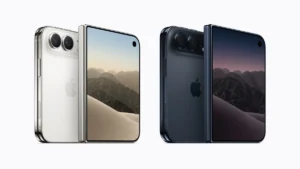
The iPhone Ultra, expected to debut alongside the 18 Pro series, represents the most significant pivot in Apple’s history. If Apple successfully brings its ecosystem polish to a foldable form factor, it will likely trigger a massive migration of users from Android-based foldables back to the Apple fold. The success of the iPhone Ultra will not just be measured in sales, but in the potential to stabilize the foldable market, which has struggled with durability and software fragmentation for years.
Conclusion
As we look toward the September 8 launch window, the industry is clear: the focus has shifted from incremental camera improvements to systemic endurance and thermal stability. Whether through the sheer brute force of Xiaomi’s 8,550 mAh cells or Apple’s refined, modem-optimized power architecture, the smartphone of late 2026 is becoming a highly specialized tool. The next six months will determine which of these strategies—aggressive hardware expansion or measured, integrated optimization—wins the hearts of the global consumer base. For now, the hardware race is heating up, and the cooling fans are only just beginning to spin.