Two Decades of the Cloud: How Amazon EC2 Redefined Global Computing Infrastructure
SEATTLE — Two decades ago, a single blog post quietly published by Jeff Barr altered the trajectory of the technology industry forever. On that day, Amazon Web Services introduced the public beta of Amazon Elastic Compute Cloud (EC2). What began as a rudimentary offering—a solitary Linux virtual server size (m1.small) available in a single geographic region (US East), billed strictly by the hour—has blossomed into the digital bedrock of the modern internet.
As AWS marks the 20th anniversary of that watershed moment, the industry is taking stock of a service that did not merely introduce a new product category, but fundamentally re-architected how humanity builds, scales, and conceptualizes computing infrastructure.
Main Facts: The Genesis and Evolution of a Cloud Titan
The core value proposition articulated by Amazon in 2006 remains remarkably consistent today: the ability to provision secure, resizable compute capacity in minutes, pay exclusively for what is consumed, and scale workloads dynamically without the friction of long-term capital commitments or physical hardware procurement.
However, the scale at which this proposition is delivered today is almost unrecognizable compared to its humble origins:
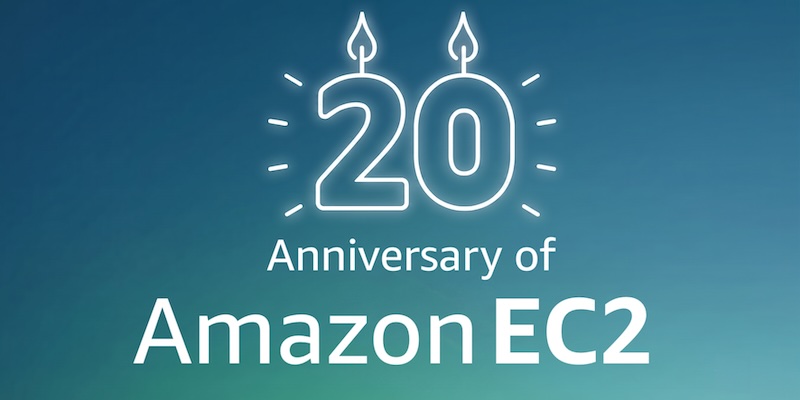
- Explosive Variety: From a single instance type, EC2 has expanded into an ecosystem boasting over 1,200 distinct instance types. These span general-purpose, compute-optimized, memory-optimized, storage-optimized, accelerated computing, and high-performance computing (HPC) families.
- Global Footprint: What started as a single region has expanded into 39 active AWS Regions worldwide.
- Edge Expansion: EC2 has broken through traditional data center boundaries, reaching local environments via AWS Outposts, metropolitan areas through AWS Local Zones, and ultra-low-latency 5G networks via AWS Wavelength.
- The Invisible Engine: Today, virtually every higher-level abstraction in the cloud—from managed containers (Amazon ECS, EKS) and serverless architectures (AWS Lambda, Fargate) to massive machine learning training clusters (Amazon SageMaker AI, Amazon Bedrock)—ultimately relies on EC2 capacity under the hood.
Chronology: Milestones That Built the Modern Cloud
To understand how EC2 evolved from a basic virtualization tool into a sprawling global fabric, one must examine the critical architectural milestones that defined its twenty-year journey.
2006–2008: Laying the Foundation
- August 2006: Jeff Barr launches the Amazon EC2 Beta, giving developers their first taste of on-demand, cloud-based Linux servers.
- 2008: The introduction of Amazon Elastic Block Store (EBS) solves one of early cloud computing’s biggest hurdles by providing persistent, low-latency block storage attached dynamically to EC2 instances.
2009: Maturing Enterprise Capabilities
- Elastic Load Balancing (ELB), Auto Scaling, and Amazon CloudWatch: Released in tandem, these services transform EC2 from isolated virtual machines into a resilient, self-healing, and observable architecture capable of handling unpredictable production traffic.
- Amazon Virtual Private Cloud (VPC): AWS introduces logically isolated virtual networks, satisfying enterprise security and compliance requirements by allowing companies to run resources in a private, customer-defined network topology.
2017–2018: Custom Hardware Revolution
- The AWS Nitro System (2017): By offloading virtualization functions to dedicated hardware and software, AWS achieves near-bare-metal performance, significantly enhancing security, reducing virtualization overhead, and accelerating feature delivery.
- AWS Graviton Processors (2018): AWS enters the custom silicon market with ARM-based Graviton processors, engineered specifically to deliver superior price-to-performance ratios for scale-out cloud workloads.
- AWS Outposts (2018): The cloud comes to the on-premises data center, allowing customers to run native EC2 infrastructure locally.
2019: The Edge and Ultra-Low Latency
- AWS Local Zones and AWS Wavelength: EC2 instances are pushed to major metropolitan centers and embedded directly into global 5G telecommunications carrier networks, unlocking single-digit millisecond latencies for real-time applications like gaming, autonomous vehicles, and industrial automation.
Supporting Data: Scaling to Meet the Demands of the AI Era
The architectural foresight built into EC2’s early design philosophy left ample room for generational leaps in performance. Nowhere is this more apparent than in the service’s current handling of artificial intelligence and machine learning.
In 2006, training a trillion-parameter foundation model was a theoretical exercise constrained by physical data center limits. Today, EC2 supports massive, hyper-cluster accelerated computing instances equipped with advanced GPUs and custom machine learning accelerators (such as AWS Trainium and Inferentia).
Data from enterprise adoption trends indicates that compute density has scaled exponentially. Where organizations once measured capacity in dozens of virtual CPUs, modern AI workloads routinely orchestrate tens of thousands of interconnected EC2 nodes communicating via high-throughput, low-latency Elastic Fabric Adapter (EFA) networking. This elasticity allows startups and Fortune 500 enterprises alike to spin up massive supercomputing clusters for hours, train complex LLMs, and spin them down just as quickly—incurring costs solely for the duration of the compute cycle.

Official Responses: Reflections from the Inside
Reflecting on the milestone, AWS leaders and long-tenured engineers emphasize that the secret to EC2’s longevity lies in a steadfast adherence to customer-centric iteration.
Channy Yun, principal developer advocate at AWS, noted in a retrospective anniversary address: "We made strong foundational decisions in 2006, and we left room for the service to grow. Twenty years later, that strategy of creating services that are minimal-yet-useful, launching quickly, and iterating rapidly in response to your feedback continues to guide how we build."
Internal engineering teams frequently point to the 2017 rollout of the Nitro System as a turning point that secured EC2’s dominance for the next decade. By decoupling core hypervisor functions from general-purpose CPU cores, AWS engineers were able to guarantee deterministic performance, tighten hypervisor-level security, and drastically accelerate the velocity at which new instance families could be brought to market.
Furthermore, customer advisory boards echo these sentiments, noting that EC2’s backwards-compatibility guarantees have allowed legacy enterprise applications written two decades ago to run side-by-side with cutting-edge generative AI models without forcing disruptive architectural rewrites.
Implications: The Next Twenty Years of Cloud Computing
As Amazon EC2 enters its third decade, its implications for the global technology landscape are profound. The service has effectively established the baseline expectation for digital infrastructure: instantaneous, elastic, and globally accessible.
However, the challenges facing the next twenty years differ starkly from those of 2006.
- Power and Sustainability: As hyperscale computing demands surge—driven heavily by power-hungry generative AI workloads—the future of EC2 will heavily depend on energy efficiency. AWS’s continued investment in custom silicon (like Graviton, Trainium, and Inferentia) is designed not just for raw performance, but to maximize compute output per watt consumed.
- Autonomous Infrastructure: With cloud environments growing increasingly complex, the human element of managing instance types, capacity planning, and scaling policies is steadily giving way to AI-driven optimization, predictive scaling, and self-healing infrastructure layers built atop EC2.
- Pervasive Edge Computing: As 5G, IoT, and edge devices mature, the physical boundaries of the data center will continue to dissolve. EC2 will increasingly execute computations wherever the data is generated—whether that is on an enterprise floor via Outposts, a cellular tower via Wavelength, or deep within urban sectors via Local Zones.
The original m1.small Linux instance launched in August 2006 may look like a relic in an era dominated by neural networks and distributed quantum experiments. Yet, the DNA of that original beta launch—the idea that infrastructure should be treated as an elastic, on-demand utility—remains the beating heart of the digital economy. As the cloud computing landscape prepares for its next evolutionary leap, Amazon EC2 stands firmly as the platform upon which the future of technology will be computed.