WordCamp US 2026 Concludes in Phoenix: AI Integration, the Launch of WordPress 7.1, and a Renewed Focus on Simplicity
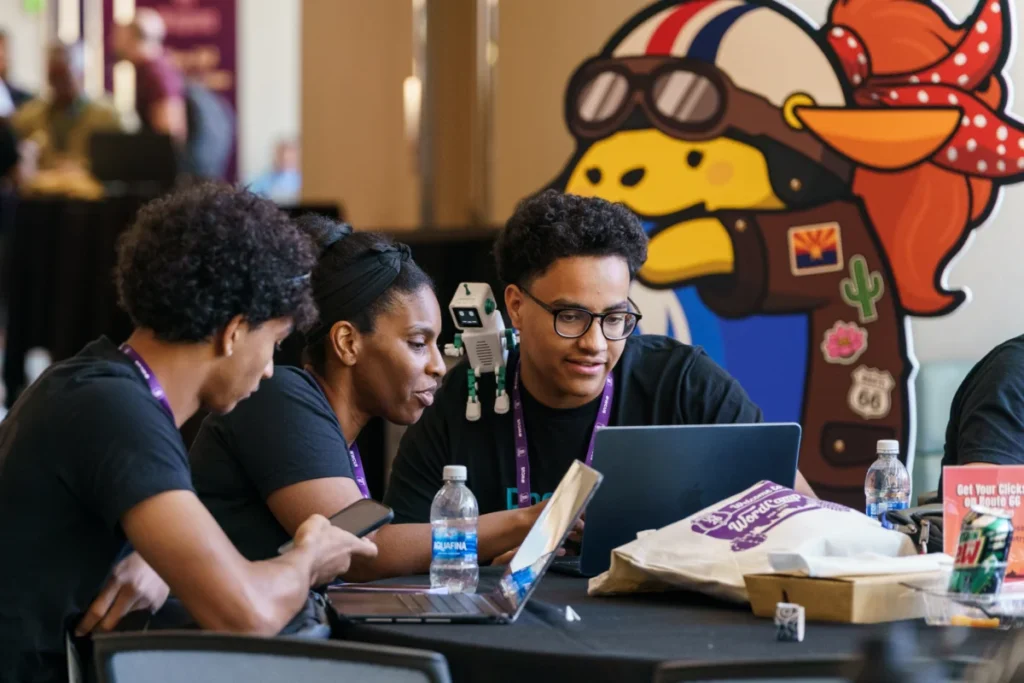
PHOENIX, ARIZONA — WordCamp US (WCUS) 2026 officially wrapped up its four-day run at the Phoenix Convention Center, drawing over 1,100 registered attendees from around the globe and thousands more via online livestreams. Navigating a desert climate that saw temperatures peak at a scorching 111°F (44°C), the global open-source community gathered to tackle the future of digital publishing, grapple with the rapid acceleration of artificial intelligence, and chart a course back to core tenets of software simplicity.

The multi-day event featured a packed schedule including dedicated Contributor and Showcase Days, over 50 speaker-led sessions across four tracks, specialized hands-on workshops, and major software announcements—most notably the release of WordPress 7.1, affectionately dubbed "Mary Lou."

Main Facts
WordCamp US 2026 served as a pivotal checkpoint for the world’s most popular content management system. Key takeaways from the conference include:

- Massive Attendance and Global Reach: Over 1,100 participants registered in person at the Phoenix Convention Center, supported by a fleet of golf carts ferrying attendees through the intense heat between the Sheraton Phoenix Downtown and the venue. Thousands more tuned into livestreams worldwide.
- The Launch of WordPress 7.1: Mid-way through the event, release leads took to the stage to officially launch WordPress 7.1 ("Mary Lou"), which quickly amassed hundreds of thousands of downloads.
- The AI Pivot: Across nearly all tracks—ranging from core development and security to design systems and automated translation—speakers emphasized that artificial intelligence does not replace human work; rather, it shifts it. Human judgment, context-setting, and intent remain irreplaceable.
- Civic and Enterprise Adoption: Showcase Day highlighted massive migrations and modernizations, including civic government portals managed by Manny Costa, independent publisher The Ankler breaking away from Substack, and open community giant Daily Kos transitioning its 2.7 million users to WordPress.
- A Call for Software Simplicity: During the closing keynote, WordPress Co-founder Matt Mullenweg introduced experimental concepts like WordPress "Piplets"—self-contained 25-megabyte PHP files requiring no database—signaling a strong push toward structural simplicity.
Chronology of the Event
Day 1 & 2: Contributor Day and Showcase Day
The conference kicked off with Contributor Day operating under the motto "Real artists ship." A new format welcomed 425 participants—including 29 first-time contributors—who formed 26 agile teams focused on shipping tangible results by day’s end. Contributors tackled everything from closing tickets and shipping pull requests to building a Photo Directory importer, updating dashboard notes, and expanding accessibility checks for themes.

Monday transitioned into Showcase Day, shifting the focus from code contributions to large-scale real-world deployments. Sessions detailed how civic platforms handle vital public communications, how The Ankler successfully migrated 15 newsletters to WordPress to reclaim audience data, and how Daily Kos transitioned 1.5 million posts and 88 million comments in what stands as a milestone for user-generated platforms.

Day 3 & 4: Core Sessions, Keynotes, and Industry Insights
The core conference days delivered over 50 sessions across four tracks, focusing on AI governance, developer tools, security supply chains, and design systems. High-profile keynotes from industry leaders set the intellectual tone:

- Bo English-Wiczling addressed the trust gap in AI adoption, noting that AI changes the nature of developer work by demanding precise intent and rigorous context.
- Loyal Pyczynski drew on his experience with Disney and Meta to discuss iterative failure and creative confidence, famously noting, "We need to make sure that we make better mistakes tomorrow."
- Amanda Ventura of Waymo joined David Levine for a fireside chat on Wednesday morning, discussing how consumer trust in autonomous technology is earned through continuous listening, safety data transparency, and responsive product updates.
Closing Day: Proclamations, Releases, and the Future
The final day combined municipal recognition with visionary technical debate. Michael Hammett, Phoenix’s first Chief Innovation Officer, presented a mayoral proclamation from Mayor Kate Gallego declaring August 19 "Phoenix WordPress Day" in honor of the local digital economy’s growth.

Following the proclamation, release leads pushed the button on WordPress 7.1 ("Mary Lou"), and Matt Mullenweg engaged in a wide-ranging Q&A with Robert Jacobi, outlining the project’s evolving philosophy on metrics, core contributions, and radical simplicity.

Supporting Data & Metrics
- Temperature: 111°F (44°C) outside the Phoenix Convention Center, managed logistically via downtown golf cart shuttles.
- Contributor Day Scale: 425 participants, 29 first-time contributors, and 26 specialized working groups.
- Daily Kos Scale: A massive undertaking involving 1.5 million posts, 88 million comments, and 2.7 million registered users.
- WordPress Piplet Specifications: Single self-modifying PHP files holding up to 25 MB (roughly 4 million words) capable of loading in approximately 50 milliseconds without an external database.
- Five for the Future: Currently records roughly two million self-sponsored hours pledged weekly across 150,000 contributors—a metric Matt Mullenweg suggested should evolve to more accurately reflect verified output like code commits and closed tickets.
Official Responses and Key Quotes
The conference served as a megaphone for leaders across technology, civic administration, and media who view open-source collaboration as a cornerstone of modern digital infrastructure:

- Matt Mullenweg on Simplicity: "I want WordPress to be known for simplicity, not just complexity." Reflecting on future experimentation, he highlighted the potential of single-file WordPress instances ("Piplets") to mirror the minimalist power of raw, self-contained web development.
- Bo English-Wiczling on the Reality of AI: "AI doesn’t remove your work. It moves it." English-Wiczling cautioned that while code generation happens in seconds, human oversight remains vital to catch accessibility flaws, stylistic errors, and unsafe dependencies.
- Loyal Pyczynski on Iteration: "Success is an iterative endeavor, and time is our most precious resource."
- Amanda Ventura on Trusting Complex Systems: "Trust is repeated work." Ventura explained how user feedback—such as adjusting autonomous vehicle pickup cues for visually impaired riders—transforms technical capability into reliable public service.
Implications for the Open Web
WordCamp US 2026 leaves behind several significant implications for the broader tech and publishing landscape:

- The Maturation of AI Integration: The community has moved past the initial novelty phase of generative AI. The consensus in Phoenix was clear: AI tools are effective accelerators, but they must be held accountable to human standards of security, accessibility, and intent. Trust is now an active product practice.
- Decentralized Publishing Momentum: High-profile migrations away from closed platforms (such as Substack) toward self-hosted WordPress environments—as showcased by The Ankler—signal that publishers increasingly prioritize direct ownership of data, revenue rules, and reader experience.
- Redefining Contribution Metrics: Discussions surrounding the Five for the Future initiative point toward a cultural shift within WordPress. The project is leaning toward recognizing verified impact (actual commits, code reviews, and ticket resolutions) over estimated time pledges, promoting greater accountability and transparency.
- Embracing Radical Simplicity: Through explorations into SQLite, WordPress Playground, and experimental single-file "Piplets," the core maintainers are actively looking for ways to lower the barrier to entry, ensuring WordPress remains nimble, lightweight, and resilient in an increasingly complex digital ecosystem.
What Lies Ahead
With WCUS 2026 in the rearview mirror, session recordings remain available on the official WordCamp US schedule page. The open-source community now looks ahead to the annual State of the Word address, followed by international gatherings: WordCamp Asia 2027 in Penang, Malaysia, and WordCamp Europe 2027 in Málaga, Spain.

Photo credits for WCUS 2026 documentation: Jaron Quach, Emily Chan, Wini Lao, Kendra Stowe, and Jennifer Swisher.