Beyond the Tactic: Rethinking Pipeline Growth in the Age of "Doing More with Less"
For the modern marketer, the mandate to "do more with less" has become a pervasive, often demoralizing, mantra. In an era where budgets are tightening and economic uncertainty looms, the pressure to inflate pipeline targets has never been higher. Yet, for many, the traditional playbook—churning out more content, running more webinars, and pushing more ads—is yielding diminishing returns.
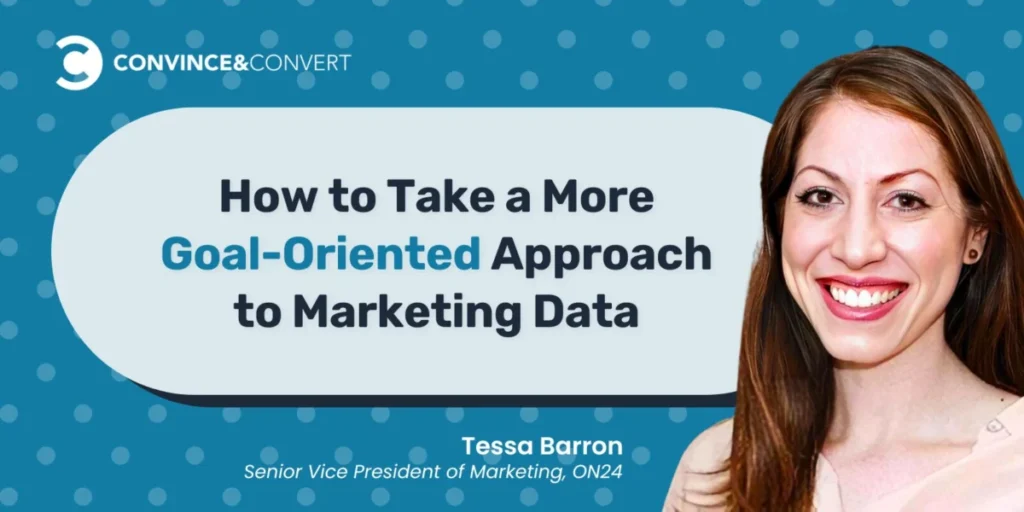
Tessa Barron, the former Senior Vice President of Marketing at ON24 and a recent guest on the Data-Driven Decisions podcast, argues that the problem is not a lack of effort, but a misalignment of philosophy. According to Barron, the industry is suffering from a "tactic-first" obsession. By pivoting from a tactic-oriented mindset to a goal-oriented one, marketers can stop spinning their wheels and start driving measurable, high-quality pipeline growth.
The Core Philosophy: Moving Beyond the Tactic-First Trap
The fundamental shift Barron advocates for is simple yet radical: stop starting with the output. In the current landscape, marketing teams often default to a calendar-based approach. They plan their year by asking, "How many webinars can we host in Q1?" or "How many whitepapers should we publish this month?"
Barron suggests this is the first sign of a stagnant strategy. "We as marketers have to check in with ourselves and say, ‘Have we changed? Are we still doing what we were doing three years ago?’" she notes. If the answer is yes, then expecting that "more of the same" will produce a higher ROI is fundamentally flawed.
The Shift to Goal-Oriented Marketing
Instead of setting goals around activity, marketers must set goals around outcomes. For instance, instead of planning four webinars, the goal should be: "In Q1, we need to reach X number of new accounts, or achieve a 10% uplift in our pipeline target."
By framing the challenge this way, the "tactic" becomes a secondary consideration—a tool chosen specifically to bridge the gap between the current state and the desired outcome. If the goal is a 10% increase in first-meeting conversions, the marketing team isn’t tasked with "doing more webinars"; they are tasked with identifying what information a prospect needs to feel confident in booking that first meeting. If the data suggests that deep-dive technical education is the catalyst for those meetings, then a webinar becomes the logical, strategic choice.
Unmasking the "Signal": Data vs. Noise
One of the greatest challenges for modern marketing teams is the sheer volume of data available. In the quest for insight, many teams drown in "vanity metrics"—page views, click-through rates, and social media impressions that provide little visibility into actual buyer intent.
Barron proposes a shift in terminology: stop looking for "data" and start looking for "signals." A signal is any piece of intelligence that indicates a buyer is moving closer to a conversion point. Once these signals are identified, the marketer’s job shifts from being a content creator to being a "trap-setter"—designing interactive moments that force these signals to surface.
Real-World Applications of Strategic Data Capture
The efficacy of this approach is best illustrated through the practical experiences of ON24 clients:
- The Technology Sector: One company found that prospects using a specific cloud provider were ten times more likely to convert. Rather than targeting a broad audience, they used their webinar platform to ask a direct, qualifying question: "Which cloud provider are you currently using?" This allowed them to immediately segment their audience and prioritize those with the highest propensity to convert.
- The Healthcare/Pharma Sector: A firm aiming to support doctors in high-risk patient environments needed to identify which practitioners were most in need of their specific therapy. By integrating a poll asking doctors to rate the risk level of their patient base, the company could immediately identify the "high-risk" segment. This provided the sales team with a prioritized list of prospects who were already signaling a critical need for the company’s solution.
The Sales-Marketing Nexus: Bridging the Pipeline Gap
A recurring theme in modern B2B marketing is the friction between sales and marketing. Barron contends that this friction often stems from a misunderstanding of roles. Marketing does not "create" pipeline; rather, marketing builds the infrastructure—the net, as it were—that catches the prospects who will eventually become pipeline.
The Front-Line Intelligence Loop
To build that net effectively, marketers must stop working in a vacuum. The most valuable, underutilized resource in any organization is the sales team. Sales representatives are on the front lines, navigating the objections, hesitations, and specific, granular questions that prospects have before they sign a contract.
Barron suggests that marketers should interview their sales counterparts to understand the "qualification criteria" they use. What are the specific hurdles that stop a deal? What questions, when answered, seem to close the gap? When marketing can align its content and its "signal-traps" with the actual challenges faced by sales, the quality of the leads being handed off improves dramatically.
Tactical Refinement: The "In-Between" Spaces
While the ultimate goal is the pipeline, Barron emphasizes that the "in-between" spaces—the micro-moments between a cold lead and a qualified opportunity—are where most companies lose their momentum.
Too often, organizations focus on the top of the funnel (brand awareness) or the bottom (closing the deal), while ignoring the friction that occurs in the middle. This includes outdated lead forms that require too much information, inconsistent messaging across platforms, or a lack of interactive content that keeps a prospect engaged after the initial touchpoint.
Controlling the Dials
"It’s figuring out those key steps in between a lead becoming a pipeline opportunity," says Barron. "It’s focusing there that you can really start to be able to control and understand how to turn dials." By optimizing these small, iterative steps—shortening a contact form, refining a nurture email, or adding a live Q&A to an on-demand video—marketers can exert influence over the conversion rate without needing to increase their total lead volume.
Communicating Impact to Stakeholders
The final hurdle in this shift is the internal perception of marketing. For non-marketing stakeholders, the complexity of a modern marketing stack can be alienating. When reporting back to the C-suite or board, the temptation is to provide a comprehensive, 50-slide deck of activity reports.
Barron advises against this. To maintain alignment, marketers must present data in the simplest, most visually compelling way possible. Stakeholders do not need to know the granular details of every social post; they need to know if the strategy is moving the needle on the company’s core objectives. By tying every report back to the "goal-oriented" framework established at the beginning of the quarter, marketers can demonstrate that their work is not just a cost center, but a precise, calculated engine for revenue growth.
Implications for the Future
As the B2B landscape becomes increasingly crowded and buyers become more resistant to generic outreach, the "do more with less" era may actually be a blessing in disguise. It forces a return to fundamentals. It mandates that marketing departments move away from the "spray and pray" tactics of the past and toward a more clinical, data-backed approach to human interaction.
By treating data as a signal for action, aligning deeply with the realities of the sales floor, and focusing on the micro-conversions that drive the pipeline, marketing leaders can move beyond the "wince-inducing" demand to do more. Instead, they can focus on doing better.
As the industry continues to evolve, the most successful marketers will be those who stop counting their tactics and start counting their signals—transforming their departments into centers of intelligence that provide not just leads, but a clear, actionable picture of the customer journey.
For those looking to dive deeper into these strategies, the full insights from Tessa Barron are available in the "Data-Driven Decisions" podcast series, which offers a comprehensive look at how modern teams are recalibrating their approach to the digital marketplace.