The Dawn of Proactive Automation: Mastering OpenAI’s Codex for Business Transformation

In the rapidly evolving landscape of artificial intelligence, a common misconception continues to hinder business owners and marketers: the belief that advanced AI automation is the exclusive domain of software engineers. OpenAI’s latest breakthrough, the Codex desktop application, is dismantling this barrier, transforming AI from a reactive chatbot into a proactive business partner capable of executing complex, multi-step workflows without a single line of traditional code.
As businesses struggle to integrate AI into their daily operations, Codex represents a paradigm shift. Unlike the standard ChatGPT interface, which requires constant human input to function, Codex acts as an autonomous agent—or a fleet of them—that can interact with your file systems, web browsers, and legacy software to perform labor-intensive tasks independently.
The Core Concept: Redefining AI Interaction
To understand the power of Codex, one must first distinguish between the "brain" and the "harness." OpenAI’s models—such as the advanced reasoning engines—serve as the brain. The web-based version of ChatGPT is merely one type of harness. The Codex desktop app is a specialized, enterprise-grade harness designed to give that brain "hands" to manipulate your local environment.
When you communicate with Codex, you do not write code. You use natural language, just as you would in a browser window. The transformation occurs in the agency of the tool: while ChatGPT answers questions, Codex completes objectives. It can read spreadsheets, cross-reference data, manage folder structures, delete redundant files, and execute multi-step business logic, all driven by a single conversational prompt.

This is not merely an improvement on existing workflows; it is a total removal of the "middleman" tools—like Zapier or n8n—that were previously required to bridge the gap between AI and your tech stack.
Chronology of Integration: A Strategic Deployment
Transitioning to an AI-augmented workflow requires a methodical approach. The following chronology outlines the path from initial setup to full-scale automation.
Phase 1: Deployment and Environment Setup
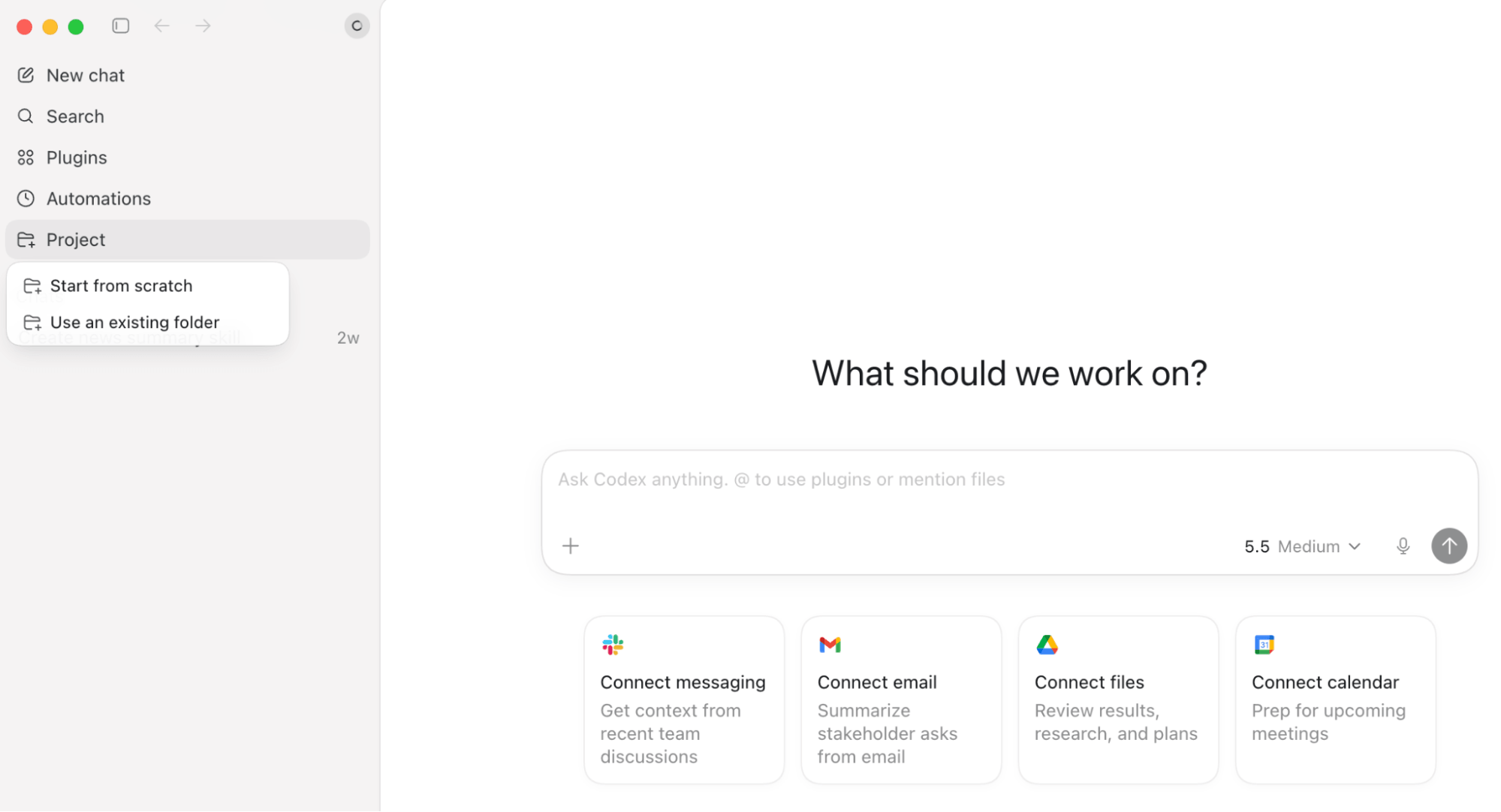
The journey begins by downloading the dedicated Codex desktop application. Once installed, the primary configuration step involves "pointing" the application to specific directories on your computer or local network. By mapping Codex to these folders, you grant it the permissions necessary to read, write, and modify your proprietary data.
Security is paramount during this phase. Experts recommend avoiding the temptation to connect Codex to your root drive. Instead, create a "sandbox" folder—a dedicated, scoped directory. This limits the blast radius of any automated actions, ensuring that the AI has access only to the files necessary for its assigned task.
Phase 2: Defining Permissions and Scope
Upon connection, Codex offers granular permission modes. The industry best practice is to start with default permissions, observing how the agent interacts with your files before elevating to full read/write access. This period of observation allows the user to understand the agent’s logic patterns, mitigating the risk of unintended file deletion or unauthorized modifications.
Phase 3: Activating Skills and Plugins
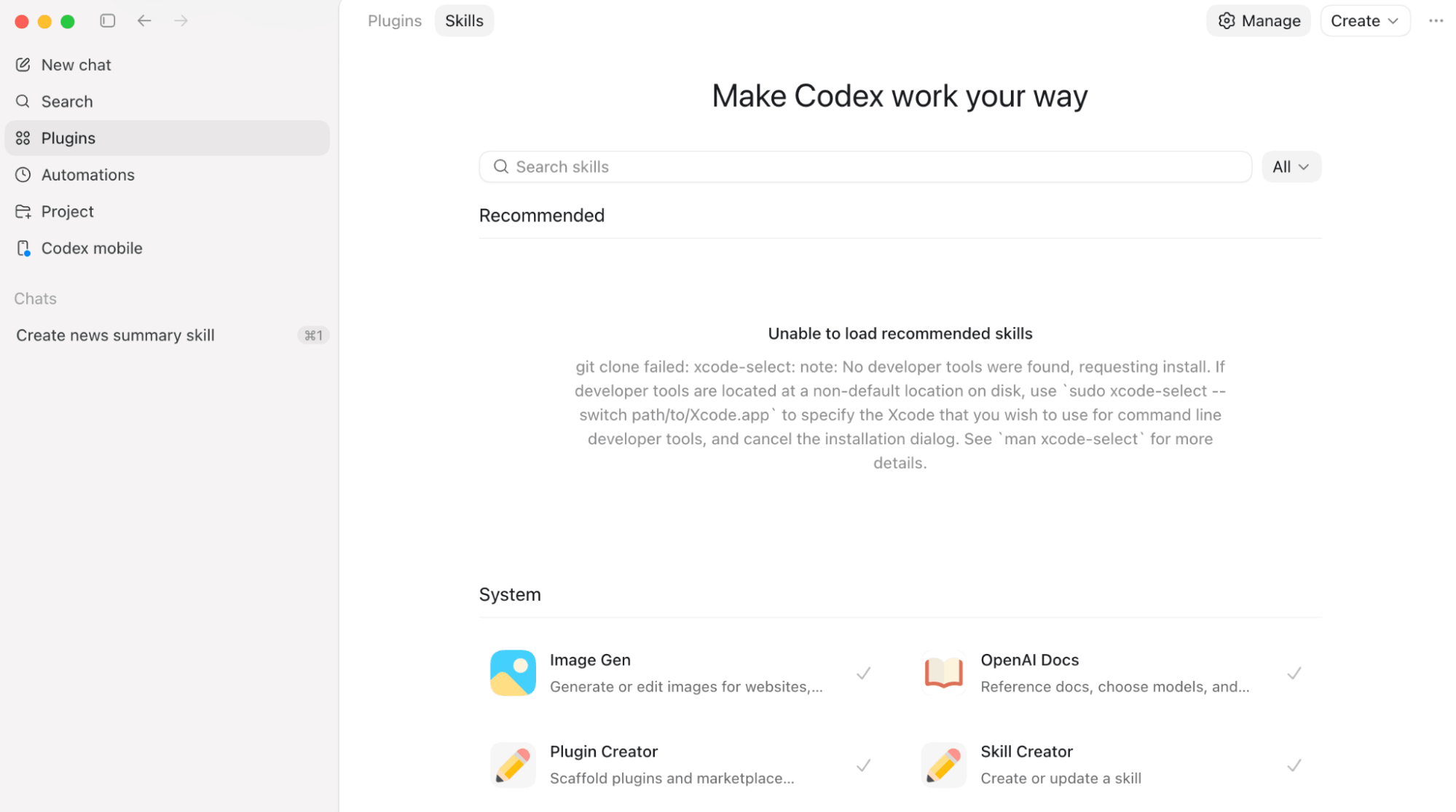
Once the environment is secure, the user begins "training" the agent. This is done through Skills—reusable sets of instructions that teach Codex how to handle specific tasks, such as applying a company brand voice to a document or formatting a report. Simultaneously, Plugins act as the connective tissue between Codex and the outside world. The Chrome plugin, for instance, allows the agent to navigate the web, fill out forms, and interact with legacy software that lacks a modern API, effectively "humanizing" the AI’s ability to use the internet.
Supporting Data: Efficiency Gains in Practice
The efficacy of Codex is best illustrated through real-world applications within high-friction environments, such as the construction and logistics sectors.
Consider the case of invoice reconciliation. Previously, a mid-sized firm might allocate two to three full days of staff time each month to manually verify vendor invoices against master spreadsheets. By transitioning to a Codex-driven workflow, that time is compressed into 15 to 30 minutes.

The mechanism behind this is the Subagent Architecture. In this scenario, Codex spawns distinct subagents for each vendor. If the firm works with five vendors, Codex launches five simultaneous subagents. Each agent is tasked with a narrow objective: identify discrepancies, verify balances, and flag duplicates. Because these agents operate in parallel, the total time to completion is only as long as the slowest individual process, rather than the sum of all tasks.
Furthermore, in legacy system management, where employees might spend 10 minutes navigating clunky user interfaces to export a single field log, Codex can be configured to perform these tasks unattended. By running a three-subagent sequence—one to navigate and export, one to calculate, and one to reconcile—businesses can automate these tasks overnight, ensuring that data is ready and verified by the start of the next business day.
Official Perspectives on Security and Integrity
The rapid adoption of AI agents has brought the risk of "Prompt Injection" to the forefront of the cybersecurity conversation. Prompt injection occurs when an AI agent, while browsing the web or interacting with external data, encounters hidden instructions embedded by a malicious third party. These instructions attempt to override the user’s original directives, potentially commanding the agent to extract sensitive data, access financial records, or install unauthorized software.
To combat this, a robust defensive framework is required:
- Data Isolation: Never allow a single agent to handle both sensitive internal data and external web browsing simultaneously.
- Verification Loops: Implement a "Gatherer-Verifier" structure. One agent gathers data from the outside world; a second, isolated agent verifies the integrity and safety of that data; only then is the information passed to your internal workflow.
- Scoped Access: Restrict the agent’s ability to execute shell commands or install software to a "zero-trust" environment.
By maintaining a clean separation between raw, external information and the internal "thinking" processes of your agents, businesses can harness the power of automation while maintaining a secure operational posture.
Implications: The Future of Business Workflows
The implications of Codex are profound. We are moving away from the era of "Human-in-the-Loop" as a bottleneck, toward a model of "Human-on-the-Loop." In this new paradigm, the human acts as the architect of the workflow, while the AI functions as the engine that runs it.
The Shift from Reactive to Proactive
The most significant change is the transition to proactive operation. Traditional automation tools (like macros or basic scripts) are static; they do what they are told, and if the data format changes slightly, they break. Codex, however, uses its "brain" to understand the context of the data. If a spreadsheet column is renamed, Codex understands the intent and continues the task. If a website’s layout changes, the Chrome plugin adapts its navigation to find the button it needs.
Democratization of Automation
For the business owner, this means that the "cost of entry" for advanced digital transformation has plummeted. The ability to automate is no longer gated by a computer science degree or the need for expensive IT consultants. A marketing manager can now build an agent that monitors competitor mentions every four hours, summarizes the findings, and drafts a report—all by typing a few sentences into a chat box.

The Economic Value of Time
When repetitive, high-volume tasks are shifted from human staff to autonomous agents, the value proposition of human labor shifts toward strategy and creative problem-solving. Companies that adopt these tools are not just saving hours on invoicing or reporting; they are freeing up their most valuable assets—their people—to focus on innovation and growth.
Conclusion
As we look toward the future, the integration of tools like OpenAI’s Codex is not merely an optional upgrade; it is a fundamental shift in how business is conducted. The organizations that thrive in the next decade will be those that view AI not as a novelty, but as a core component of their workforce. By understanding how to deploy, secure, and scale these autonomous agents, business leaders can build a future where technology does the heavy lifting, allowing human potential to be directed toward the visionary goals that truly define success.