BJP High Command Cracks Down on Karnataka Unit Following MLC Poll Cross-Voting Scandal
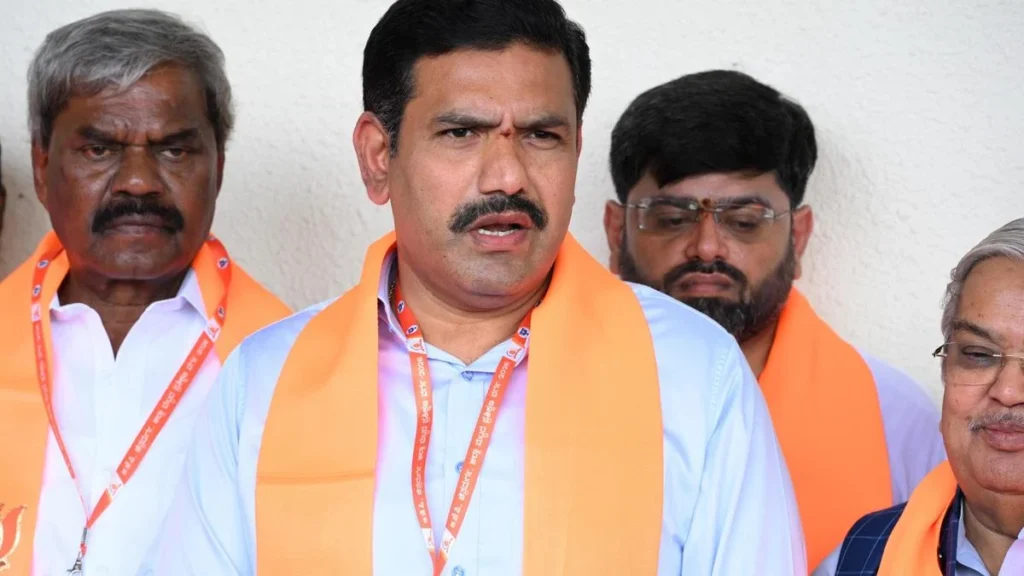
BENGALURU: The Karnataka unit of the Bharatiya Janata Party (BJP) finds itself in the throes of a significant internal crisis following the fallout of the recently concluded Legislative Council elections. A high-level meeting, chaired by BJP national president Nitin Nabin in the national capital, has signaled a no-nonsense approach from the central leadership, as the party grapples with the embarrassment of widespread cross-voting that handed an unexpected victory to the Congress party.
The atmosphere during the meeting was reportedly tense, with central observers expressing deep dissatisfaction over the lack of discipline and the palpable internal fragmentation within the state unit. As the party looks to consolidate its position ahead of future electoral cycles, the events of the last few weeks have exposed a fragile alliance and a divided house.
The Genesis: A Strategic Miscalculation
The Legislative Council elections, which saw seven seats up for grabs, were meant to be a straightforward exercise in legislative arithmetic. The BJP had fielded two candidates, while the Congress, buoyed by its strong majority in the Assembly, fielded five. However, the equilibrium was disrupted when the Janata Dal (Secular) — the BJP’s NDA ally — decided to field a candidate for the seventh seat.
Party insiders reveal that senior BJP leadership had explicitly cautioned JD(S) leader H.D. Kumaraswamy against the move, arguing that the math did not support a victory for the seventh candidate. Despite these warnings, the JD(S) persisted, a decision that many in the BJP now view as a calculated attempt to test the loyalty of various factions within the NDA.
The result was catastrophic for the alliance. The Congress party secured its fifth seat, while the JD(S) candidate suffered a humiliating defeat. Crucially, the outcome was only possible because of cross-voting by legislators from both the BJP and the JD(S) ranks.
Chronology of the Crisis
- Pre-Election Phase: Despite warnings from BJP state leadership, the JD(S) announces its intention to contest the seventh seat, creating friction within the NDA coalition.
- Polling Day: Reports emerge of cross-voting, with several MLAs allegedly defying party whips to vote for the Congress candidate.
- The Results: The Congress party sweeps the fifth seat, while the JD(S) candidate fails to secure a win. The margin of victory for the Congress candidate indicates a significant number of "disloyal" votes from the opposition benches.
- Post-Poll Fallout: Public embarrassment leads to intense scrutiny of the Karnataka BJP’s internal communications and coordination.
- June 24, 2026: A high-level emergency meeting is convened by BJP national president Nitin Nabin in Delhi, attended by state president B.Y. Vijayendra, Leader of the Opposition R. Ashok, and general secretary (Karnataka) Radha Mohan Das Agarwal.
- The Mandate: A disciplinary committee, led by MLC C.T. Ravi and including N. Mahesh and Mahesh Tenginakayi, is tasked with identifying the turncoats, with a report deadline set for June 25.
Disciplinary Action: The C.T. Ravi Committee
The BJP central leadership has made it clear that "betrayal" will not go unpunished. The formation of a committee headed by senior leader C.T. Ravi underscores the gravity of the situation. The mandate of the committee is clear: conduct a forensic audit of the voting patterns and identify every legislator who deviated from the party’s directive.
"The party will not tolerate such blatant indiscipline," a senior party functionary noted. The deadline of June 25 for the submission of the report suggests that the central leadership expects swift action. Whether this leads to suspensions, show-cause notices, or expulsions remains to be seen, but the intent is to send a message that the party structure is not to be undermined by individual agendas.
The Political Implications: An Internal Schism?
The cross-voting scandal has reignited debates regarding the leadership of B.Y. Vijayendra. While Vijayendra has been steering the state unit, critics within the party have long whispered about a "hidden faction" that remains loyal to older power centers within the Karnataka BJP.
Some analysts argue that H.D. Kumaraswamy’s decision to field an extra candidate was not merely a blunder, but a tactical move aimed at exposing the rifts within the BJP. By forcing a scenario where legislators had to choose between party loyalty and personal or factional interests, the move effectively highlighted the "scattered" nature of the state unit.

If the cross-voting was indeed orchestrated to undermine Vijayendra’s leadership, the consequences for the party’s cohesion are dire. The image of a "disunited unit" is exactly what the BJP, which prides itself on its disciplined cadre, cannot afford as it attempts to position itself as the primary alternative to the incumbent Congress government in the state.
Official Responses and Strategic Realignment
Following the meeting in Delhi, Leader of the Opposition R. Ashok attempted to present a united front, though his comments alluded to a heavy-handed central intervention.
"We met our national president and held exhaustive discussions on the cross-voting issues," Ashok stated. "He has asked us to leave the matter to him, and he has assured us that action will be taken against those who betrayed the party."
Ashok’s statement highlights a significant shift: the state unit has effectively surrendered its autonomy in handling this crisis to the central leadership. By deferring to Nitin Nabin, the state leaders are likely attempting to shield themselves from the fallout of potential internal purges, while also signaling to the cadre that the "High Command" is now watching every move.
Beyond the disciplinary measures, the party is now pivoting toward a strategy of reorganization. The leaders discussed "strengthening the party" and creating a roadmap to reclaim power in the state. This involves not only weeding out dissenters but also repairing the fractured relationship with the JD(S) and ensuring that the legislative wing acts as a cohesive bloc in future sessions.
Looking Ahead: The Challenges of Unity
As the BJP moves forward, the primary challenge remains the reconciliation of its various factions. The Karnataka unit has historically been prone to internal power struggles, and the cross-voting incident is merely a symptom of a deeper malaise.
For B.Y. Vijayendra, the coming weeks will be the most critical of his tenure. He must navigate the fallout of the C.T. Ravi committee report while maintaining the confidence of the central leadership. Any perceived weakness in handling the "traitors" could lead to further erosion of his authority.
For the party as a whole, the path to recovery involves more than just disciplinary action. It requires a fundamental rebuilding of trust among legislators and a clear strategic vision that transcends the petty internal rivalries that have, for now, handed a significant political victory to the Congress.
As the June 25 deadline approaches, all eyes in Bengaluru’s political circles are on the report from the C.T. Ravi committee. The findings will likely be the first step in a long, potentially painful, process of cleansing the party’s ranks and restoring the discipline that once made the Karnataka BJP a formidable electoral machine. Whether this leads to a more unified, stronger party or a deepening of the existing rifts is a question that will define the political landscape of Karnataka for months to come.