Stop the Bleeding: A Masterclass in E-commerce Conversion Rate Optimization

Your business is bleeding. Every day, potential customers arrive at your digital storefront, browse your offerings, and then vanish into the ether, leaving behind nothing but abandoned carts and missed revenue. In the high-stakes world of e-commerce, traffic is the lifeblood of your operation. However, many business owners make the fatal error of focusing exclusively on "transfusions"—pouring more capital into paid ads and social media campaigns to attract more visitors—while the fundamental wounds in their sales funnel remain unpatched.
Before you spend another dollar on traffic acquisition, you must stop the bleeding. The solution is E-commerce Conversion Rate Optimization (CRO). In this comprehensive guide, we dissect the mechanics of conversion, the vital metrics that determine your success, and the strategic best practices that turn window shoppers into loyal, paying customers.
The Anatomy of Conversion: Understanding the Core Metric
At its simplest, Conversion Rate is the heartbeat of digital commerce. It measures the ratio of individuals who progress from one stage of a journey to the next. Whether it is a brick-and-mortar customer trying on a garment or an online visitor clicking "Add to Cart," the principle remains identical: it is the measurement of intent turned into action.
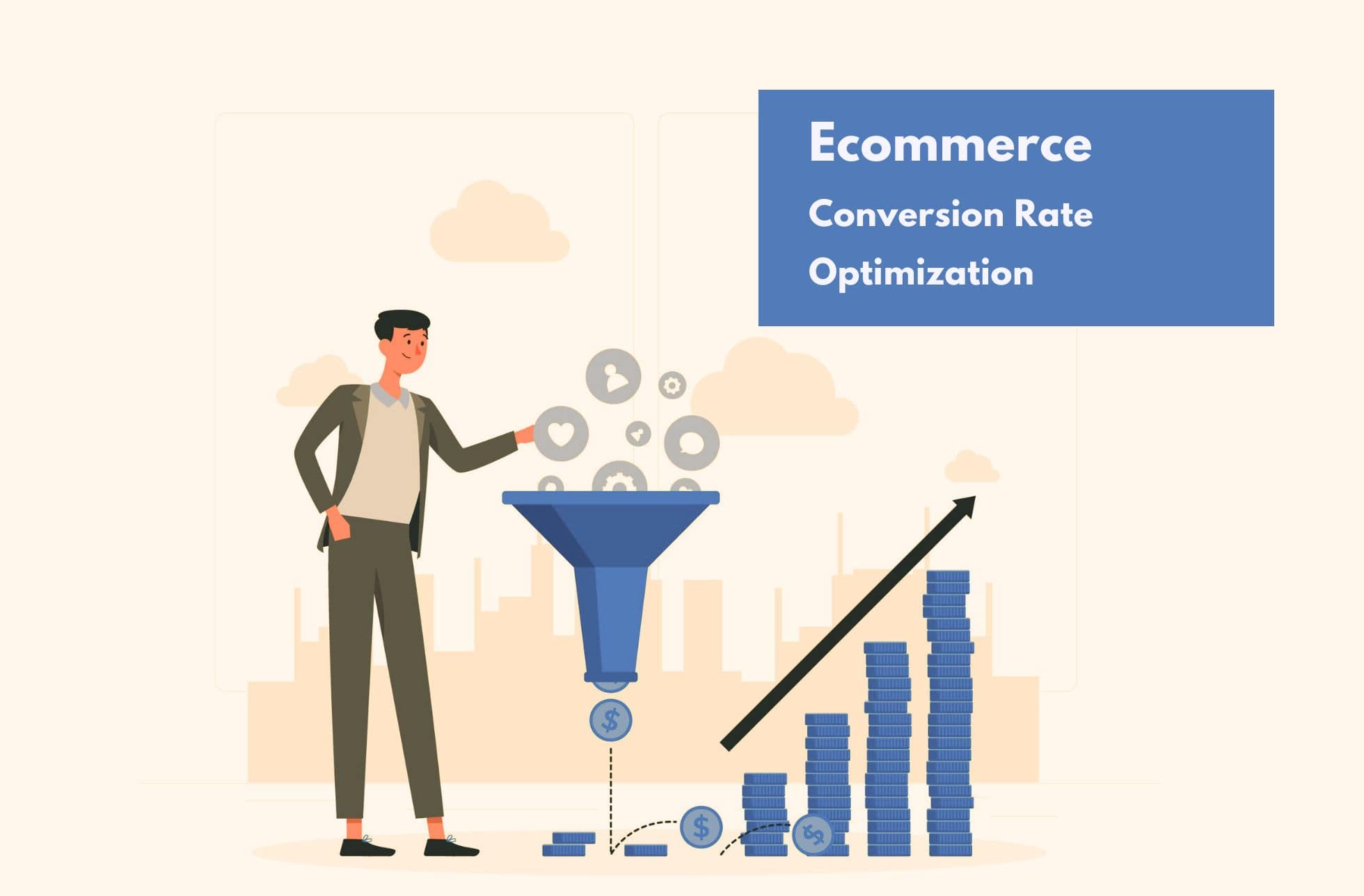
In the e-commerce landscape, the conversion rate typically represents the percentage of total website visitors who complete a desired action—most commonly a purchase. However, it can also refer to micro-conversions, such as signing up for a newsletter, downloading a white paper, or creating an account.
The Mathematical Foundation
To optimize, you must first quantify. The formula for calculating your conversion rate is straightforward:
Conversion Rate (%) = (Number of Conversions / Total Number of Visitors) x 100

For instance, if your digital storefront welcomes 1,000 unique visitors in a day and 20 of them finalize a purchase, your conversion rate stands at 2%. This figure is not merely a number; it is a diagnostic tool that reveals the health of your user experience.
Chronology of Optimization: The CRO Lifecycle
Optimization is not a one-time event; it is a continuous, iterative cycle. To effectively implement a CRO strategy, businesses must follow a disciplined, chronological approach:
- Data Collection & Audit: Before changes are made, you must establish a baseline. Using tools like Google Analytics or Hotjar, you gain visibility into how users interact with your site.
- Bottleneck Identification: By mapping the customer journey—from landing page to checkout—you can pinpoint where the "leaks" occur.
- Hypothesis Formulation: Once a bottleneck is identified, determine why users are dropping off. Is the checkout form too long? Is the page loading speed insufficient?
- A/B Testing: Implement controlled experiments to test potential solutions.
- Implementation and Scaling: Apply the winning variations across your site to solidify performance gains.
Strategic Pillars for Boosting Performance
Based on extensive industry analysis, we have identified five proven strategies that differentiate high-performing e-commerce giants from struggling startups.

1. Collect Trustable Data
Operating a website without accurate data is akin to navigating a ship through a storm with no radar. Many businesses rely on "gut feelings," but successful optimization requires empirical evidence. Utilize business intelligence tools to track heatmaps, scroll depth, and user behavior. If the data shows that users are abandoning the site at the shipping calculation stage, you have found your first target for improvement.
2. Identify and Eliminate Bottlenecks
Think of your sales funnel as a highway. If the lanes narrow suddenly, traffic jams are inevitable. In e-commerce, these bottlenecks often appear as complex navigation, forced account creation, or hidden costs. By analyzing the conversion rate between individual stages (e.g., product page to cart, cart to checkout), you can isolate exactly where your "bleeding" is most severe. Often, simplifying a checkout process by removing unnecessary fields can result in an immediate double-digit percentage increase in sales.
3. Implement Robust Trust Signals
Skepticism is the default state of the modern online shopper. When a user reaches the payment gateway, they are hyper-aware of security. You must proactively dismantle their hesitation:

- Trust Badges: Display icons from verified security partners (Norton, McAfee, etc.). These visual cues are psychological triggers that signify safety.
- Secure Payment Gateways: Offering recognized payment methods like PayPal, Apple Pay, or major credit cards provides a sense of legitimacy.
- SSL Certificates: Ensure your site displays the padlock icon. It is no longer optional; it is a fundamental requirement for browser trust.
- Social Proof: Reviews, testimonials, and user-generated content act as a digital "social endorsement." When a customer sees that others have successfully shopped with you, their perceived risk drops significantly.
4. Professional Presentation and UX
In the digital age, design is the equivalent of a storefront’s curb appeal. High-quality imagery, intuitive navigation, and consistent branding are non-negotiable. Research indicates that consumers correlate the visual professionalism of a site with the reliability of the products sold. A site that looks "broken" or dated will drive customers directly to your competitors.
Benchmarking Success: What Constitutes a "Good" Rate?
A frequently asked question is, "What is a good conversion rate?" While industry averages hover between 2% and 5%, these numbers are highly variable based on product price point, industry, and traffic quality.
- Sales Conversion Rate: The primary indicator of revenue health.
- Email Conversion Rate: Measures the effectiveness of your retention and nurturing efforts.
- Landing Page Conversion Rate: High-performing pages should aim for 5% to 10% conversion. If your landing page is below 2%, it likely suffers from poor alignment between the ad copy and the actual offer.
- Lead Conversion Rate: Crucial for B2B or high-ticket e-commerce, focusing on the transition from visitor to qualified contact.
Implications of Neglect
Ignoring the conversion rate is a strategic failure that results in "profit leakage." Even if you successfully increase your traffic by 50%, a stagnant conversion rate means you are simply wasting your marketing budget on an inefficient funnel.

Conversely, even a small improvement—such as increasing your conversion rate from 2% to 3%—can equate to a 50% increase in revenue without spending a single additional cent on advertising. This is the "magic" of conversion rate optimization.
Conclusion
E-commerce conversion rate optimization is the ultimate discipline for sustainable growth. By shifting your focus from volume to value, you stop the bleeding and transform your website into a high-performance sales machine. Start by auditing your data, identifying your most restrictive bottlenecks, and instilling absolute trust in your visitors. Your customers are already there—it is time to ensure they stay long enough to complete their journey.