The Architecture of Agility: Building Portable AI Workflows for the Post-Platform Era
In the rapidly evolving landscape of generative artificial intelligence, a silent but significant risk is brewing for businesses: platform dependency. As organizations embed tools like OpenAI’s ChatGPT, Anthropic’s Claude, and Google’s Gemini into their daily operations, they are inadvertently building their digital infrastructure on shifting sands. When a platform experiences an outage, a pricing hike, or a decline in model performance, the "locked-in" business finds its productivity ground to a halt.
A new framework, championed by AI strategist Nicole Leffer and explored in depth by Michael Stelzner on the AI Explored podcast, proposes a solution: the "Portable AI Workflow." This approach shifts the focus from mastering a single tool to building a modular, platform-agnostic system. By decoupling instructions, context, and data from specific AI providers, professionals can maintain operational continuity regardless of which model is leading the market on any given day.
Main Facts: The Vulnerability of the "All-In" Strategy
The current state of AI adoption is characterized by "walled gardens." Marketers and developers often spend dozens of hours refining custom GPTs, Claude Projects, or Gemini Gems. While these internal tools offer immediate efficiency, they create a "switching cost" that can become a liability.
The core tenets of the portable AI movement are built on four primary concerns:
- Operational Stability: AI platforms are not immune to downtime. An outage in a primary tool can paralyze a business that has not prepared an alternative.
- Model Variance: AI models are frequently updated. These updates can lead to "model drift," where the quality of output unexpectedly shifts. Portability allows a user to pivot to a different model if the primary one is having an "off day."
- Financial Leverage: As AI providers move from subsidizing growth to seeking profitability, subscription costs and API credits are likely to rise. Portability ensures a business is never trapped by a price hike.
- Functional Optimization: No single AI is best at everything. While Claude might excel at nuanced copywriting, ChatGPT often leads in data analysis or image generation. A portable workflow allows users to leverage the specific strengths of various models without losing context.
Chronology: From Prompting to Infrastructure
To understand why portability is the next frontier, one must look at the evolution of how humans interact with LLMs (Large Language Models).
- Phase 1: The Single Prompt (Late 2022 – Early 2023): Users interacted with AI through "one-shot" prompts. Knowledge was ephemeral and disappeared when the chat window closed.
- Phase 2: Custom Instructions and Personas (Mid-2023): Platforms introduced "Custom Instructions" and "System Prompts," allowing for a layer of persistence. However, these were hard-coded into the specific platform’s UI.
- Phase 3: The Rise of Agents and Projects (Late 2023 – 2024): OpenAI launched GPTs, and Anthropic launched Projects. These allowed users to upload documents and define specific behaviors. This was the peak of "platform lock-in," as moving these configurations between platforms required manual rebuilding.
- Phase 4: The Modular Era (Present): The introduction of the Model Context Protocol (MCP) and standardized Markdown-based instruction files has enabled the current shift toward portability. We are now in an era where the "brain" (the LLM) is treated as a utility, while the "memory" and "logic" (the workflow) are owned by the user.
Supporting Data: The Three Pillars of a Portable Workflow
Building a workflow that can be "taken anywhere" requires a fundamental shift in how digital assets are stored and organized. Nicole Leffer identifies three primary methods for achieving this independence.
1. External Storage and the Model Context Protocol (MCP)
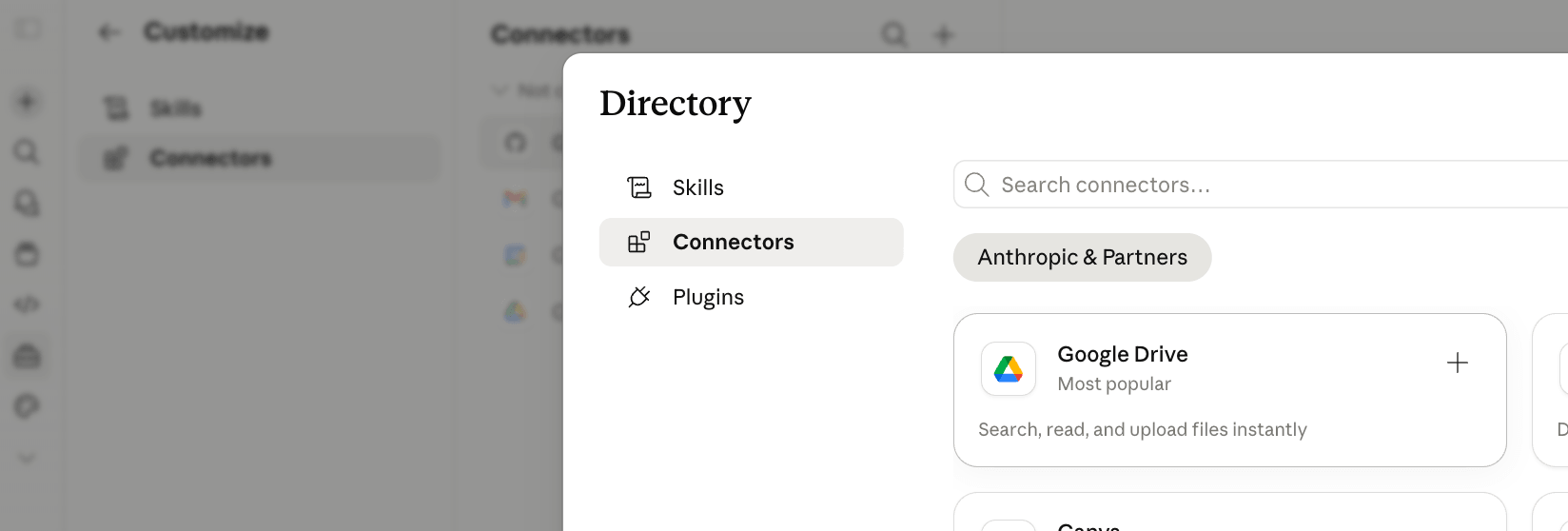
The most common mistake in AI management is uploading proprietary documents directly into a platform’s internal storage. Instead, experts recommend storing context files—brand guidelines, templates, and data—in external cloud environments like Google Drive, Dropbox, or SharePoint.
The technical bridge for this is the Model Context Protocol (MCP). MCP connectors act as standardized APIs that allow different AI models to access the same external database. By pointing an AI to a specific, curated folder rather than a broad document library, users improve output accuracy. This is due to the "needle in a haystack" problem; LLMs perform better when given a precise set of documents rather than being asked to sift through a massive, unorganized directory.
2. The Markdown "Skill" System
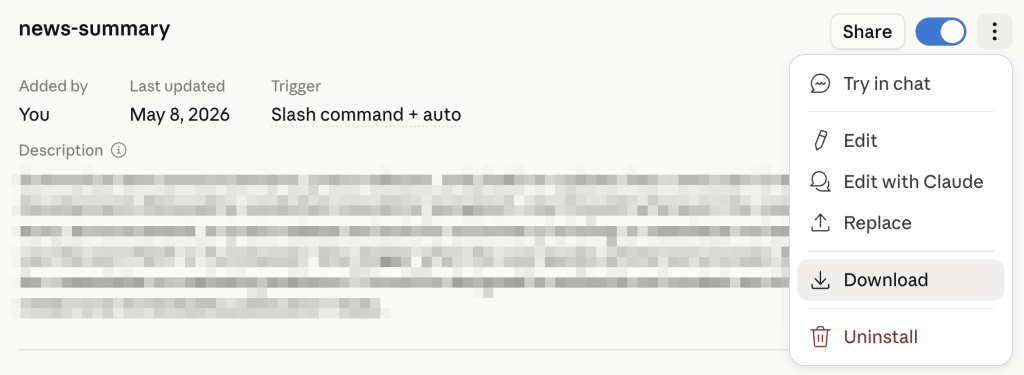
A "Skill" is essentially a portable brain module. Technically, it is a .zip file containing a SKILL.md file—a document written in Markdown that provides structured, step-by-step instructions for the AI.
Markdown is the universal language of LLMs. Because it uses simple text-based formatting (like # for headers and - for lists), it is easily interpreted by every major AI model. A skill can include:
- Core Instructions: How to perform a specific task (e.g., "Write a 500-word blog post in the style of X").
- Templates: Structured formats for the output.
- Code Scripts: Custom logic or calculators for the AI to run.
- Reference Links: Paths to the external storage mentioned above.
Because these are saved as local files, a user can download a skill from Claude and upload it to ChatGPT in seconds. This creates a "plug-and-play" environment for enterprise-level tasks.
3. The "Self-Briefing" Excel Agent
Perhaps the most advanced application of portability is the use of spreadsheet-based agents. By using plugins like Claude for Excel or ChatGPT for Excel, a user can turn a standard .xlsx file into a living, breathing project manager.

Leffer’s methodology involves a specific "deployment" sequence:
- The Planning Phase: Using a high-level model (like OpenAI’s Codex) to design the workbook structure, defining tabs for data, formulas, and history.
- The Briefing Phase: The AI generates a Markdown briefing file and JSON data samples.
- The Execution Phase: The user opens Excel, activates an AI plugin, and feeds it the briefing. The AI then builds the workbook from the inside.
The key to portability here is the History Log Tab. By instructing the AI to record every action it takes within a dedicated tab in the spreadsheet, the user creates a "save state." If the user switches from the Claude plugin to the Copilot plugin, the new AI reads the history log and the instruction tabs, picking up exactly where the previous model left off.
Official Responses and Expert Insights: The Security Mandate
While the move toward portable skills offers immense freedom, it introduces a new category of cybersecurity risk. Nicole Leffer issues a stern warning regarding the "Public Skill" marketplace.
"A skill is not just a text prompt," Leffer notes. Because skills can contain executable code and scripts, they can serve as Trojan horses. A malicious skill downloaded from an unverified third-party source could be programmed to:
- Extract sensitive data from a connected CRM.
- Exfiltrate proprietary documents to an external server.
- Embed viruses within the files it generates.
The expert consensus is to maintain a "Zero Trust" policy for AI assets. Users should only utilize skills created internally or provided by reputable, tier-one developers like Anthropic, OpenAI, or Google. For enterprise teams, the recommendation is to use "Team" or "Enterprise" accounts where skills can be shared within a secure, authenticated environment.
Implications: The Future of the AI-Human Interface
The shift toward portable workflows signals a maturing of the AI industry. We are moving away from the novelty of "chatting" and toward the rigors of "systems architecture."
For the individual professional, this means that the most valuable skill is no longer "prompt engineering"—which is often platform-specific—but rather "process engineering." The ability to document a business process in a structured, Markdown-compatible format is becoming a core competency for the modern workforce.
For the SaaS industry, this trend may force a shift in business models. If users are no longer "sticky" to a specific platform because their workflows are portable, AI providers will have to compete more aggressively on model intelligence, latency, and price, rather than on user interface lock-in.
Ultimately, building a portable AI workflow is an act of digital sovereignty. In an era where the tools we rely on are controlled by a handful of massive corporations, the ability to pack up our "digital brains" and move to a different provider is the only true form of business insurance. As Leffer concludes, portability doesn’t mean using every platform at once—it simply means ensuring you are never trapped.