Beyond the Infinite: Mastering Context Window Management for Long-Running AI Agents

In the rapidly evolving landscape of artificial intelligence, we have witnessed a paradigm shift: the transition from "LLMs as prompt-response engines"—simple tools that answer a query and exit—to "AI agents as long-running background processes." These autonomous agents are designed to execute complex, multi-step tasks over hours, days, or even weeks. However, as these agents accumulate information, they inevitably collide with a fundamental physical constraint of modern machine learning: the context window.
For developers and AI engineers, the context window is no longer just a technical parameter; it is the most significant bottleneck in the pursuit of truly autonomous systems. When an agent’s memory becomes overloaded, it suffers from performance degradation, hallucinations, and, eventually, a total loss of operational coherence. This article explores the architectural strategies required to manage these windows effectively, balancing the demands of infinite memory against the harsh realities of latency and cost.
The Core Challenge: The Context Bottleneck
Modern Large Language Models (LLMs) function by processing a fixed sequence of tokens. This "context window" serves as the agent’s short-term working memory. In a stateless application, this is rarely an issue. But in a long-running agent, every action, user interaction, and system log consumes precious tokens.
When this window fills, the agent begins to experience "digital amnesia." It loses track of its primary objectives, forgets previous errors, or, worse, enters circular logic loops. To build robust, autonomous agents, engineers must move away from the assumption that the model can "hold it all" and instead implement sophisticated memory management architectures.
1. Sliding Windows: The Temporal Filter
The most straightforward approach to memory management is the Sliding Window. Drawing inspiration from streaming data architectures, this strategy maintains a fixed-size buffer of the most recent interactions.
Mechanism and Implementation
In a sliding window model, the system treats the conversation history as a first-in, first-out (FIFO) queue. Once the history exceeds a predefined number of turns or tokens, the oldest data is purged to make room for new inputs. To maintain the agent’s identity, developers typically "lock" the system prompt (the instructions defining the agent’s persona and goals) at the top of the context, ensuring it is never truncated.
Tradeoffs and Implications
- Pros: It is computationally inexpensive, requires no external databases, and introduces negligible latency.
- Cons: The "Digital Amnesia" effect. By design, this method forces the agent to forget the past. If a problem occurs that requires knowledge from an hour ago, the agent is effectively flying blind. This is often the primary cause of repetitive failure loops in agentic systems.
2. Recursive Summarization: The Compression Engine
If a sliding window is a simple filter, Recursive Summarization is a lossy compression algorithm. Rather than deleting old data, the agent periodically triggers a secondary process to condense the conversation history into a concise summary.
Supporting Data
In large-scale deployments, recursive summarization can reduce token usage by 60–80% while retaining the "plot" of the interaction. By maintaining a running summary—often updated every 10 to 20 turns—the agent retains a high-level understanding of its mission, even as the granular details of the early conversation are replaced by the summary.
Tradeoffs
- Pros: It keeps the agent focused on long-term objectives and avoids the sudden loss of context seen in sliding windows.
- Cons: Much like a low-bitrate JPEG, information degradation occurs. Fine-grained details (such as specific variable names, timestamps, or nuanced user preferences) are often discarded in the summarization process. This makes it unsuitable for tasks requiring high-precision data retrieval.
3. Structured State Management: The "Scratchpad" Approach
For agents performing specific, repeatable tasks, Structured State Management is often the gold standard. This strategy rejects the notion that the agent needs to "read" its own history to function.
The Mechanism
Instead of raw conversation logs, the agent maintains a persistent JSON object—a "scratchpad." This object stores key variables, completed goals, identified errors, and known facts. At the beginning of each turn, the agent is fed its instructions, the current state, and the new input. It is then instructed to output its next action and an updated version of the JSON state.
Implications
- Pros: It is highly token-efficient and allows for deterministic, predictable agent behavior. It forces the developer to define exactly what the agent should care about, reducing the risk of "prompt noise."
- Cons: This method is rigid. If the agent encounters a scenario that does not fit into the predefined JSON schema, it may lack the flexibility to handle the input, leading to unexpected errors. It requires significant upfront engineering to design an effective state schema.
4. Ephemeral Context via Retrieval-Augmented Generation (RAG)
RAG-based memory offloads the burden of storage to an external vector database. Instead of holding all history in the active context, the agent treats its past as an archive.
Chronology of Execution
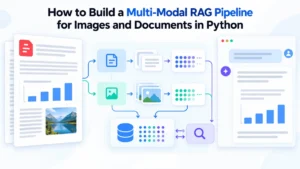
- Ingestion: As the agent generates text, logs are embedded and stored in a vector database.
- Retrieval: When a new prompt arrives, the system performs a semantic search to find the most relevant historical snippets.
- Synthesis: Only the relevant information is injected into the current context window, allowing the agent to "remember" long-term events without exceeding token limits.
Tradeoffs
- Pros: Theoretically infinite memory. An agent can operate for weeks and still access a specific detail from day one.
- Cons: The "Retrieval Blind Spot." RAG relies on semantic similarity. If the agent needs to connect two unrelated events that share no semantic overlap, the retriever may fail to fetch the necessary information, causing the agent to miss critical "mental pieces" of a larger puzzle.
5. Dynamic Context Routing: The Multi-Model Strategy
Dynamic Context Routing represents the most advanced frontier in agent engineering. It treats AI models not as monolithic entities, but as a tiered workforce.
Architectural Logic
This strategy utilizes two distinct models:
- The Worker (Low-Cost Model): Handles high-frequency, routine tasks with a small context window.
- The Orchestrator (High-Capacity Model): Remains dormant until the Worker signals a failure or a complex decision-making requirement.
When the Worker fails three times in a row, the full, raw history is routed to the Orchestrator. The Orchestrator reviews the long-term context, synthesizes the core issues, and generates a fresh, optimized instruction set for the Worker to resume operations.
Implications and Official Perspectives
Industry experts note that while this is the most cost-effective method for scaling, it introduces significant "maintenance debt." Crafting the logic to detect exactly when a smaller model is failing—without wasting resources—requires sophisticated monitoring and fine-tuning. However, as agentic workflows grow in complexity, this hybrid approach is increasingly viewed as the standard for enterprise-grade autonomous systems.
Conclusion: The Architecture of Forgetting
Building successful autonomous agents is not about achieving the illusion of infinite memory; it is about architectural intelligence. The most effective agents are those that possess a clear "memory hierarchy"—using sliding windows for immediate context, structured scratchpads for logic, and RAG for long-term historical retrieval.
As we look toward the future of AI engineering, the primary skill will not be prompt engineering, but rather the strategic management of what an agent remembers, and more importantly, what it can afford to forget. By mastering these five strategies, developers can move past the limitations of the context window and into a new era of truly persistent, capable autonomous systems.