The Digital Frontier: Why Accessibility is the New Essential for Modern Enterprise
In an era where the internet serves as the primary gateway to commerce, healthcare, and civic life, the digital divide is no longer just a social concern—it is a business and legal imperative. As the global population ages and the reliance on digital services accelerates, the mandate for web accessibility has shifted from a "nice-to-have" corporate social responsibility initiative to a core operational pillar.
Leading this transformation is AudioEye, a platform that has spent nearly two decades bridging the gap between digital content and the 1.3 billion people worldwide who live with disabilities. By blending advanced AI automation with human-led expertise, the company is redefining how organizations ensure their digital storefronts are truly open to everyone.
The Evolution of a Digital Necessity
For years, digital accessibility was relegated to the fringes of corporate IT checklists. It was often viewed as a niche compliance requirement, frequently ignored until a legal threat emerged. However, the landscape has shifted dramatically over the last five years.
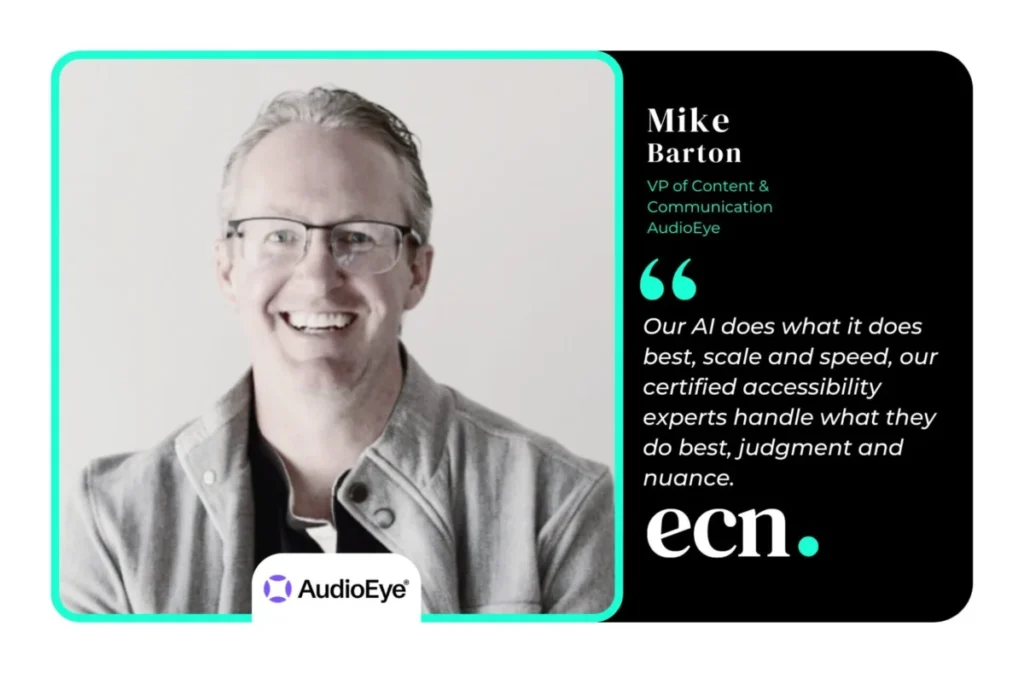
"Digital accessibility was a niche concern when AudioEye started," explains Mike Barton, VP at AudioEye. "Most companies treated it as a checkbox or ignored it entirely. What’s changed is that the stakes have caught up to the principle."
The surge in accessibility-related litigation has acted as a catalyst for this change. With lawsuits doubling since 2020 and the introduction of sweeping international regulations like the European Accessibility Act (EAA), companies can no longer afford to view accessibility as optional. Today, it is a critical intersection of brand reputation, legal risk management, and untapped market potential.
Core Facts: The AudioEye Approach
At the heart of AudioEye’s strategy is a hybrid methodology. The company operates on the fundamental belief that while automation is essential for scale, human judgment is the only way to ensure true usability.
- Platform Functionality: AudioEye utilizes a single line of JavaScript—similar to common cookie consent banners—to integrate into existing tech stacks. This allows for 24/7 monitoring and real-time remediation.
- The AI Engine: The platform’s AI scans websites against Web Content Accessibility Guidelines (WCAG) standards. According to an independent 2026 study by Adience, AudioEye’s AI detects up to 2.5 times more issues than competing automated tools.
- Human Validation: Approximately 50% of accessibility issues are resolved automatically. For the remaining complex barriers—those requiring nuance, context, and the lived experience of users—AudioEye employs certified accessibility specialists, including individuals with disabilities, to perform manual audits and custom code fixes.
- Scale: The platform currently supports over 127,000 organizations, ranging from small local businesses to massive global enterprises.
Supporting Data: The Business Case for Inclusion
For businesses, the cost of inaction is increasingly quantifiable. Accessibility is no longer just a moral argument; it is a significant economic engine.
The Revenue Impact
People with disabilities represent an estimated $18 trillion in global spending power. Yet, the current state of the web often bars them from participating in this economy. Research shows that seven out of ten users with disabilities will abandon a website if it does not work for them. Worse, many will exclusively shop at brands they know to be accessible, creating a permanent loss of customer lifetime value for businesses that fail to adapt.
The Legal Landscape
The risk of ignoring these standards is mounting. Beyond the U.S. Americans with Disabilities Act (ADA) requirements, international mandates like the EAA now force global companies to harmonize their digital experiences across borders. AudioEye reports that 78% of current accessibility lawsuits target online retailers, making e-commerce the most vulnerable sector for non-compliance.
Implications for the Future of the Web
As we look toward the next decade, the relationship between accessibility and technology is set to become even more intertwined. Two major trends are currently shaping this trajectory: global regulation and the rise of AI-driven discovery.
Global Regulatory Shifts
The entry into force of the European Accessibility Act (EAA) in 2025 has effectively "globalized" the compliance map. Companies that previously focused only on U.S. legal risks are now finding that their obligations have expanded. This, according to Barton, is an opportunity for growth and maturity in the market. "Companies that treat accessibility as table stakes—or a growth engine—are winning," he says.
AI Agents and the "New Front Door"
Perhaps the most intriguing development is the rise of AI agents that navigate the web on behalf of users. These agents rely on a website’s "accessibility tree" to interpret content. If a site is not properly coded for accessibility, these AI agents may fail to "read" the site correctly, rendering the business invisible to the next generation of discovery tools.
"Accessibility and AI discovery are going to be the same conversation in a few years," Barton notes. "If your site isn’t accessible, you’re invisible to one of the fastest-growing discovery channels online."
Bridging the Gap: How the Hybrid Model Works
The effectiveness of AudioEye’s solution lies in its ability to handle the "volume vs. value" problem.
- Speed through Automation: By utilizing AI to fix issues like missing alt text, broken form labels, and poor heading structures, AudioEye allows teams to achieve rapid, wide-scale compliance.
- Depth through Expertise: AI struggles with intent. For example, understanding how a user interacts with a complex, interactive carousel requires human perspective. AudioEye’s specialists provide the manual intervention necessary to bridge this gap, ensuring that the site is not just "technically" compliant, but actually usable.
This combination of speed and precision has resulted in significantly higher protection rates for AudioEye’s clients compared to traditional consulting firms or basic "widget-only" solutions. By providing documented evidence of their work—and even working directly with legal counsel to debunk invalid claims—the company has established a new standard for what businesses should expect from an accessibility partner.
Conclusion: A Default Standard
The ultimate vision for AudioEye is to reach a point where accessibility is no longer a "project" or a "scramble" to meet legal deadlines, but a default state of the web.
"The internet should work for everyone who uses it," says Barton. "Our job is to make sure it does."
For the modern enterprise, the path forward is clear. By investing in scalable, hybrid accessibility solutions, businesses do more than just insulate themselves from litigation. They capture a significant, underserved market segment, future-proof their digital presence against the rise of AI discovery, and demonstrate a commitment to a digital environment that is, by design, inclusive of all humanity. As technology continues to evolve at breakneck speed, the companies that prioritize accessibility will be the ones that remain relevant, trusted, and competitive in the global marketplace.