Inside Google DeepMind India: How the Search Giant is Weaponizing Local Efficiency to Close the AI Coding Gap and Redefine Global Token Economics
Main Facts: The Race to Close the AI Coding Gap
In a candid admission during a New York Times podcast earlier this year, Alphabet CEO Sundar Pichai acknowledged a reality that has kept Google’s product teams on high alert: the search giant is "falling a little behind" in the highly competitive domain of AI-powered coding tools. For a company that has historically positioned itself at the absolute vanguard of artificial intelligence research, the concession was a rare moment of public vulnerability.
However, behind the scenes, Google has mobilized its global research apparatus to erase this deficit. At the center of this counter-offensive is Google DeepMind India. Operating out of Bengaluru, this specialized unit has been quietly transformed into an essential proving ground where Gemini models are being re-engineered to be cheaper, faster, more logical, and highly optimized for developer workflows.
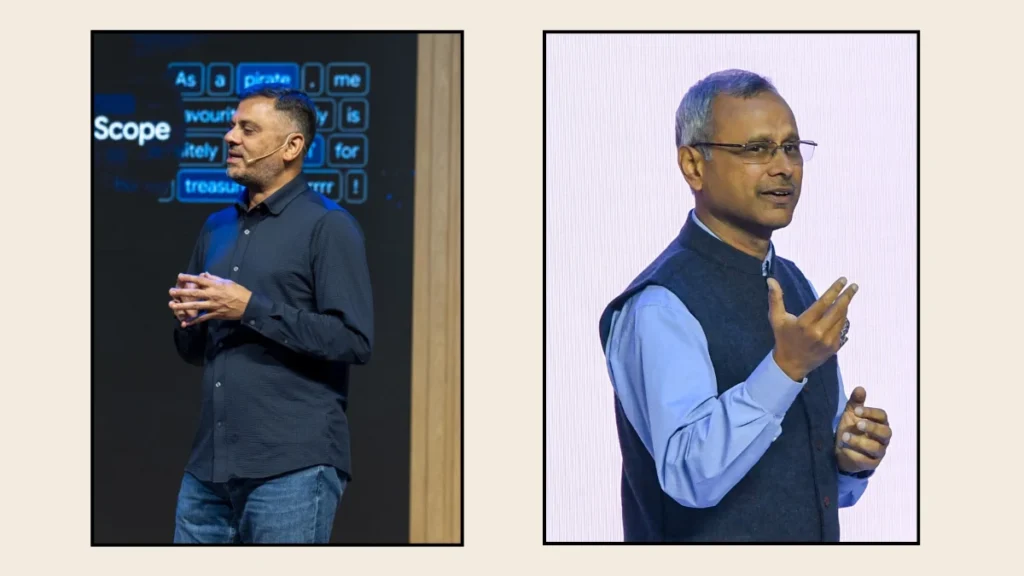
According to Manish Gupta, who leads research for Google DeepMind India, and Seshu Ajjarapu, who heads applied AI for the unit, closing the coding capability gap has risen to the absolute highest tier of internal importance.
[Google Internal Priority Scale]
├── P0: Critical / Immediate Action (Coding Capabilities & Logical Reasoning)
├── P1: High Priority (Infrastructure & Model Efficiency)
└── P2: Medium Priority (Downstream Feature Integration)
"Code is a top priority—P0, P1, and P2," Ajjarapu stated, employing Google’s internal shorthand for its most critical, high-stakes engineering projects.
This intense focus on code generation is not merely about achieving feature parity with rivals like Microsoft-backed GitHub Copilot or emerging darlings like Cursor. Rather, DeepMind’s leadership views coding as a foundational pillar for general intelligence. Because coding tasks offer structured, verifiable, and checkable rewards—where code either compiles and runs correctly or fails—they demand rigorous logical reasoning. By training models to excel at the strict logical structures of software engineering, Google expects to achieve massive knock-on benefits, lifting the reasoning and problem-solving capabilities of the Gemini model family across all non-coding domains.
Chronology: The Evolution of Google’s Efficiency Engine
To understand how DeepMind India became the epicenter of Google’s efficiency drive, one must trace the development of Google’s generative AI models alongside the economic pressures of running AI at scale.
CHRONOLOGY OF GOOGLE'S AI OPTIMIZATION TIMELINE

[Late 2023]
Google launches the Gemini model family; identifies high compute costs
and token consumption as major barriers to enterprise-wide adoption.
      │
      ▼
[Early 2024]
DeepMind India develops the "Matryoshka-inspired transformer" technique
in Bengaluru to nest smaller models within larger ones.
      │
      ▼
[Mid 2024]
Matryoshka technique is successfully deployed on-device via the
Gemini Nano 3 model on Google Pixel devices, optimizing battery life.
      │
      ▼
[Late 2024]
Sundar Pichai publicly acknowledges Google's coding tool deficit.
DeepMind India pivots to apply Matryoshka principles to server-side workloads.
      │
      ▼
[Present / Future]
DeepMind India scales agricultural/health APIs and pilots a transition
from per-token pricing to task-based enterprise billing.
The Birth of the Bengaluru Efficiency Mandate
When Google launched its Gemini model family, the company faced a dual challenge: matching the raw intelligence of its competitors while simultaneously managing the astronomical compute costs associated with serving billions of queries. Because of India’s unique market dynamics—characterized by an immense, tech-savvy population combined with high price sensitivity—the Bengaluru-based lab naturally focused on model efficiency.
The Breakthrough of Nesting Models
In early 2024, the Indian research team achieved a breakthrough by designing the "Matryoshka-inspired transformer." Taking its name from the famous Russian nesting dolls that fit precisely inside one another, this novel architecture allows smaller, highly efficient sub-models to exist nested within a larger, more complex parent model.
From On-Device to the Cloud
By mid-2024, this technique was put to its first major test: deployment on the Gemini Nano 3 model running locally on Google Pixel smartphones. The approach allowed the phone’s operating system to call upon only the specific "layer" or size of the model required for a given task, drastically reducing computational overhead and preserving precious battery life. Following the success of this on-device deployment, DeepMind India began working to migrate this nesting principle to server-side workloads in Google’s massive data centers.
Supporting Data: The Mechanics of Matryoshka Transformers and Token Economics
The research coming out of Google DeepMind India is deeply rooted in empirical performance metrics and structural model optimization. The transition from brute-force scale to refined, variable-compute architectures represents a massive shift in how AI models are trained and run.
The Physics of the Matryoshka-Inspired Transformer
In traditional transformer architectures, every token passing through the model activates the entire parameter set, consuming the same amount of compute regardless of whether the query is a simple math equation or a highly complex systems-architecture question.
The Matryoshka-inspired transformer solves this by structuring the model’s mathematical representations hierarchically.
$$textModel Capacity Used propto textTask Complexity (Structured Nesting Layers)$$
This architecture allows the system to dynamically truncate its representations. The performance benefits are highly measurable:
- On-Device Battery Conservation: Reduces active processing draw on mobile chipsets by utilizing only the innermost nested layers for simple tasks (e.g., text auto-completion).
- Server-Side Cost Reduction: By applying the same truncation to cloud servers, Google can process high-volume, low-complexity requests at a fraction of the standard hardware cost, reserving its full, un-truncated model capacity for high-complexity reasoning and code generation tasks.
┌──────────────────────────────────────────────────────────┐
│  Matryoshka Transformer (Outer Layer - Full Model)       │
│  ┌────────────────────────────────────────────────────┐  │
│  │  Medium Nested Layer (Intermediate Reasoning)       │  │
│  │  ┌──────────────────────────────────────────────┐  │  │
│  │  │  Innermost Layer (Basic Processing/Nano)     │  │  │
│  │  └──────────────────────────────────────────────┘  │  │
│  └────────────────────────────────────────────────────┘  │
└──────────────────────────────────────────────────────────┘
The Search for "The Right Amount of Thinking"
Manish Gupta’s research team is focused on finding the exact inflection point where a model should stop processing. The goal is to mathematically determine "the right amount of thinking" a model should apply to any given problem.

This prevents two major system inefficiencies:
- Under-thinking: Applying too few parameters to a hard problem, resulting in hallucinated or broken code.
- Over-thinking: Wasting expensive compute resources and server time by over-analyzing a simple, straightforward query.
The Shift in Token Economics
As AI agents become more autonomous, they increasingly run in continuous loops—checking their own work, calling external APIs, and executing tools. Under the current industry-standard pricing model, enterprises pay a flat rate per token processed. However, in agentic workflows, token consumption can spike unpredictably.
To address this, Google DeepMind India is spearheading a conceptual shift in enterprise pricing. Seshu Ajjarapu suggests that the industry must move away from volatile, usage-based token pricing and toward a predictable "Value per Completed Task" pricing model.
| Metric | Token-Based Pricing Model | Task-Based Pricing Model (Proposed) |
|---|---|---|
| Pricing Unit | Per 1,000 input/output tokens | Per successfully completed action/task |
| Predictability | Low (highly variable based on agent loops) | High (flat-rate or value-aligned cost) |
| Risk Profile | Borne by the customer (paying for failed loops) | Shared (Google optimizes loop efficiency) |
| Primary Use Case | Simple chat, summarization, Q&A | Complex agentic workflows, autonomous coding |
Official Responses: Strategy, Data Privacy, and Monetization
As Google DeepMind India rolls out these technological upgrades, its leadership has been highly deliberate in framing how these tools will be integrated into the broader enterprise market, particularly regarding data security and commercialization.
Redefining the Enterprise Moat
A persistent anxiety among enterprise customers is the fear that their proprietary codebases and sensitive corporate data will be ingested by foundation models, ultimately training the models to benefit their competitors.
Ajjarapu addresses this by drawing a sharp, non-negotiable distinction between "public data" and "private data."
"The competitive moat for enterprises no longer sits with the underlying foundation model. It sits with a company’s own private context, internal workflows, proprietary tools, and domain expertise."
— Seshu Ajjarapu, Head of Applied AI, Google DeepMind India
To reinforce this, Manish Gupta clarified Google’s strict contractual position:
- Zero Data Leakage: Customer data remains entirely the property of the customer.
- No Continuous Training: Gemini models do not learn or update their weights from enterprise queries or proprietary inputs.
- Static Base Training: All training and weight adjustments occur strictly on the original, highly vetted pre-training corpus.
Search and the Downstream Monetization Philosophy
The integration of generative AI into Google Search via AI Overviews and AI Mode has already yielded positive results, driving double-digit user growth globally. When questioned about the immediate plans to monetize these expensive AI search features through aggressive advertising, the DeepMind India leadership team urged patience, emphasizing user utility over short-term revenue capture.
"If we create user value, we will figure out the rest," Ajjarapu stated, reiterating that Google is intentionally avoiding fast-tracking monetization before proving the long-term utility of its AI search interfaces.
Implications: From Local Proving Grounds to Global Deployments
The innovations originating from Google DeepMind India are designed under a clear, operational philosophy articulated by Manish Gupta: "India first, but not India only." By solving complex, high-scale, and cost-sensitive challenges locally, the team is building technologies that can be seamlessly exported to the rest of the world.
1. High-Impact Local Verticals
The real-world applications developed by the Indian unit extend far beyond pure consumer search, targeting vital sectors such as agriculture, public health, and localized commerce.
                       ┌────────────────────────┐
                       │  DeepMind India Lab    │
                       └───────────┬────────────┘
                                   │
         ┌─────────────────────────┼─────────────────────────┐
         ▼                         ▼                         ▼
┌─────────────────┐       ┌─────────────────┐       ┌─────────────────┐
│   Agriculture   │       │   Healthcare    │       │   Linguistics   │
│  (Land Mapping) │       │  (MedGemma AI)  │       │  (25 Languages) │
└────────┬────────┘       └────────┬────────┘       └────────┬────────┘
         │                         │                         │
         ▼                         ▼                         ▼
  Crop Insurance,           Leprosy Detection,       Sanskrit Search,
   Credit APIs for          Reproductive Health      Tata Steel Safety
Agri-Startups Tools (Open Source) & Customer Care- Precision Agriculture: DeepMind India has built an advanced agricultural landscape model using satellite imagery. The model can identify precise farm boundaries and crop types down to the level of individual, smallholder agricultural fields. Google is making this data accessible via an open API, allowing local startups to build highly accurate crop insurance products and financial credit assessment tools for farmers.
- Public Health Democratization: Utilizing MedGemma, a specialized medical variant of the Gemini model, the team has built highly tailored applications for early leprosy detection and reproductive health support. Google plans to open-source these tools to help scale diagnostic access across rural India.
- Multilingual and Localized Enterprise Search: Gemini’s language model has been trained in 25 Indian languages, including ancient languages like Sanskrit. This localized push has driven massive real-world adoption, ranging from local merchants in Surat using localized interfaces to industrial giants like Tata Steel deploying the technology to manage shop-floor safety and customer care operations.
2. The Global Impact of "India First" Innovation
The implications of DeepMind India’s work stretch far beyond the subcontinent. The efficiency gains forced by the economic realities of the Indian market are directly shaping the global architecture of Google’s AI portfolio.
- Lowering the Barrier to Entry for Enterprise AI: By bringing the Matryoshka-inspired nesting principle to server-side workloads, Google can offer enterprise clients far lower API costs, making high-volume agentic workflows financially viable for businesses worldwide.
- Accelerating the Path to General Intelligence: By prioritizing coding (P0/P1/P2) as a core training mechanism, the Bengaluru team is directly helping to upgrade the logical reasoning frameworks of the global Gemini models. This will result in more reliable, less error-prone models for global developers.
- A New Blueprint for AI Pricing: If Google successfully transitions from per-token billing to task-based pricing, it will fundamentally disrupt the cloud AI market, forcing competitors like OpenAI and Anthropic to adapt their business models to match Google’s highly optimized, task-oriented cost structures.
While Google DeepMind’s robotics research remains centered in other global labs, the Indian unit has firmly established itself as the company’s indispensable efficiency engine. By transforming India’s vast scale and economic constraints into a competitive advantage, the Bengaluru team is not only helping Google close its coding gap—it is quietly designing the economic and structural blueprint for the future of global artificial intelligence.