The Strategic Pivot: How Midlife Professionals are Mastering YouTube for Business Growth
In an era dominated by viral trends and short-form entertainment, a new wave of professional creators is proving that YouTube is no longer just a playground for the young and charismatic. For midlife professionals, consultants, and business owners, the platform has evolved into a sophisticated lead-generation engine. According to YouTube growth expert Ty Myers, the secret to success for those "starting late" lies not in high-energy performance, but in a disciplined, business-first framework that prioritizes problem-solving over personality.
Main Facts: The New Reality of YouTube for Business
The traditional perception of a successful YouTuber—someone naturally bubbly, young, and extroverted—is increasingly being debunked by a data-driven reality. As the platform matures, the algorithm has shifted its focus from broad entertainment to specific utility. This shift favors individuals with "domain expertise"—years of experience in sales, teaching, or consulting—who can communicate solutions to specific audience pain points.
Key findings from current market analysis suggest that:
- The "Late Starter" Advantage: Professionals with established careers possess a deeper understanding of their "Avatar" (target audience) than younger creators, allowing them to create high-value content that converts viewers into clients.
- The 80/20 Rule of Production: Approximately 80% of a video’s success is determined before the camera even turns on, specifically through the selection of the topic, title, and thumbnail.
- Monetization Beyond AdSense: For business-oriented channels, revenue is increasingly derived from high-ticket coaching, consulting, and product sales rather than YouTube’s internal ad revenue sharing.
- The Low-Bar Entry: Modern smartphone technology, such as the iPhone 15, combined with professional-grade audio, has lowered the financial barrier to entry, making high-end studio setups optional rather than mandatory.
Chronology: The Four Phases of Channel Evolution
Ty Myers outlines a distinct four-phase roadmap for building a sustainable YouTube presence from scratch. This progression ensures that creators do not burn out by chasing perfectionism in the early stages.
Phase 1: Establishing the North Star
Before a single frame is recorded, a creator must define their mission and goals. Myers argues that ambiguity is the "single biggest killer" of channel growth. Whether the goal is to generate consulting leads or leave a professional legacy, this clarity dictates every subsequent decision regarding content strategy and audience targeting.
Phase 2: Defining the Avatar
The second phase involves a deep psychological dive into the target viewer. Creators must identify the specific fears, desires, and problems of their audience. This specificity allows the YouTube algorithm to match the video with the right users by reading transcripts and metadata. If a channel tries to serve everyone, it ultimately serves no one.
Phase 3: The "Repetition" Stage (Videos 1–15)
The third phase is characterized by quantity over quality. Myers recommends getting the first 15 videos out as quickly as possible, regardless of technical polish. This stage is designed to overcome "perfectionism paralysis" and help the creator find their voice on camera. Typically, it takes about 15 videos for a professional’s true personality and confidence to emerge.
Phase 4: The Quality Pivot
Once the workflow is established, the focus shifts to studying YouTube as a distribution system. This involves analyzing high-performing "outlier" videos in the niche and understanding why they succeeded. This is the stage where creators move from being mere uploaders to becoming strategic platform operators.

Supporting Data: The Pre-Production Engine and Validation
A common pitfall for new creators is spending 90% of their time on filming and editing, only to find that no one clicks on the finished product. To counter this, Myers suggests a radical reallocation of time: of a 10-hour production week, six hours should be dedicated exclusively to pre-production.
Validating Topics with Data
To ensure a topic has market demand, Myers utilizes tools like VidIQ. This software allows creators to see monthly search volumes and competition levels for specific keywords.
- Search Volume: High volume indicates a broad interest.
- Recency: If the top-performing videos on a topic are five years old, the topic may be stagnant.
- View Trajectory: Data reveals whether a video is gaining "evergreen" views or if it was a one-time spike that has since flatlined.
The Power of Autocomplete
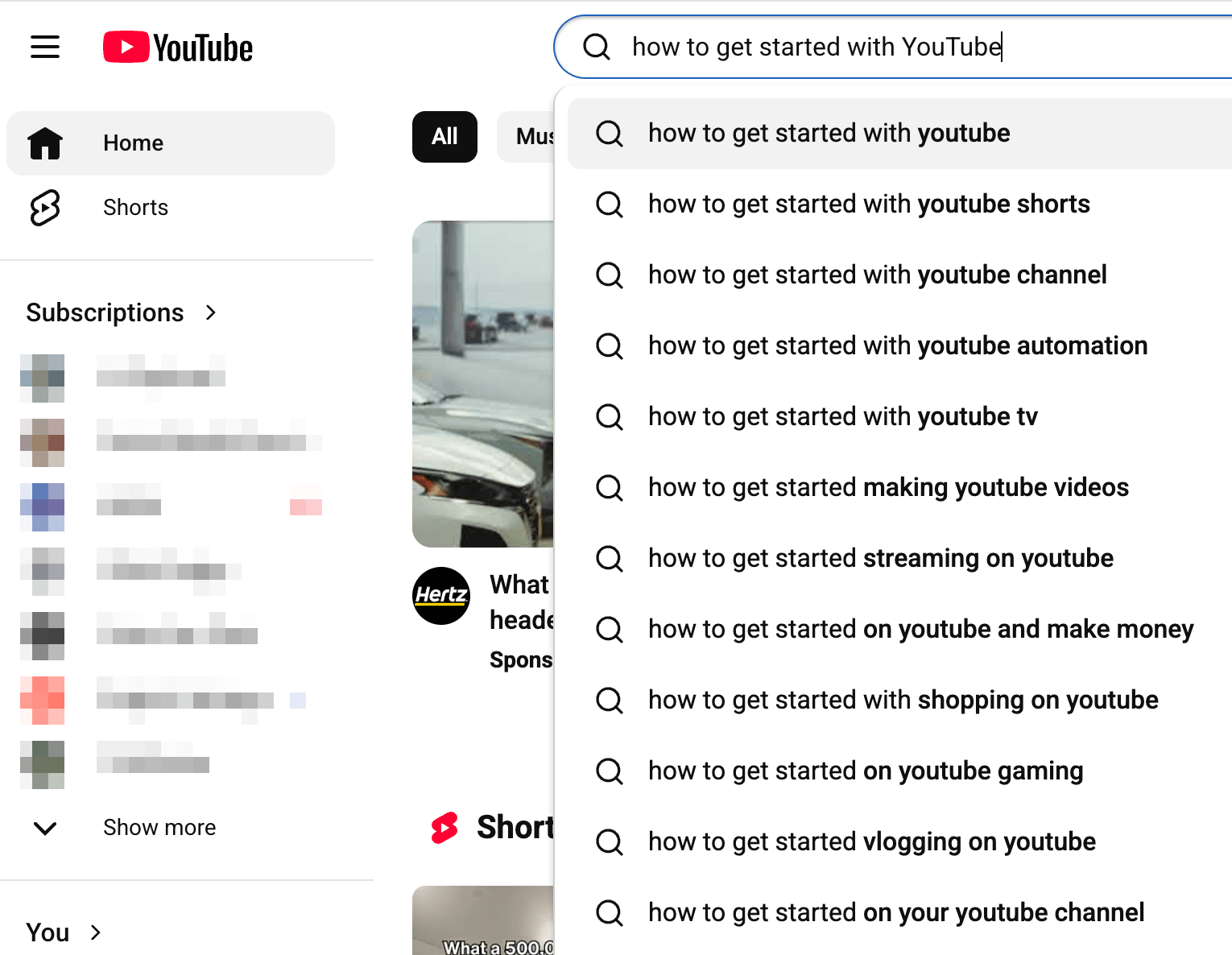
YouTube’s own search bar serves as a primary source of market research. By typing a core concept and letting "autocomplete" finish the sentence, creators can see exactly how real users phrase their problems. This ensures that titles match the actual search intent of the audience.
Case Study: The "Ask PawPaw" Pivot
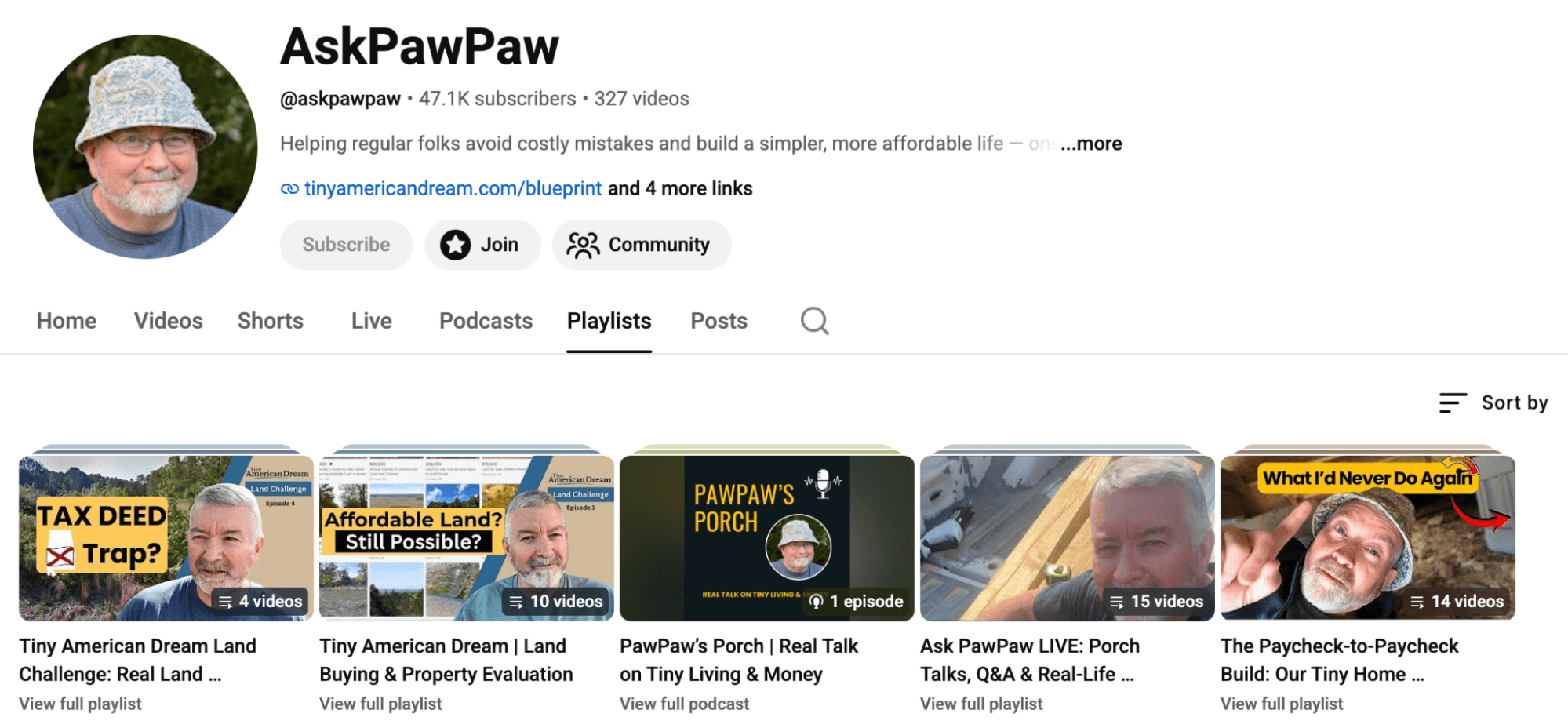
The effectiveness of this data-driven approach is best illustrated by Kevin, the creator behind the Ask PawPaw channel. Initially, Kevin struggled with content focused on traditional retirement vehicles like HSAs and budgeting. Through "outlier research," Myers and Kevin discovered a massive interest in "tiny home shed conversions." By pivoting his content to address this specific niche—visiting local displays and discussing square footage and pricing—Kevin tapped into a high-demand market that transformed his channel’s growth trajectory.
Official Responses: Expert Strategies for Content and AI Integration
In response to the rising complexity of content creation, Myers advocates for the integration of Artificial Intelligence to streamline the research and scripting process.
AI as a Research Assistant
Myers utilizes Google NotebookLM to synthesize dense information. By feeding the AI academic papers, industry reports, and executive interviews, he can generate structured summaries that form the backbone of credible, data-heavy scripts.
The "Interview" Scripting Method
For drafting the actual script, Myers employs Claude (an AI by Anthropic). Rather than asking the AI to write a generic script, he uses an "interview method." He instructs the AI to ask him questions about his personal stories, analogies, and unique perspectives one at a time. This ensures the final script contains the "raw material" of human experience that generic AI-generated content lacks.
The Anatomy of a High-Impact Hook
According to Myers, the first 30 seconds of a video are the most critical. A professional hook must contain:

- Viewer Identification: Explicitly naming who the video is for.
- The Curiosity Gap: Making a counterintuitive statement that challenges common assumptions.
- The Credibility Proof: Briefly mentioning specific results or experience to justify the viewer’s time.
Implications: Monetization and the Future of the Creator Economy
The long-term implication of this framework is a shift in how "success" is measured on YouTube. For the professional creator, views are a vanity metric; conversion is the true KPI.
Strategic Monetization
Myers’ own revenue model serves as a blueprint. He eschews reliance on AdSense in favor of high-ticket coaching. He utilizes two types of Calls to Action (CTAs):
- The Explicit Mid-Roll: A direct mention halfway through the video that deeper assistance is available via a link in the description.
- The Subtle Reference: Naturally mentioning client success stories throughout the video to build trust and demonstrate authority.
Maximizing Session Duration
YouTube rewards channels that keep users on the platform. Consequently, Myers advises against traditional "outros" with music or recaps, which signal to the viewer that it is time to leave. Instead, he recommends a "seamless bridge" to the next video, ending on a question that can only be answered by clicking the next link in the end-screen card.
Technical Minimums
Perhaps the most encouraging implication for late starters is the minimal gear requirement. The "pro-sumer" trap—spending thousands on DSLR cameras and lighting—is often unnecessary. Myers himself produced over 100 videos using only an iPhone 15 and a Shure MV7+ microphone. The consensus among experts is clear: while viewers will tolerate average video quality, they will immediately abandon a video with poor audio. Therefore, the only non-negotiable investment for a new channel is a high-quality USB-C microphone.
Conclusion
The window of opportunity for midlife professionals on YouTube is not closing; rather, it is just beginning to open for those who approach it with a business mindset. By focusing on niche specificity, data-backed pre-production, and strategic monetization, "late starters" can bypass the noise of the entertainment-focused creator economy and build a platform that delivers both authority and revenue. As Ty Myers demonstrates, the platform doesn’t reward the loudest voice, but the one that most clearly solves a viewer’s problem.