The Death of Information Overload: Why Marketing Leaders Are Pivoting to Curated Newsletters
In an era defined by an unrelenting barrage of data, the primary challenge for modern marketing leaders is no longer the acquisition of information—it is the filtering of it. Every morning, the average professional is greeted by an overwhelming influx of industry reports, LinkedIn "thought leadership" posts, and urgent case studies. Yet, despite the ubiquity of content, there remains a profound deficit in clarity.
This paradox has forced a fundamental shift in how brands communicate with their audiences. The era of the "link-heavy" newsletter is waning, replaced by a demand for high-utility, curated intelligence. Leading the charge in this shift is Convince & Convert, which recently announced the evolution of its flagship newsletter, ON, into a new, streamlined publication titled The Trendline. This transition serves as a bellwether for the broader marketing industry: the future of email marketing lies not in volume, but in strategic synthesis.
The State of the Industry: Data Overload vs. Strategic Insight
The digital landscape is currently saturated. With the rise of generative AI and the democratization of content creation, the volume of marketing-related noise has reached an all-time high. For CMOs and directors, this creates a "paralysis by analysis." They do not need more content; they need better filters.
The core problem with traditional newsletters is their reliance on the "click-through" model. For years, the industry standard for email marketing has been to provide a headline and a brief teaser, forcing the reader to click a link to consume the actual value. While this tactic boosts click-through rates (CTR), it often ignores the reality of how busy professionals actually consume information.
Marketing leaders are, by nature, decision-makers. They are constantly evaluating what is worth their limited time. If a newsletter forces them to navigate away from their inbox to find out why a story matters, it adds friction to their day. Increasingly, readers are gravitating toward publications that deliver "value upfront"—summaries that provide the what, the why, and the so-what without requiring a journey across the web.
Supporting Data: Why Newsletters Still Rule
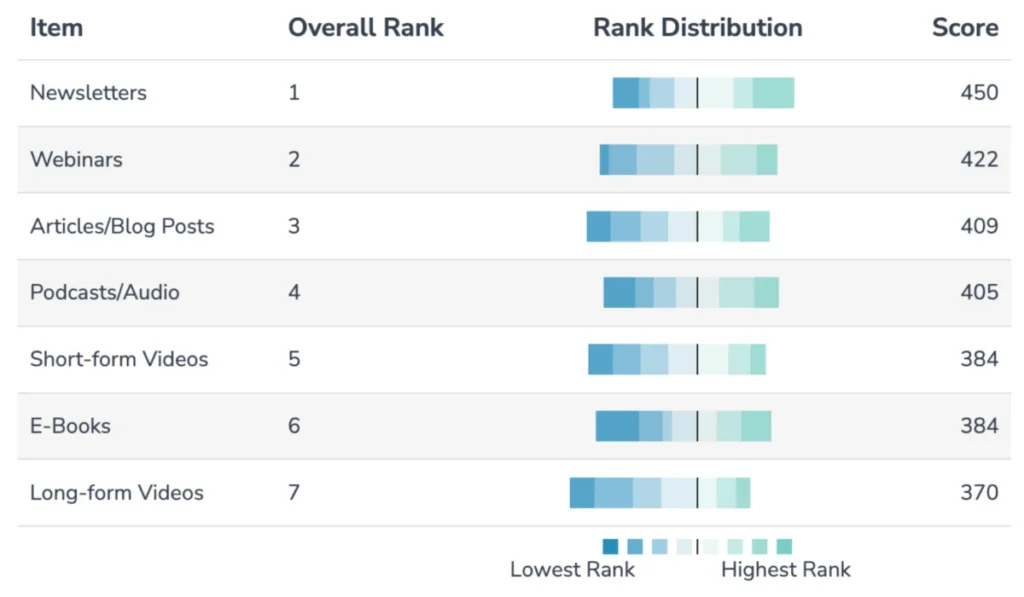
Despite the proliferation of short-form video and social media platforms, the newsletter remains the most trusted and preferred medium for B2B intelligence. Recent audience research conducted by Convince & Convert highlights this preference starkly.
In an annual survey of its readership—a demographic composed primarily of marketing decision-makers—the team asked respondents to rank their preferred content formats for learning about industry trends. The results were decisive: newsletters were nearly twice as likely to be ranked first than any other medium, including webinars, podcasts, and long-form blogs.

This data suggests that while other formats excel at entertainment or broad awareness, the newsletter occupies a unique space of "intellectual partnership." It is a tool for professional development, a digest that performs the heavy lifting of synthesis on behalf of the reader. When a newsletter successfully acts as a curator, it becomes a trusted advisor rather than just another source of notifications.
Chronology of a Pivot: From "ON" to "The Trendline"
The decision to rebrand and restructure the Convince & Convert newsletter was not a reactive choice but a strategic one born from years of observing audience behavior.
- The Recognition Phase: The editorial team identified that the previous format, ON, was becoming increasingly siloed by content medium (e.g., listing blog posts, then podcasts, then research). This structure required the reader to do the work of connecting the dots.
- The Diagnostic Phase: By reviewing engagement metrics and user feedback, the team realized that the "list of links" format was failing to deliver immediate value. The content was high quality, but the delivery method lacked the necessary strategic context.
- The Re-design Phase: The team shifted toward a "debrief" model. The goal was to build a resource that brings important topical developments to the reader through a professional, strategic lens.
- The Launch: The Trendline was introduced to provide a more focused,, and "ownable" resource, prioritizing insights that can be consumed entirely within the email itself.
The Anatomy of the New Strategy
The shift to The Trendline is grounded in a commitment to "value-upfront" content. This approach involves several key structural changes designed to respect the reader’s time and intelligence:
1. The Strategic Lens
Instead of acting as a news aggregator, The Trendline acts as a strategic debrief. Each edition answers three critical questions for the reader: Why does this story matter? What does it mean for the industry? What questions should a marketer be asking themselves? By framing information this way, the newsletter moves from being a repository of information to a guide for decision-making.
2. Compact Delivery
The team established strict guidelines for content length. By focusing on concise summaries that provide actionable intelligence, the newsletter eliminates the "click-bait" loop. Readers get the core insight immediately, with the option to click deeper only if the topic warrants further investigation.
3. Interactive Engagement
The introduction of "Sound Off"—a poll feature at the end of each edition—serves a dual purpose. For the reader, it offers a moment of interaction. For the team, it provides a cleaner, more reliable engagement metric than traditional CTR. It allows the editorial staff to gauge the pulse of their audience on specific, timely issues, creating a feedback loop that informs future content.
Implications for Modern Marketers
The shift toward The Trendline model holds significant implications for any brand looking to revitalize its own email marketing strategy. The primary lesson is that in an era of waning trust, "owned" channels like newsletters are becoming the most critical asset for audience engagement.

Understand the Pain Points
The most successful content strategies begin with a deep understanding of the audience’s daily friction. Marketing leaders, for instance, are often overwhelmed by the sheer volume of "urgent" tasks. A newsletter that saves them time—by pre-digesting the noise—becomes an essential utility. When developing a content strategy, companies must ask: Are we adding to their noise, or are we helping them filter it?
Prioritize Value Over Traffic
For years, marketers have been obsessed with driving traffic back to their websites. While this remains important for SEO and conversion, it should not come at the expense of user experience. Providing value directly in the email builds trust and authority. If a reader gets smarter just by reading the newsletter, they will return to the brand when it comes time to make a purchase or sign a contract.
Design for the Decision-Maker
When presenting research or industry insights, consider the persona of the target reader. Senior decision-makers do not have time for twenty charts or long-winded narratives. They need synthesis. Effective communication involves distilling complex data into actionable takeaways. If your content can help a leader solve a problem faster, it becomes indispensable.
The Future of Brand Journalism
The move by Convince & Convert represents a broader trend: the professionalization of the corporate newsletter. Brands are increasingly acting like media companies, recognizing that they must earn the right to occupy a space in a user’s inbox every week.
This evolution is not a "lateral move." It requires more effort, more editorial rigor, and a deeper commitment to understanding the audience’s needs. However, the payoff is substantial. By moving away from the "link-farm" model and toward a "strategic debrief" model, brands can move from being an unwanted solicitation to a trusted, necessary, and anticipated part of a professional’s workflow.
As we look toward the future of digital marketing, one thing is clear: the brands that thrive will be those that respect their audience’s most valuable asset—their attention. By filtering the noise and focusing on high-utility, context-rich intelligence, companies can transform their email marketing from a broadcast channel into a genuine, authoritative voice.
In the final analysis, the most successful newsletter in the coming years will not be the one that gets the most clicks; it will be the one that helps the reader think, learn, and make better decisions. As the marketing industry continues to move at a breakneck pace, having a reliable "trendline" to follow will be the difference between simply keeping up and actually leading the way.