Critical Condition: Sonam Wangchuk’s Hunger Strike Reaches 20-Day Milestone Amid Growing Political Solidarity
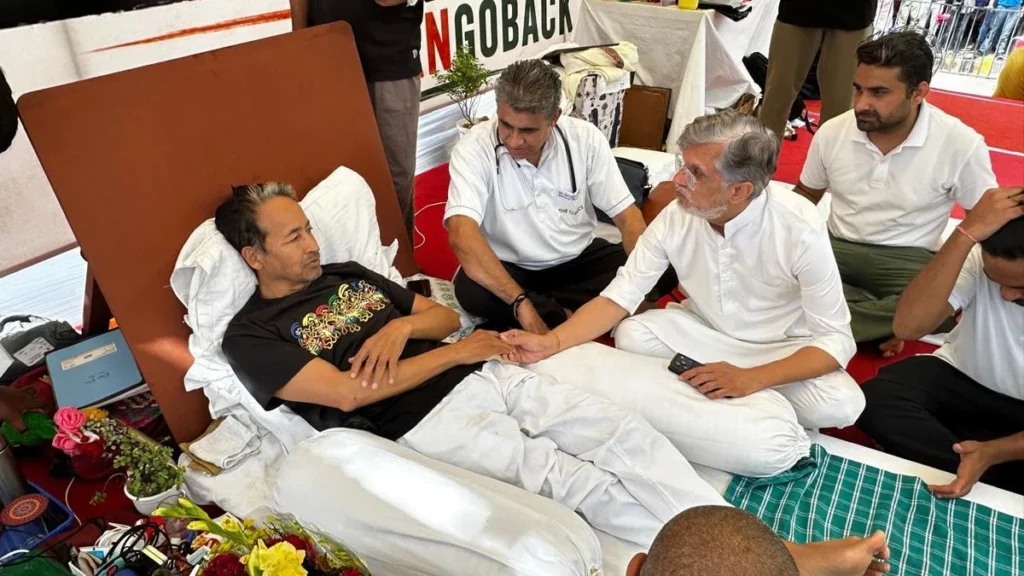
NEW DELHI – As the sun set over the historic Jantar Mantar in the heart of India’s capital on July 17, 2026, the atmosphere remained heavy with both anticipation and alarm. Environmentalist and social activist Sonam Wangchuk, now in the 20th day of his indefinite hunger strike, has entered a critical stage of physical deterioration. The protest, organized under the banner of the Cockroach Janta Party (CJP), has transformed from a localized demonstration into a focal point of national political discourse, drawing support from across the opposition spectrum.
The State of the Protest: A 20-Day Ordeal
For nearly three weeks, Sonam Wangchuk has remained at the site of the protest, sustained only by water and the resolve of his convictions. The site, which has become a symbolic fortress of dissent, has seen a steady stream of supporters, activists, and, increasingly, high-profile political figures.
Medical teams stationed at the protest site have issued increasingly urgent warnings. A statement released by the CJP leadership on the evening of July 17 emphasized the gravity of the situation: “The medical team has confirmed that Sonam Wangchuk continues to be under 24-hour medical vigilance. His vital signs are being monitored round-the-clock as his body exhibits the expected strain of prolonged fasting. We are approaching a point where the risks to his long-term health are no longer theoretical—they are immediate.”
Despite his fragile state, Wangchuk remains resolute. His protest, aimed at highlighting pressing environmental and governance concerns, has galvanized a diverse coalition of citizens who argue that the current administration’s silence on his demands is a failure of democratic engagement.

Chronology of the Struggle
The current standoff did not emerge in a vacuum; it is the culmination of months of simmering tension.
- Late June 2026: Initial negotiations between the CJP and government representatives stall, leading to the announcement of the hunger strike.
- July 1, 2026: Wangchuk commences his indefinite fast at Jantar Mantar, setting the stage for a long-drawn-out confrontation.
- July 7, 2026: By the end of the first week, international observers note the growing scale of the protest. Solidarity vigils begin to emerge in major cities across India.
- July 12, 2026: The medical team issues the first "critical" warning, citing significant weight loss and electrolyte imbalances.
- July 15, 2026: Political leaders begin visiting the site in earnest, shifting the protest from a civil society event to a major political headache for the ruling establishment.
- July 17, 2026 (Day 20): Congress MP Pawan Khera makes a high-profile visit to the site, marking a significant escalation in opposition support. The protest receives nationwide media coverage as the health crisis reaches a zenith.
The Political Calculus: Opposition Rallies Behind Wangchuk
The visit of Congress MP Pawan Khera to the Jantar Mantar site on July 17 served as a clear signal that the opposition is coalescing around the CJP’s movement. Khera, speaking to the press after meeting with a visibly weakened Wangchuk, condemned the government’s "deafening silence."
"It is a tragedy of our times that a man who has dedicated his life to the welfare of the environment and the people must sacrifice his own health to be heard," Khera stated. "The government’s refusal to engage in meaningful dialogue is not just a policy failure; it is a moral one. The opposition stands with Mr. Wangchuk, and we will continue to pressure the center until they address his legitimate concerns."
The involvement of major political parties suggests that the protest is no longer just about the specific policy demands of the CJP, but has evolved into a broader referendum on the government’s responsiveness to public dissent. Political analysts suggest that the ruling party is currently trapped in a "wait-out" strategy, hoping the movement will lose momentum, but the entry of mainstream political players has effectively neutralized that approach.

Supporting Data and Medical Implications
The medical reality of a 20-day fast is harrowing. According to health experts who have consulted on the case, the human body, after three weeks without solid sustenance, undergoes catabolic processes where it begins to break down muscle tissue and vital organ reserves for energy.
The CJP has maintained that they are providing the best possible care under the circumstances, but the lack of a government-led medical intervention or formal outreach has complicated matters. The "24-hour vigilance" mentioned by the CJP includes monitoring blood pressure, blood glucose, and heart rate, all of which are reported to be in unstable ranges.
"Every day adds an exponential layer of risk," says one volunteer doctor at the site. "We are not just talking about fatigue; we are talking about the potential for irreversible organ damage if the fast continues."
Implications for the Government
The government finds itself in a precarious position. If they concede to the demands, they risk appearing weak to their base and setting a precedent for future protests. If they remain silent and Wangchuk’s health suffers a permanent or fatal decline, they risk an uncontrollable public outcry and a potential surge in anti-incumbency sentiment.

This "no-win" scenario has led to a stalemate. Critics argue that the government’s strategy of "administrative apathy"—ignoring the protest in hopes that it will be ignored by the public—has backfired. The hashtag #SupportWangchuk has trended nationally for the better part of the week, and the site at Jantar Mantar has become a pilgrimage point for activists and students.
Furthermore, the involvement of the Cockroach Janta Party (CJP), a group known for its unconventional and grassroots-heavy protest style, has introduced an element of unpredictability. The CJP has signaled that they are prepared to escalate their protests to other parts of the capital should the situation worsen.
A Nation Watches
As July 18 dawns, the eyes of the nation remain fixed on the small, makeshift tent at Jantar Mantar. The protest has transcended the initial grievances that sparked it, becoming a litmus test for the health of India’s democratic discourse.
Whether this impasse concludes with a negotiated settlement or a tragic physical breakdown remains the central question of the week. For now, the silence from the corridors of power stands in stark contrast to the growing roar of support surrounding Sonam Wangchuk. As the movement enters its third week, the message from the protesters is clear: the cost of silence is growing, and the time for a response is running out.

This article was compiled by The Hindu Bureau based on live reporting from the field. Updates on Sonam Wangchuk’s health and the ongoing developments at Jantar Mantar will continue to be provided throughout the day.