President Droupadi Murmu’s Landmark Tour: Strengthening India’s Strategic Footprint in Eastern Europe
By Diplomatic Correspondent
New Delhi, July 19, 2026
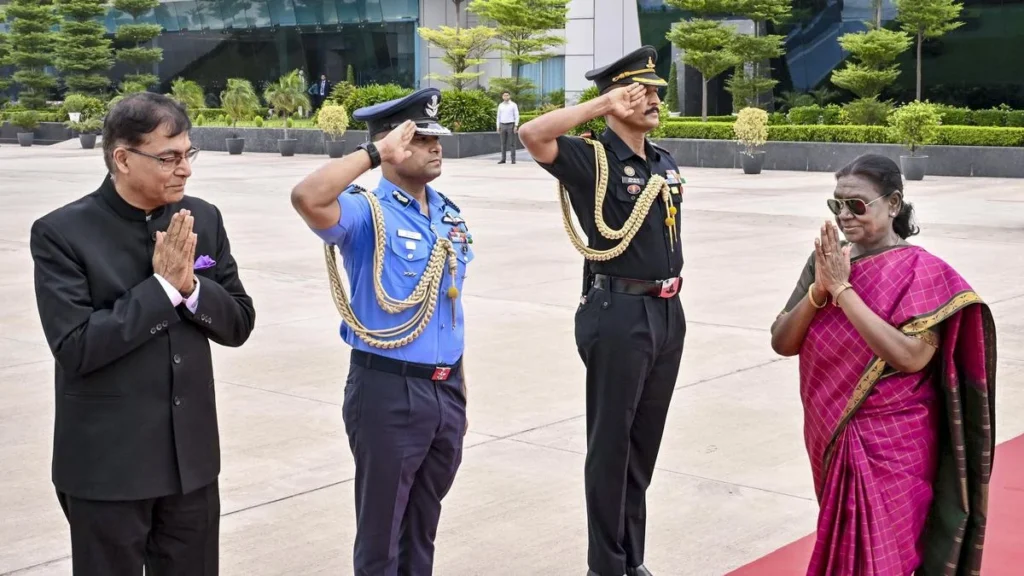
In a significant diplomatic outreach designed to deepen New Delhi’s engagement with the European continent, President Droupadi Murmu departed on Sunday for a high-stakes, three-nation tour of Moldova, North Macedonia, and Romania. The visit, which underscores India’s growing geopolitical ambitions in Central and Eastern Europe, seeks to revitalize bilateral economic partnerships, foster technological collaboration, and consolidate support for India’s regional security concerns.
The tour is marked by historical significance: it represents the first-ever state visit by an Indian President to both Moldova and North Macedonia, while her arrival in Romania will end a three-decade hiatus in presidential-level diplomatic exchanges with the Southeastern European nation.
The Strategic Imperative: Bridging the Gap
For years, India’s foreign policy focus regarding Europe has been dominated by traditional powers such as France, Germany, and the United Kingdom. However, the current administration has increasingly pivoted toward the "new Europe"—the emerging economies of the East that occupy a critical position at the crossroads of European and Eurasian trade routes.
"The three-nation visit reflects India’s growing engagement with central and eastern Europe, and reaffirms our commitment to strengthening our partnerships with the countries in the region," noted Sibi George, Secretary (West) at the Ministry of External Affairs (MEA).
The tour is not merely ceremonial; it is a calculated effort to align with the European Union’s broader strategic framework. By engaging these nations, New Delhi is actively diversifying its diplomatic portfolio, moving beyond traditional hubs to create a more resilient network of allies who share an interest in economic stability, digital transformation, and security.
Chronology of the Diplomatic Itinerary
Leg 1: Moldova (July 20)
The President’s journey commences in Chișinău, Moldova. This visit is widely viewed as a "door-opening" mission. Given that this is the first visit by an Indian head of state to the nation, the primary goal is to establish institutional frameworks for cooperation.
- Key Engagements: President Murmu is set to hold delegation-level talks with President Maia Sandu.
- Legislative Outreach: Discussions are scheduled with the President of the Parliament, Igor Grosu, and members of the Moldova-India Parliamentary Friendship Group.
- Economic Focus: The President will headline a Business Forum, aiming to bridge the information gap between Indian corporate entities and the Moldovan market.
Leg 2: North Macedonia (July 21–22)
Following her time in Moldova, President Murmu will travel to Skopje at the invitation of President Gordana Siljanovska-Davkova.
- Bilateral Synergy: The agenda focuses on the "Big Five" of modern Indo-European relations: agriculture, pharmaceuticals, science and technology, IT, and ITeS (IT-enabled Services).
- Political Engagement: Beyond a meeting with President Siljanovska-Davkova, the President is scheduled to meet Prime Minister Hristijan Mickoski and address the Assembly of North Macedonia, a rare honor that underscores the warmth of the burgeoning relationship.
Leg 3: Romania (July 23–25)
The final and perhaps most historically weighty leg of the trip is the visit to Bucharest.
- Reviving Ties: After a 30-year absence of Indian presidential visits, this trip is intended to signal a "new dawn" in bilateral relations.
- High-Level Meetings: The President will engage with a broad spectrum of Romanian leadership, including President Nicușor Dan, interim Prime Minister Ilie Bolojan, and the heads of both the Senate and the Chamber of Deputies.
- Economic Integration: The India-Romania Business Forum will serve as a platform to discuss the future of the India-EU Free Trade Agreement (FTA) and how Romania can serve as a gateway for Indian goods into the wider European Single Market.
Economic and Technological Convergence
The MEA’s briefing highlighted specific sectors where the synergy between India and these three nations is not just possible, but highly lucrative.
1. The Pharmaceutical Pipeline
India, known as the "pharmacy of the world," sees significant potential in exporting affordable, high-quality generic medicines to Moldova, North Macedonia, and Romania. Conversely, these countries, with their growing biotech infrastructure, represent potential hubs for joint research and development.

2. Digital Transformation and IT
As India continues to export its "Digital Public Infrastructure" (DPI) model globally, these Eastern European nations are eager to adopt Indian technology for governance. From payment gateways to digitized agricultural records, the focus is on "mutually beneficial cooperation."
3. Agriculture and Food Security
With global supply chains facing persistent volatility, both sides are looking to stabilize agricultural trade. Moldova and Romania, known for their fertile land, are interested in Indian agricultural technology (AgriTech) to boost crop yields and modernize farming practices.
Official Responses and Diplomatic Alignment
The Ministry of External Affairs has framed this visit as a "broad-based partnership" initiative. In a statement released on July 17, the MEA noted: "India and these nations enjoy warm and friendly relations. This visit would mark a significant and historical milestone and elevate bilateral ties."
Perhaps the most poignant aspect of this trip is the underlying security cooperation. The MEA noted that all three countries—Moldova, North Macedonia, and Romania—issued strong condemnations following the 2025 Pahalgam terror attack in Jammu and Kashmir. Their explicit support for India’s stance against cross-border terrorism has created a foundation of trust that is now being translated into economic and diplomatic dividends.
Implications: The "Strategic Pivot"
The visit of President Murmu is a manifestation of India’s "Global South" approach, which seeks to elevate relationships with smaller, strategically vital nations that are often overlooked by major powers.
Strengthening the EU-India Connection
By engaging Romania, an EU member state, India is essentially lobbying for a more sympathetic ear within the European Union regarding trade barriers and visa regulations. As the India-EU Free Trade Agreement discussions continue, the support of member states like Romania is crucial for New Delhi to secure favorable terms.
Countering Geopolitical Volatility
In an era of shifting alliances and the ongoing reconstruction of European security architecture, India’s presence in these three nations provides a balanced, neutral, and constructive partner. These nations, in turn, view India as a major economic power capable of providing an alternative to the heavy reliance on regional power blocs.
A People-to-People Boost
A core component of the presidential itinerary includes interactions with the Indian diaspora. By engaging with these communities, the President is not only recognizing their role as "cultural ambassadors" but also strengthening the socio-economic ties that facilitate business, education, and tourism.
Conclusion
As President Droupadi Murmu touches down in Chișinău, she carries with her the aspirations of a modernizing India seeking to redefine its role in the global order. This tour is a deliberate, multi-layered strategy—an effort to turn historical acquaintances into modern partners.
Whether it is through the digital transformation of local economies, the harmonization of pharmaceutical regulations, or the shared commitment to international security, the mission to Moldova, North Macedonia, and Romania represents a critical chapter in India’s diplomatic history. The success of this trip will likely be measured by the speed at which these "first-ever" visits transition into sustainable, long-term trade agreements and deeper geopolitical alignment.
For now, the focus remains on the warm receptions and the potential for a future where the map of India’s influence in Europe is significantly broader than it was just a few days ago.